Rehoboth Beach in Vintage Postcards: A 1905–1908 Photo Tour of Hotels, Boardwalk Life, and Beach Culture
Rehoboth Beach didn't begin as an amusement town or a shopping district. It began as an idea: bring people to the ocean for renewal, order, and community—then let the sea air do the rest.
In 1873, the Rehoboth Camp Meeting Association formed on hundreds of acres laid out in a fan-shaped plan with wide streets and parks, a design the city notes still largely holds today. That same year, the first boardwalk was built on high ground between the beach and Surf Avenue, and over time storms would keep rewriting the exact line where land ends and leisure begins.
By the early 1900s—our postcard window of 1905 to 1908—Rehoboth is no longer just a camp meeting on the coast. It's a resort in full stride, with crowds on the sand, oceanfront buildings, bathhouses, strolls in the pines, and a nearby maritime world anchored by breakwaters and lighthouses. The eight postcards below don't just "illustrate" that story—they are the story's texture.

Table of Contents
- The resort comes of age
- 1905–1906: The shoreline as a social theater
- 1908: Hotels, guesthouses, and the business of summer
- 1907: Surf, swimmers, and the early thrill of the water
- The pines: Rehoboth beyond the beach
- 1906: The town behind the dunes
- Views of Rehoboth: A postcard that sells the whole dream
- The maritime horizon: Breakwaters and a bigger coastal world
- A final note: Postcards as time machines
The resort comes of age
Rehoboth's transformation wasn't accidental. The town's own history highlights how quickly infrastructure and access changed everything: the boardwalk arrives in 1873, and by 1878 the Junction and Breakwater Railroad is running between Lewes and Rehoboth, helping make the coast reachable for summer visitors.
That sense of "reachable" is the invisible force behind early postcards. A postcard only makes sense when travel is common enough that people want souvenirs—and when the place is stable enough in the public imagination that a single picture can stand in for an entire vacation.
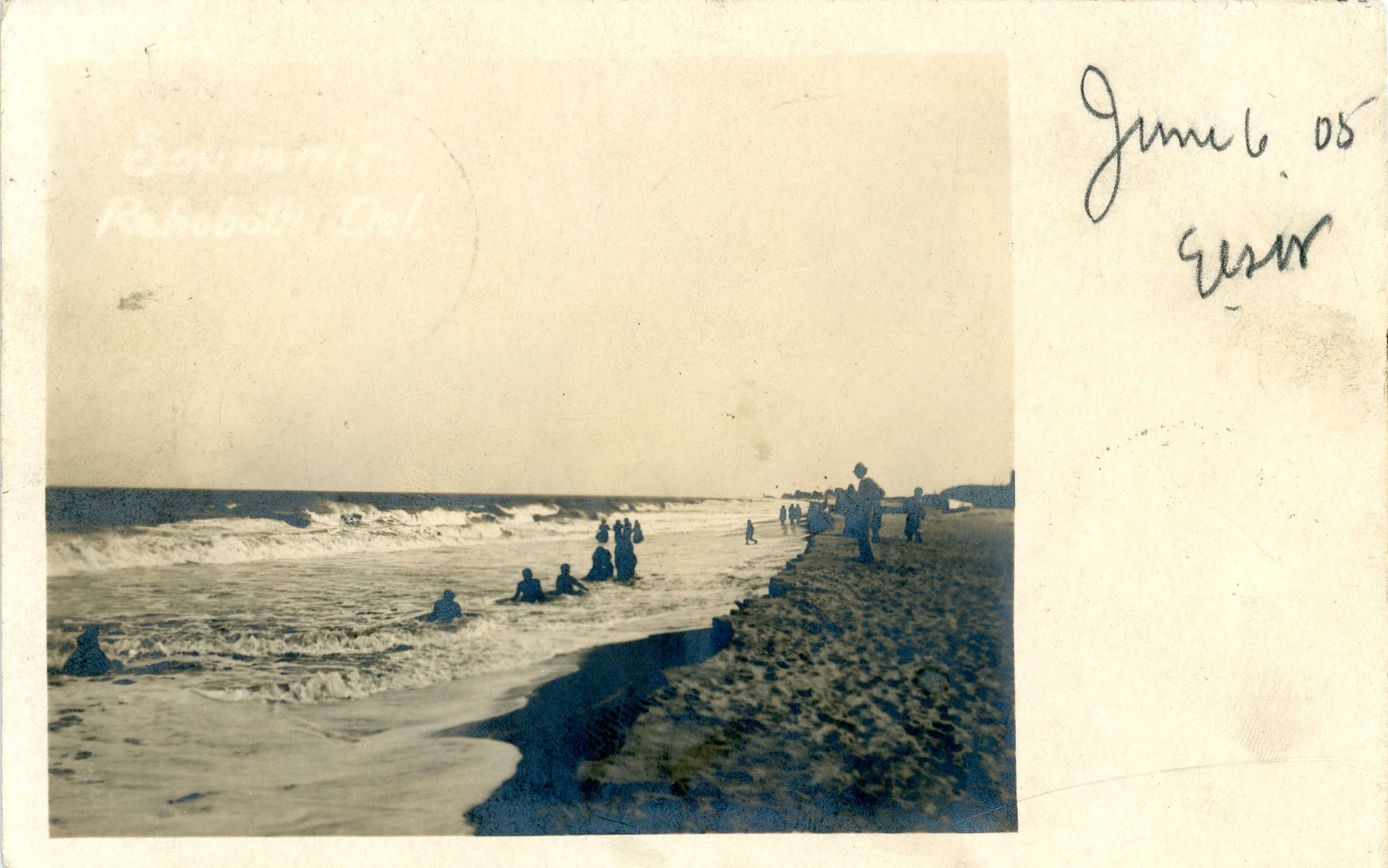
1905–1906: The shoreline as a social theater
When people picture "old-time beach life," they often imagine quiet dunes and empty horizons. The postcards disagree.
In the 1905 view, the shoreline is already active—people clustered near the waterline, the ocean treated as both attraction and backdrop. The scene captures that transitional moment: a resort town shifting from its camp-meeting origins into a broader American leisure culture.
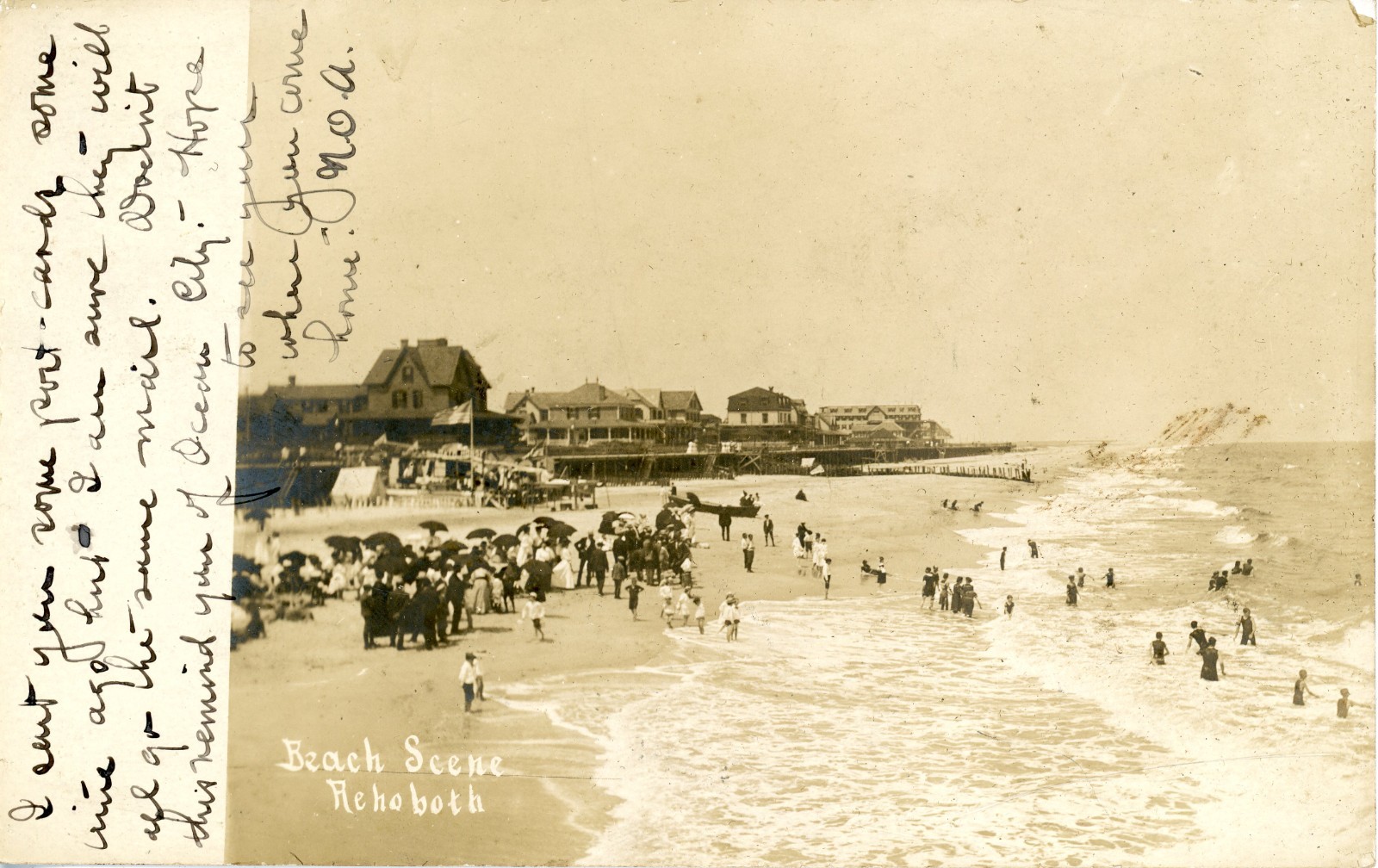
A year later, the scene feels even more "developed." The 1906 view shows a crowded shore framed by oceanfront buildings—architecture and beachgoing fused together in a single glance.
What's striking about these early beach scenes isn't just the number of people—it's the purpose of the crowd. The beach is as much about watching as it is about swimming. People gather to see and be seen. The ocean is entertainment. The shoreline is a promenade before you even step onto the boardwalk.
And that boardwalk matters here, even when it isn't centered in the frame: Rehoboth's boardwalk begins in 1873, and storms repeatedly changed its configuration over the years. Early 1900s postcards sit inside that ongoing tension: build the experience, rebuild after storms, and keep inviting visitors back.
1908: Hotels, guesthouses, and the business of summer
If the beach scenes show the public face of Rehoboth, the hotel scene shows the economics.
One detail tucked into this era is easy to overlook today, but it shaped how the beach functioned: bathhouses. In the early 1900s, bathhouses along the beachfront were essential for changing into modest bathing attire.
That single observation opens a whole historical atmosphere. Beachgoing wasn't just "go to water." It was a ritual:
- arrive,
- rent a room or a cottage,
- change properly,
- enter the public beach space with the right social signals,
- then return to the town for supper, music, and evening walks.
The postcard is not just telling you there were buildings. It's quietly revealing how structured leisure was—and how much a resort depended on the smooth choreography of thousands of visitors doing the same things, day after day, all summer.
1907: Surf, swimmers, and the early thrill of the water
Some postcards turn the volume up. They show motion instead of pose.
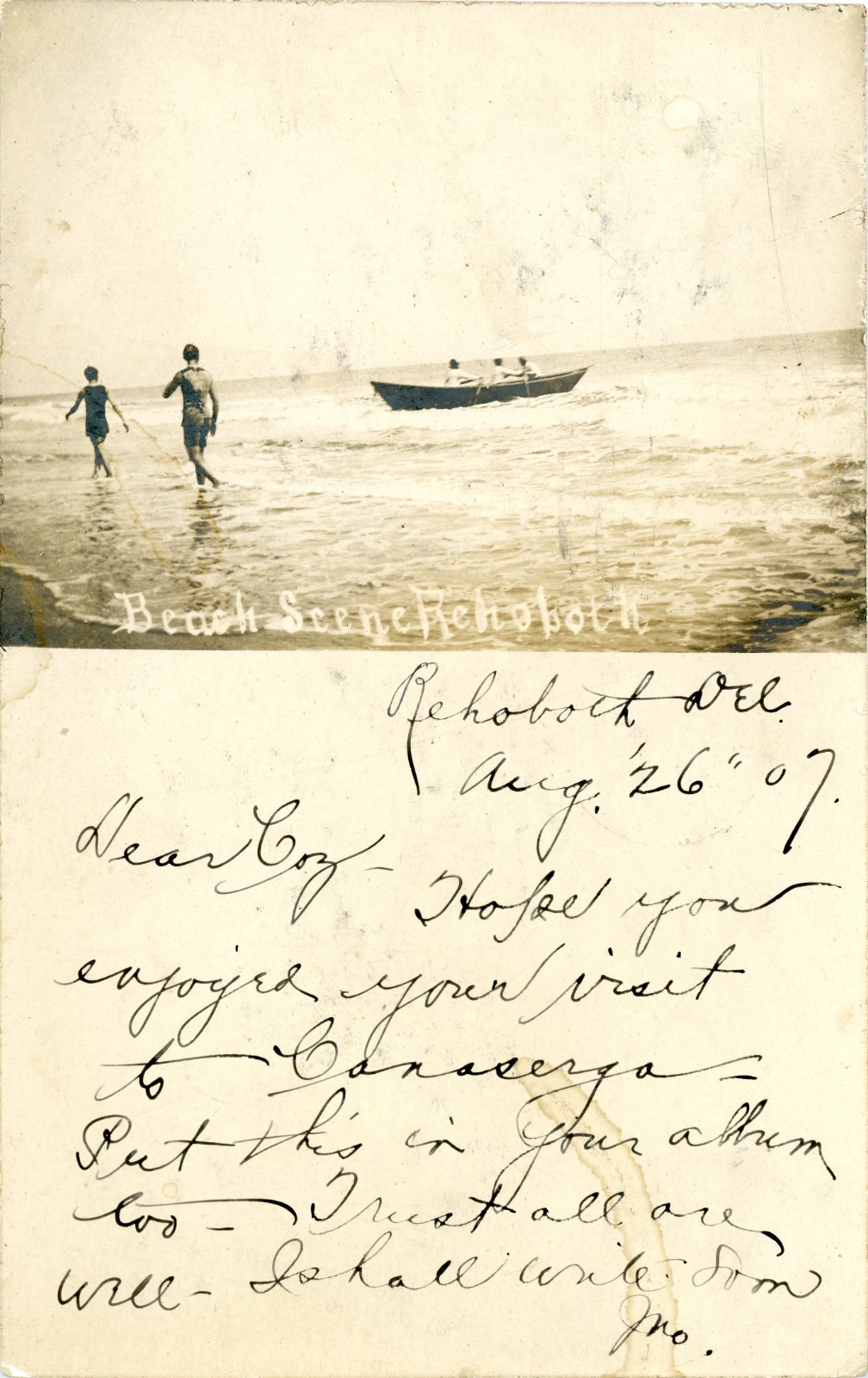
The description also points to a very period-specific reality: bathing costumes were often modest and frequently made of wool, a reminder that swimming was popular but still culturally regulated.
This is where postcards become more than nostalgia. They document how people used the ocean:
- wading as a social activity,
- swimming as a daring extension of that,
- and small craft offshore as part of the summer horizon.
Modern beach culture often separates "swimming," "boating," and "sunbathing" into different zones. In these images, it's a single shared space, a communal shoreline where everyone's summer unfolds together.
The pines: Rehoboth beyond the beach
The most revealing towns are the ones that can sell you more than one story.
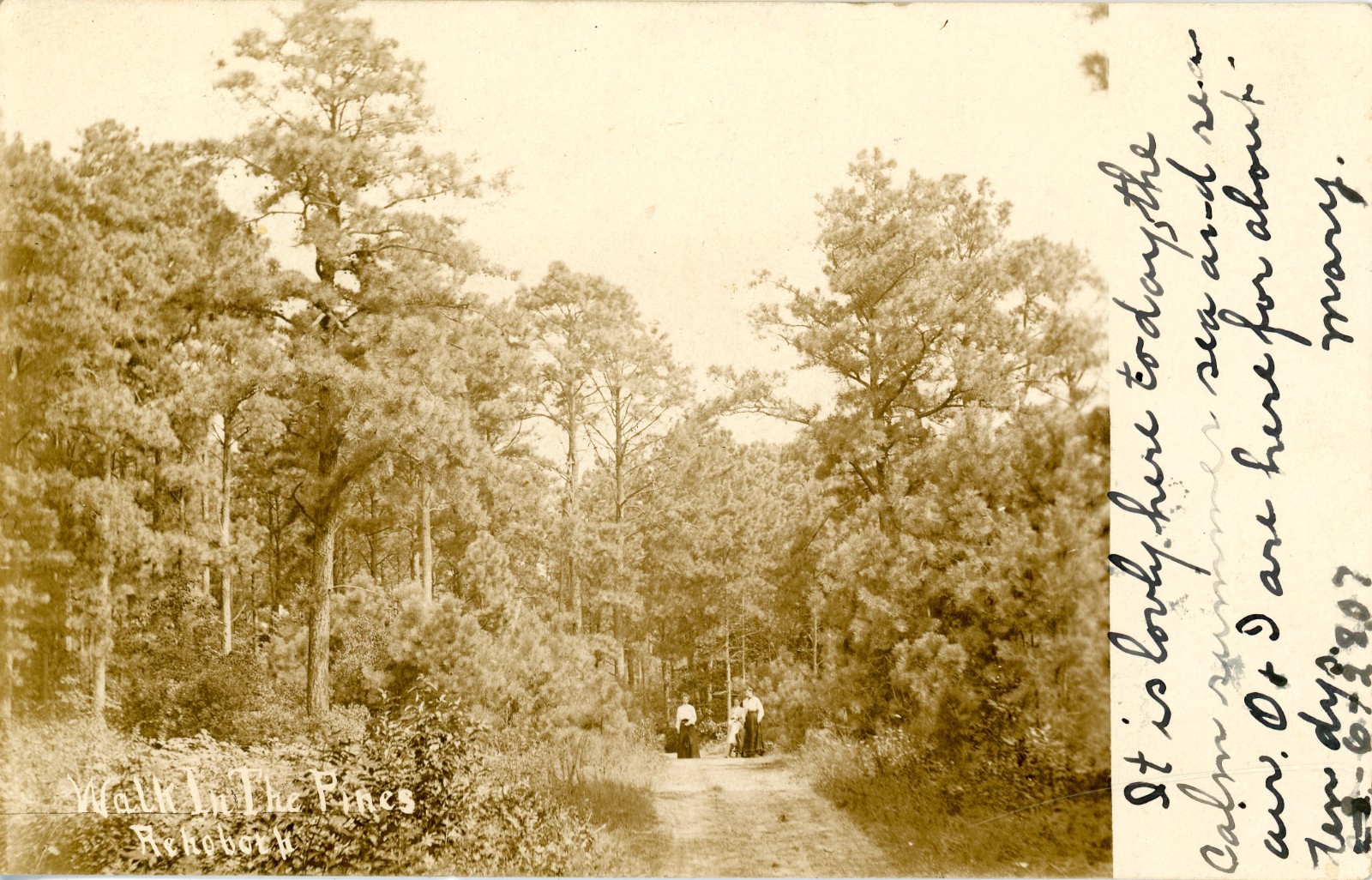
This card shifts away from the surf entirely. The pine forests are framed as a natural amenity, emphasizing the resort's appeal as a healthful retreat from urban life.
This matters because it shows how Rehoboth was marketed (and experienced) as a complete vacation environment:
- sun and surf in the day,
- shaded walks when the heat peaked,
- and an identity rooted in "fresh air" and nature as much as crowds and commerce.
It also reveals something about early-1900s leisure: the beach was exciting, but the idea of a restorative landscape—trees, shade, a slower pace—was part of the selling point. Rehoboth wasn't only a seaside spectacle. It was an escape.
1906: The town behind the dunes
Beach postcards can make any resort feel like nothing but sand and water. Street-view postcards restore the human scale.
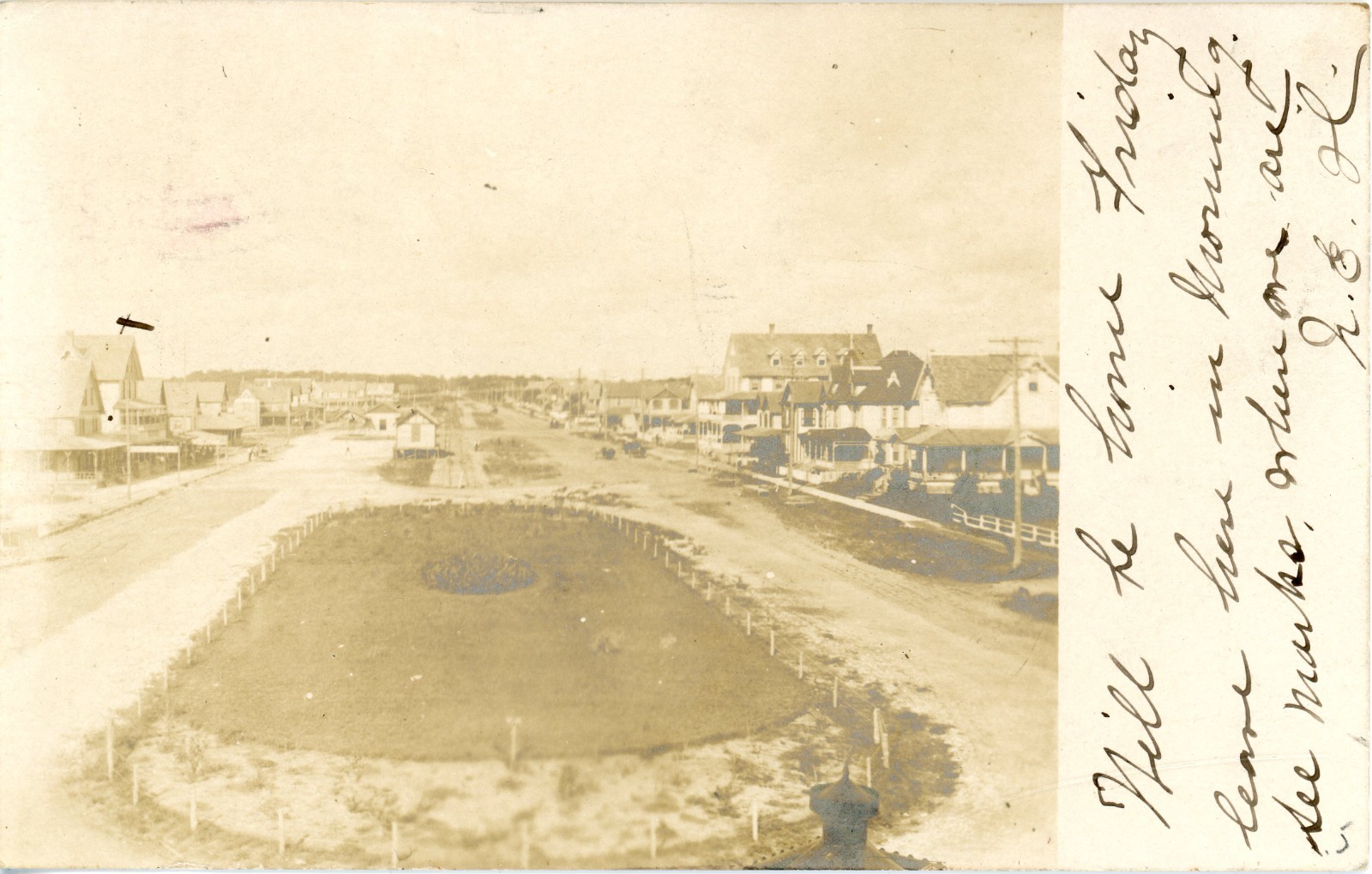
What do these details tell us, historically? They hint at a town mid-transition:
- from seasonal gathering place to built community,
- from coastal settlement to connected resort,
- from "you're at the edge of the map" to "you can reach us, and we can reach you."
Telephone poles and wires in particular speak to modernity arriving not as a headline event, but as a quiet layer laid over the town's wooden porches and sandy streets.
These are the kinds of scenes visitors mailed home when they wanted to say: this place is real. Not just a beach—an actual town where people live, build, and grow.
"Views of Rehoboth": A postcard that sells the whole dream
Every resort has an image of itself it wants the world to keep.
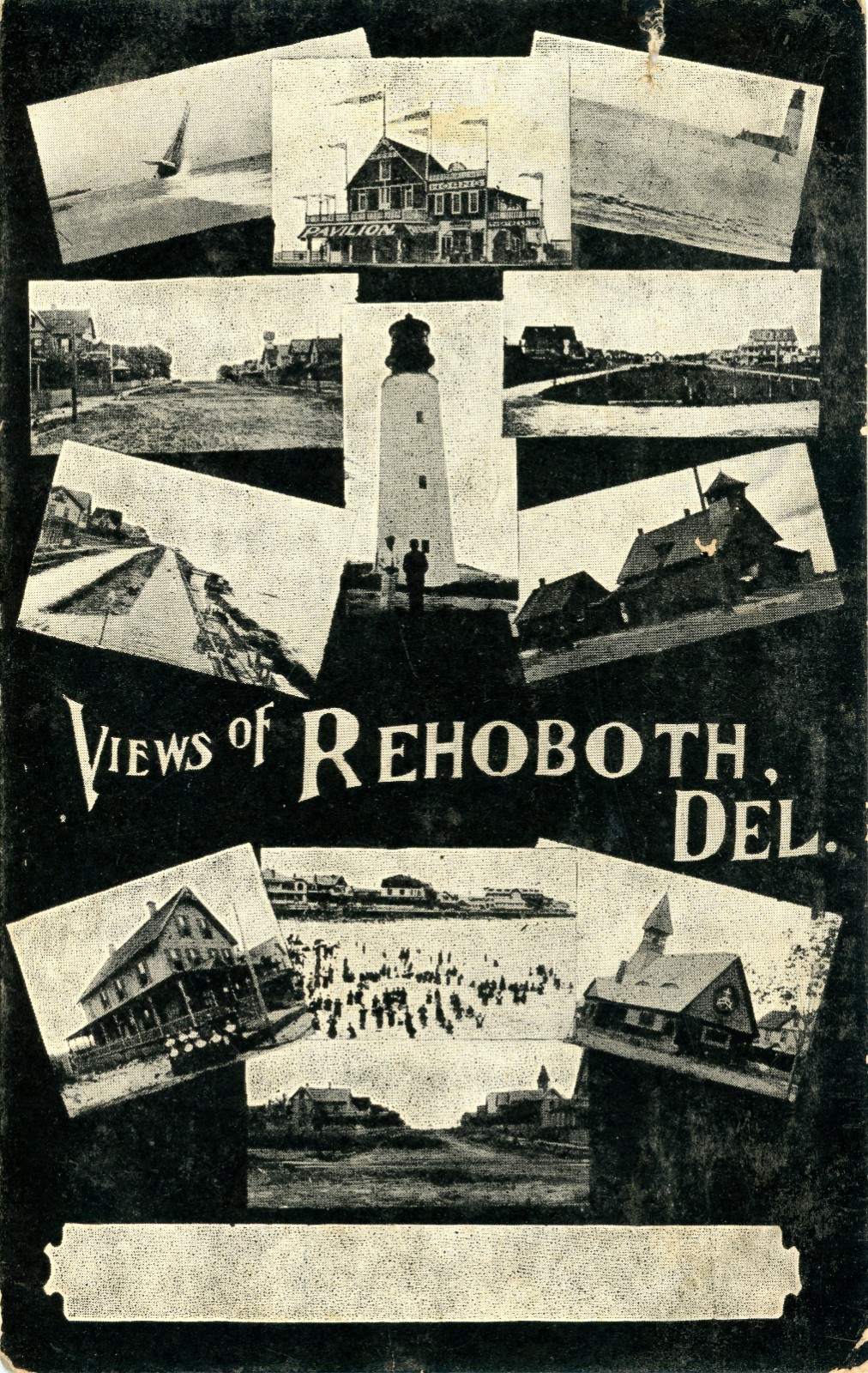
This artifact is a multi-view montage that packages Rehoboth's identity as a bustling beach resort, complete with an entertainment pavilion and other structures that signal a lively vacation destination.
It also includes a lighthouse the postcard identifies as likely the Cape Henlopen Lighthouse—an iconic regional landmark that stood until its collapse in 1926.
That lighthouse detail matters because it subtly anchors the "world" these postcards belong to. Cape Henlopen Light wasn't just scenery—it was a navigational symbol at the mouth of Delaware Bay. And when the U.S. Coast Guard history notes that it fell seaward on April 13, 1926 after erosion undermined it, you can feel how coastal life in this region was always balancing permanence and change.
In other words: the multi-view postcard isn't only a marketing collage. It's a snapshot of what Rehoboth (and its nearby coastline) considered timeless—right before time, tides, and storms proved otherwise.
The maritime horizon: Breakwaters, refuge, and a bigger coastal world
Rehoboth's story isn't only on the sand. It's also offshore, where shipping lanes, storms, and engineering shaped the coast's identity.
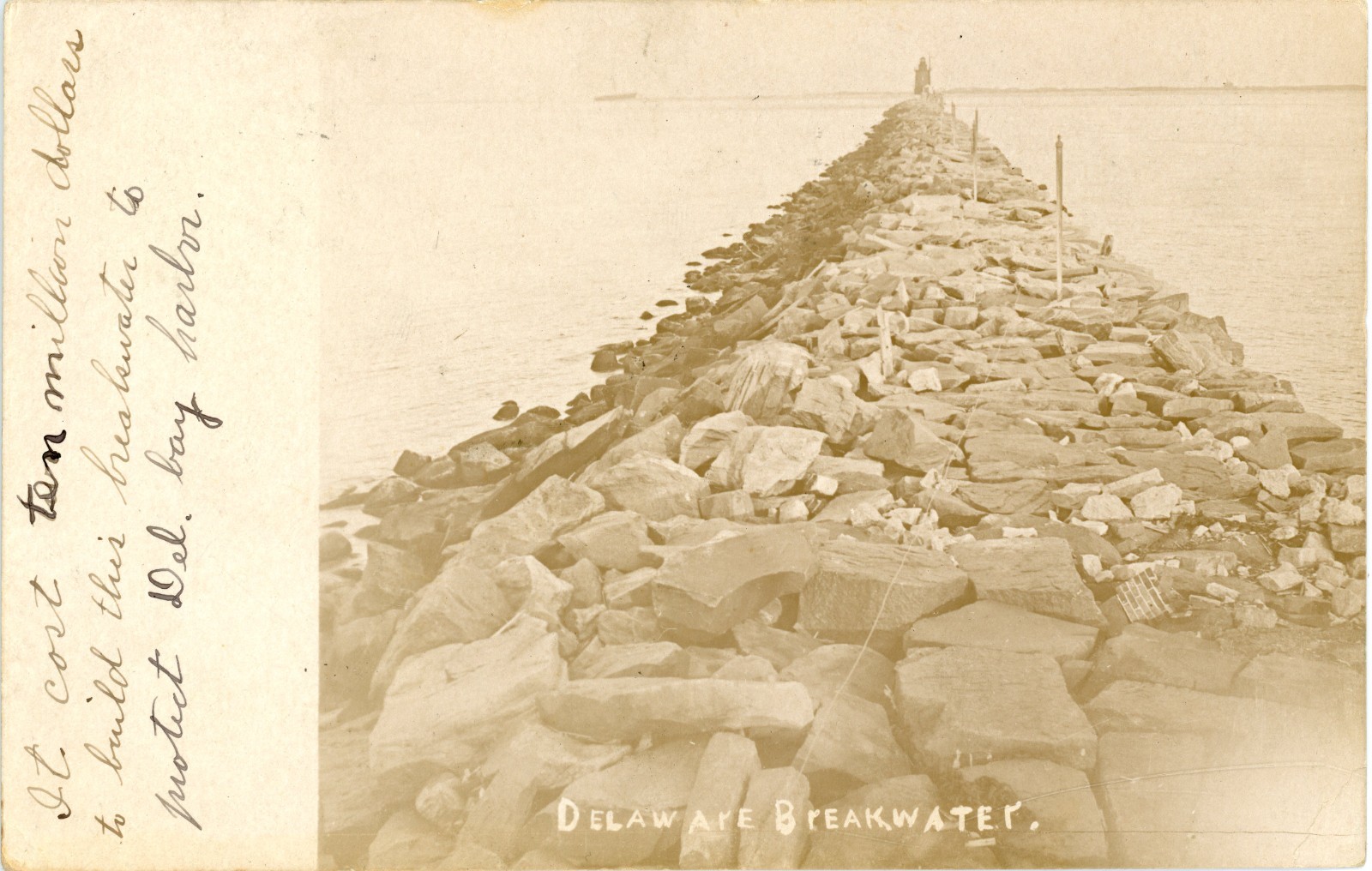
The Delaware Breakwater was a monumental civil engineering project built to create a sheltered harbor of refuge in Delaware Bay. The handwritten note on the postcard estimating "ten million dollars" captures something priceless: awe at infrastructure, written in ordinary ink.
Seen alongside the resort postcards, the breakwater view reminds us that this coastline served two worlds at once:
- vacationers on the sand,
- and commercial navigation offshore.
That "harbor of refuge" concept is still part of the official story today. The U.S. Army Corps of Engineers describes the Harbor of Refuge complex off Cape Henlopen as a federally authorized navigation-protection project, with stone breakwaters built to provide safe shelter near the entrance to Delaware Bay, and notes the site is listed on the National Register of Historic Places.
So even in a postcard set focused on hotels and beach culture, this breakwater card belongs. It's part of the same early-1900s coastal identity: a place where nature is beautiful, storms are serious, and human engineering is always trying to keep up.
A final note: Postcards as time machines
Rehoboth's official history includes a blunt line for 1914: a storm destroyed the boardwalk, pier, and pavilions, and Surf Avenue was washed out. That kind of sentence is what makes earlier postcards feel so valuable. They hold the mood of a place before the next big reshaping.
In this 1905–1908 pocket of time, Rehoboth appears confident—already crowded, already built up, already sure it belongs on the map of American summer. And yet, every image also carries the coastal truth the town itself acknowledges: storms will come, shorelines will shift, structures will be rebuilt, and the "same" boardwalk will never be exactly the same twice.
That's why vintage postcards work so well as local history. They don't just show a view. They preserve a version of the town that only existed for a moment—then slipped into memory, ink, and the mail.
Sources
Explore Our Rehoboth Beach Collection
View all 8 Rehoboth Beach postcards from 1905-1908 in our archive: