Aurora Missouri Frisco Railroad Depot Train In Station Real Photo Postcard
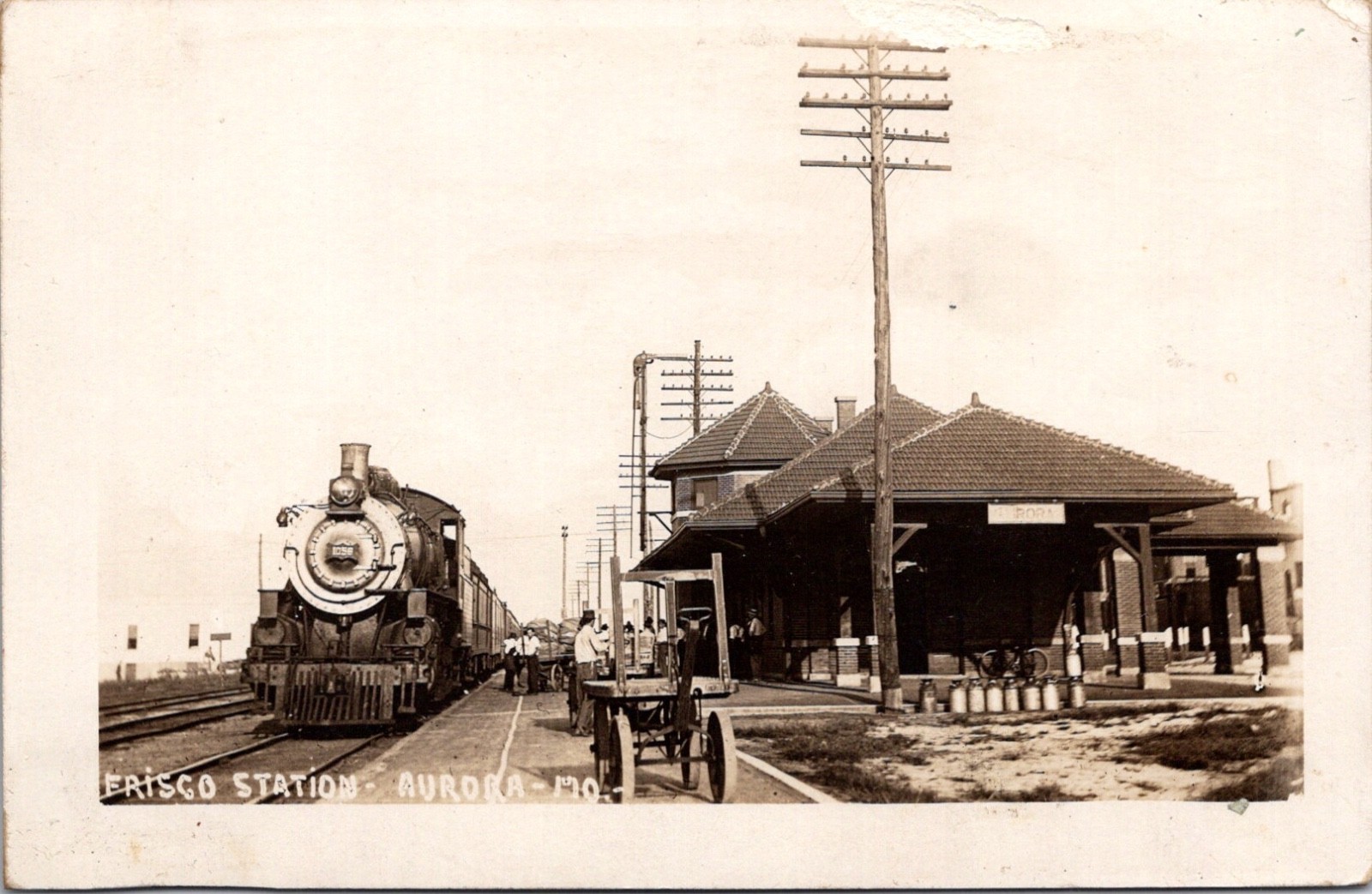
The St. Louis–San Francisco Railway, commonly known as "Frisco," played a vital role in connecting towns like Aurora, Missouri, a community that flourished in the late 19th and early 20th centuries due to its significant lead and zinc mining industry. The Frisco station in Aurora served as a crucial hub for both passenger travel and freight, facilitating the transportation of mined ore, agricultural products, and general commerce, which were essential for the town's economic prosperity. The station's architecture, with its distinctive tiled roof and broad overhangs, is characteristic of regional railway depots from the early 20th century.
This scene encapsulates the critical function of railroads and steam locomotives during a transformative period in American history, acting as the primary arteries for economic development and social connection. The milk cans visible on the platform highlight the station's role in supporting local agriculture by linking rural producers to wider markets, while the telegraph poles paralleling the tracks emphasize the railway's dual significance as both a transportation and communication corridor. This imagery vividly portrays the daily importance of the railway to a burgeoning Midwestern town.
This scene encapsulates the critical function of railroads and steam locomotives during a transformative period in American history, acting as the primary arteries for economic development and social connection. The milk cans visible on the platform highlight the station's role in supporting local agriculture by linking rural producers to wider markets, while the telegraph poles paralleling the tracks emphasize the railway's dual significance as both a transportation and communication corridor. This imagery vividly portrays the daily importance of the railway to a burgeoning Midwestern town.