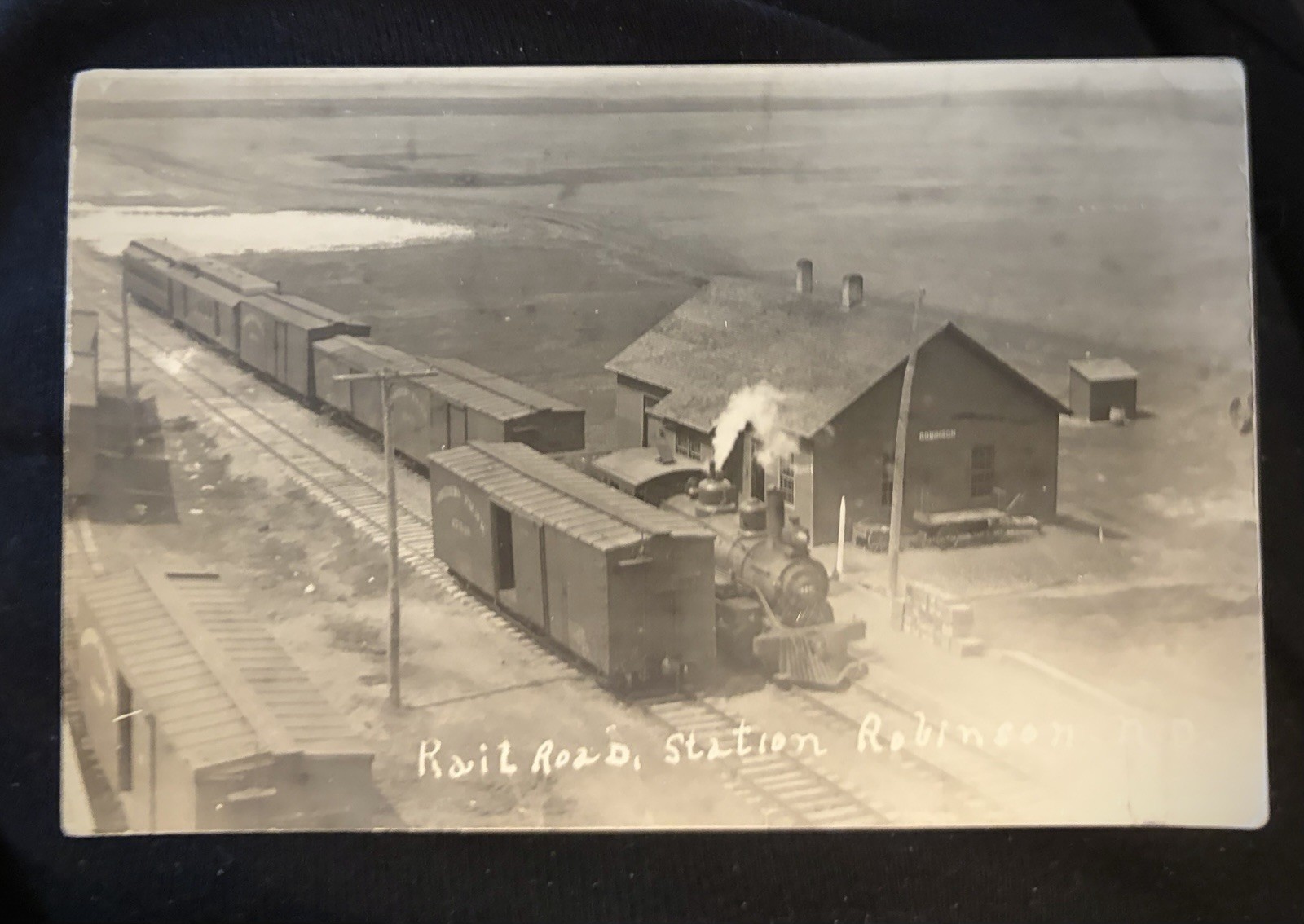
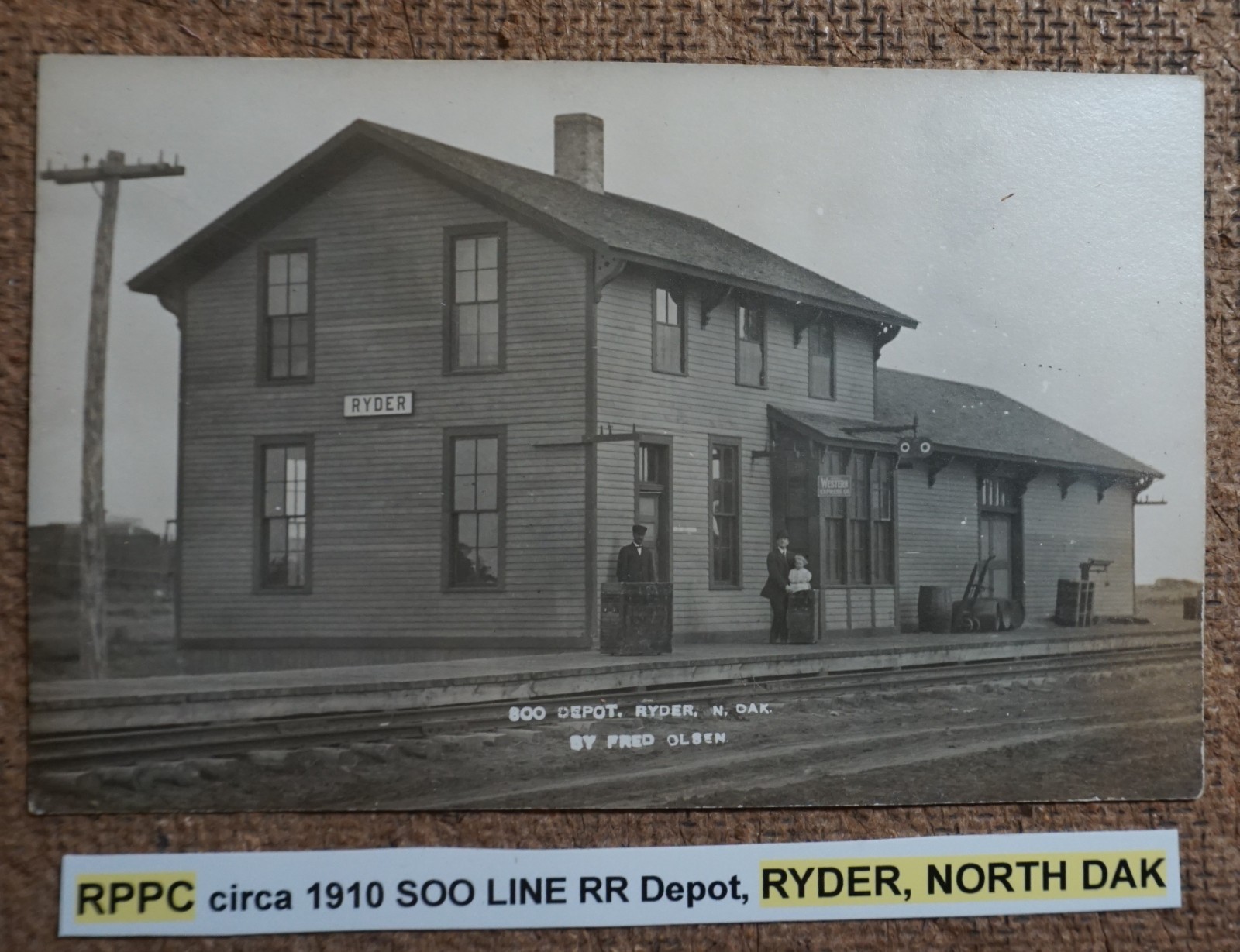
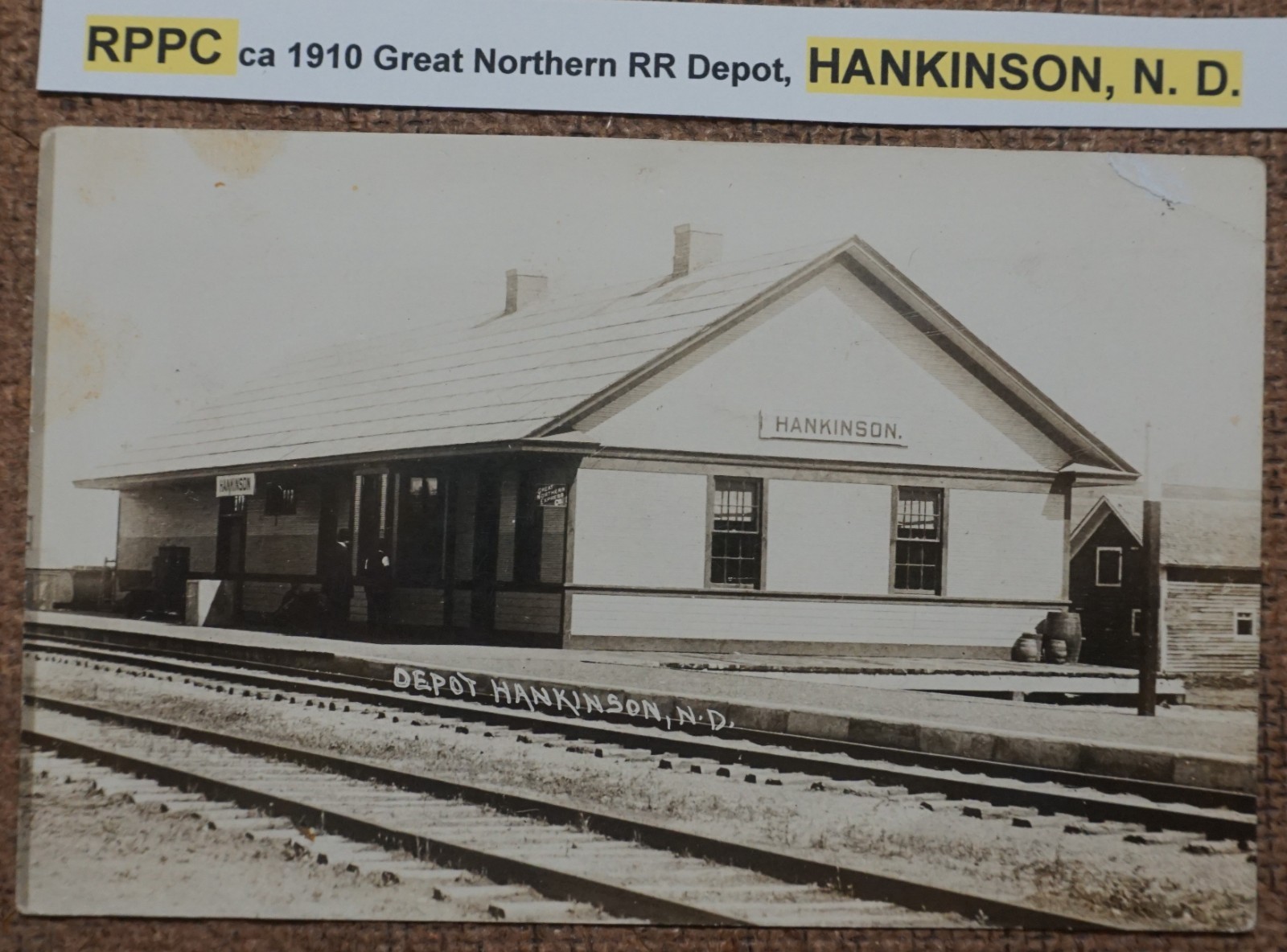
Brinsmade North Dakota Railroad Station Depot Bowman Elevator Real Photo Postcard
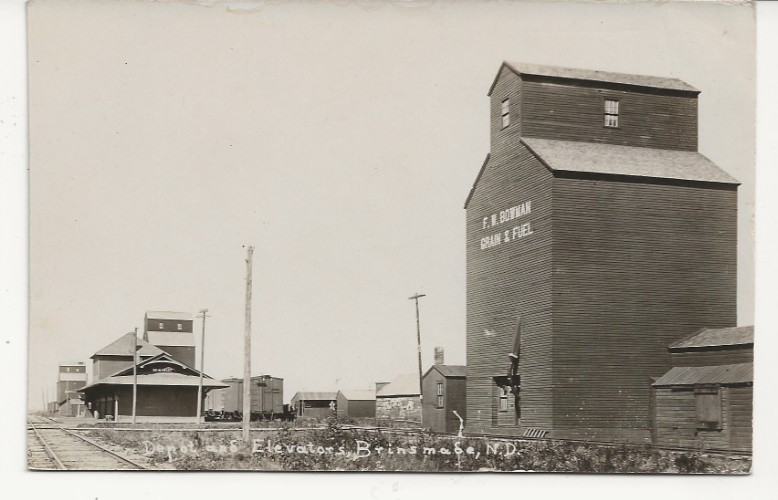
Grain elevators and railroad depots were indispensable structures in the development of countless small towns across the American Great Plains during the late 19th and early 20th centuries. The depot served as the vital hub for passenger travel, mail delivery, and the shipping of general freight, directly connecting rural communities like Brinsmade, North Dakota, to broader national networks. Adjacent grain elevators, such as the prominent F.W. Bowman facility, symbolized the agricultural prosperity of the surrounding area, providing essential storage and shipping points for harvested crops.
These combined facilities underscore North Dakota's economic reliance on agriculture, particularly wheat farming, which boomed with the expansion of railroads. Towns often grew around these railside complexes, which allowed farmers to efficiently transport their produce to market and receive supplies, fueling local economies. Such scenes were emblematic of a period where rail infrastructure and efficient grain handling were critical drivers of regional growth and settlement across the prairie states.
These combined facilities underscore North Dakota's economic reliance on agriculture, particularly wheat farming, which boomed with the expansion of railroads. Towns often grew around these railside complexes, which allowed farmers to efficiently transport their produce to market and receive supplies, fueling local economies. Such scenes were emblematic of a period where rail infrastructure and efficient grain handling were critical drivers of regional growth and settlement across the prairie states.