DeKalb Illinois Masure & Leonard Electric Trolley Main Street Real Photo Postcard
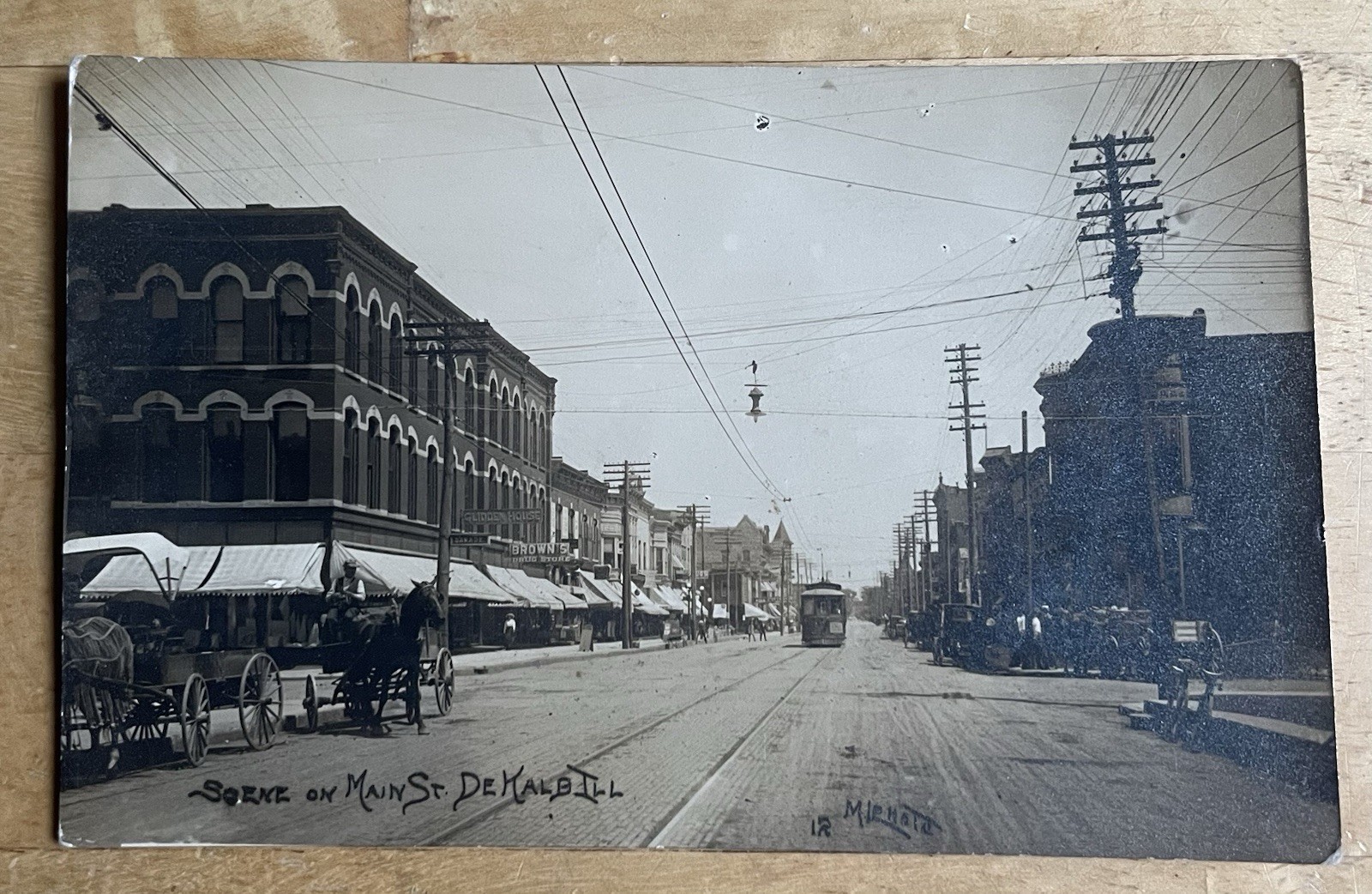
Main Street in DeKalb, Illinois, during the early 20th century, served as the vibrant commercial and social heart of the burgeoning Midwestern city. The architecture, characterized by multi-story brick buildings with prominent awnings like the Glidden House and Brown's Drug Store, reflects the typical commercial development of American towns in this period. The dynamic mix of transportation—featuring horse-drawn carriages, early automobiles, and a streetcar—distinctly places the scene in a transitional era, likely between 1905 and 1920.
DeKalb's historical significance during this era was closely tied to its agricultural innovations, most notably the development and patenting of barbed wire by Joseph F. Glidden and Jacob Haish in the 1870s, which revolutionized fencing and agriculture. This street scene captures the prosperity and technological advancements defining American progress, where evolving infrastructure like electrical poles and streetcar lines facilitated a growing economy and an increasingly mobile population in a developing industrial and agricultural center.
DeKalb's historical significance during this era was closely tied to its agricultural innovations, most notably the development and patenting of barbed wire by Joseph F. Glidden and Jacob Haish in the 1870s, which revolutionized fencing and agriculture. This street scene captures the prosperity and technological advancements defining American progress, where evolving infrastructure like electrical poles and streetcar lines facilitated a growing economy and an increasingly mobile population in a developing industrial and agricultural center.