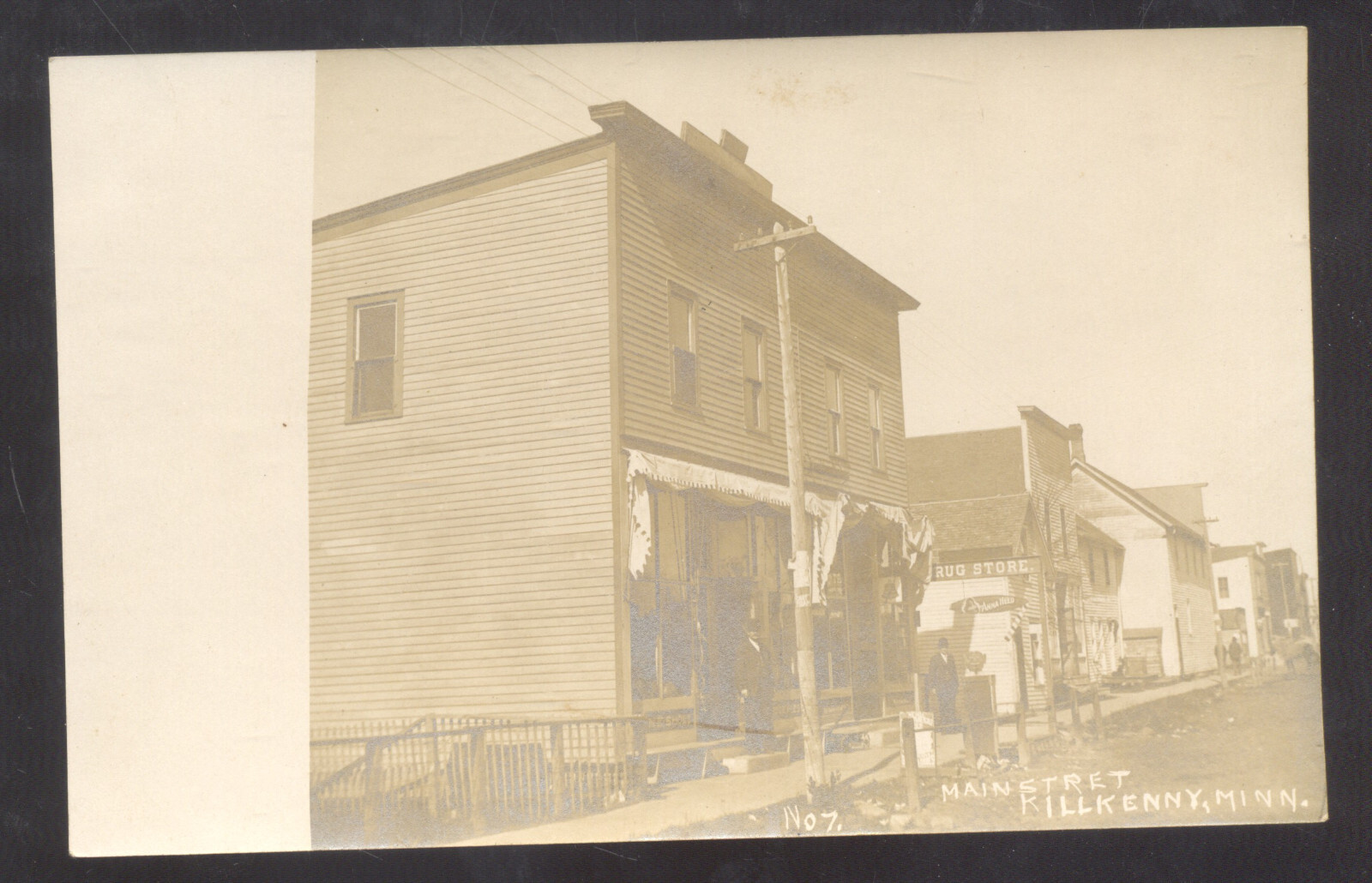
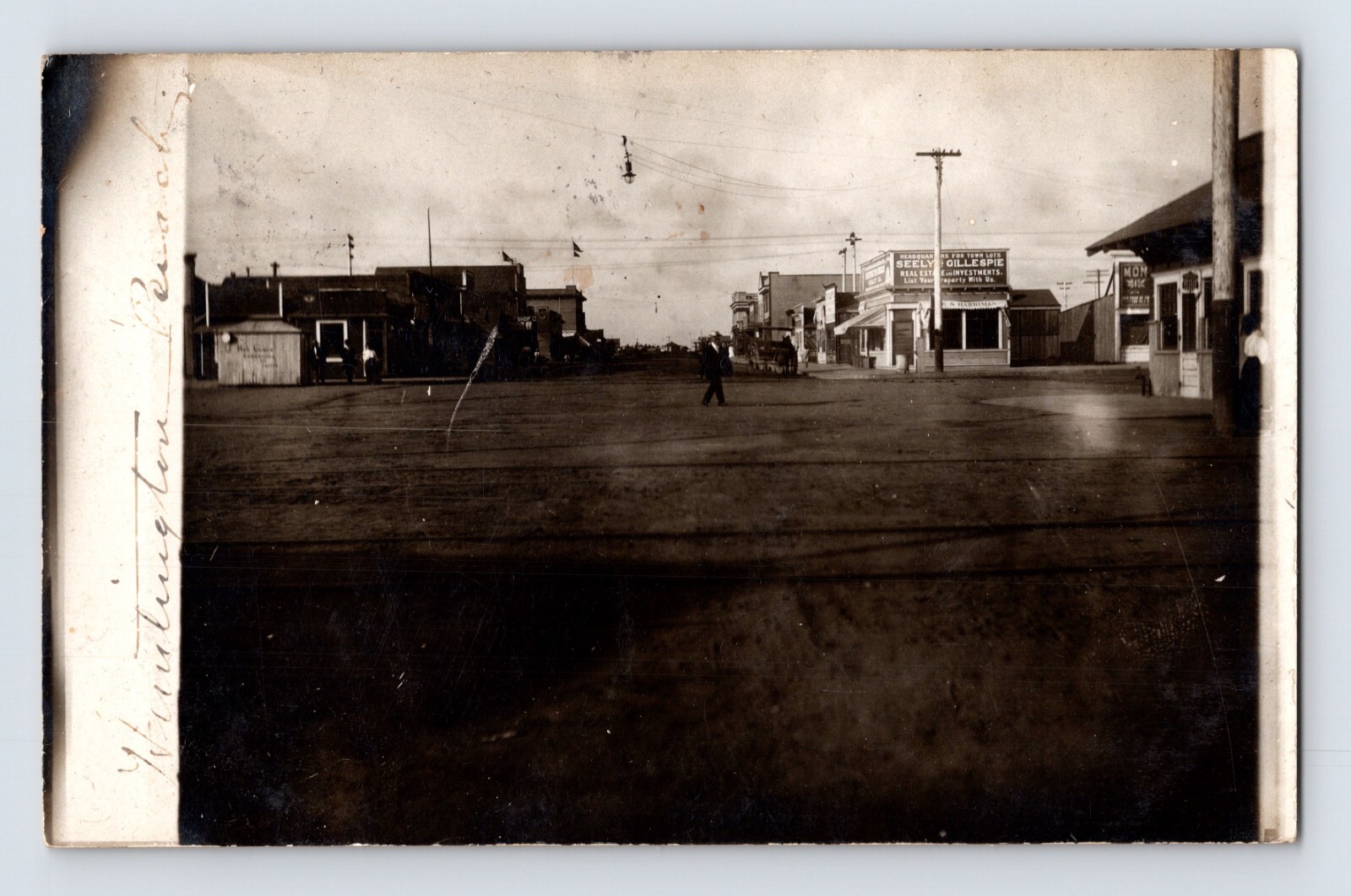
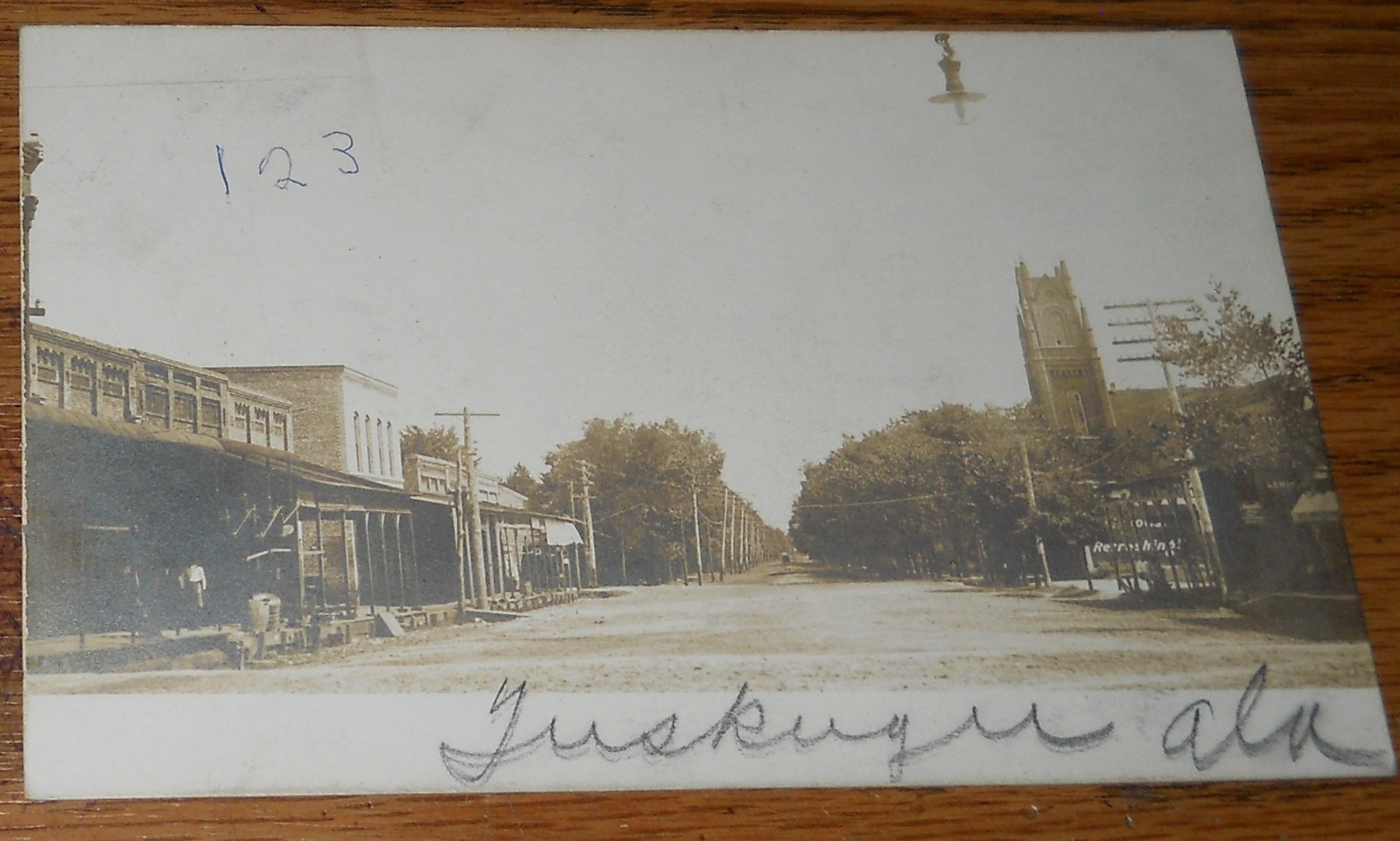
East Auburn California Downtown Aerial Pre-1907 Real Photo Postcard

Auburn, California, originally established as a mining camp in 1849 during the Gold Rush, quickly grew into a vital supply and transportation hub in the Sierra Nevada foothills. The designation "East Auburn" likely denotes a specific residential or commercial district that developed as the town expanded beyond its initial settlement. This street scene, characterized by its mix of wood-frame architecture, unpaved road, and horse-drawn buggies alongside nascent power lines, places the postcard firmly in the early 20th century, a period of significant transition and development for many American towns.
During this era, communities like Auburn were solidifying their infrastructure and economy, moving from their Gold Rush origins to become established agricultural and service centers. The visible commercial buildings suggest a thriving local economy, supporting the surrounding lumber, fruit, and remaining mining industries. Such scenes provide a valuable glimpse into daily life and urban planning in a growing California town before the widespread dominance of the automobile transformed American streetscapes.
During this era, communities like Auburn were solidifying their infrastructure and economy, moving from their Gold Rush origins to become established agricultural and service centers. The visible commercial buildings suggest a thriving local economy, supporting the surrounding lumber, fruit, and remaining mining industries. Such scenes provide a valuable glimpse into daily life and urban planning in a growing California town before the widespread dominance of the automobile transformed American streetscapes.