France Aviation Wright Flyer Airplane Experimental Camp Real Photo Postcard
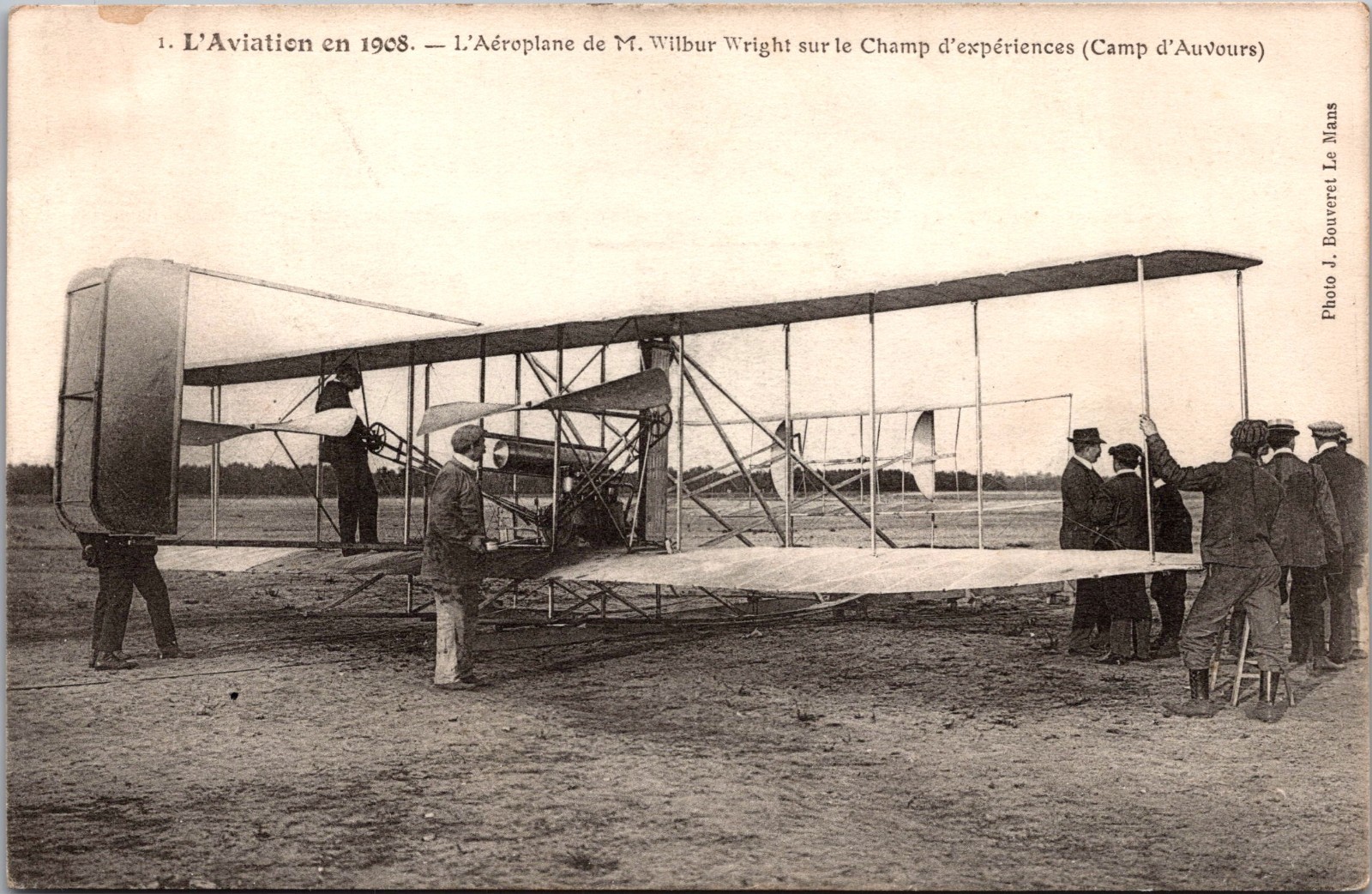
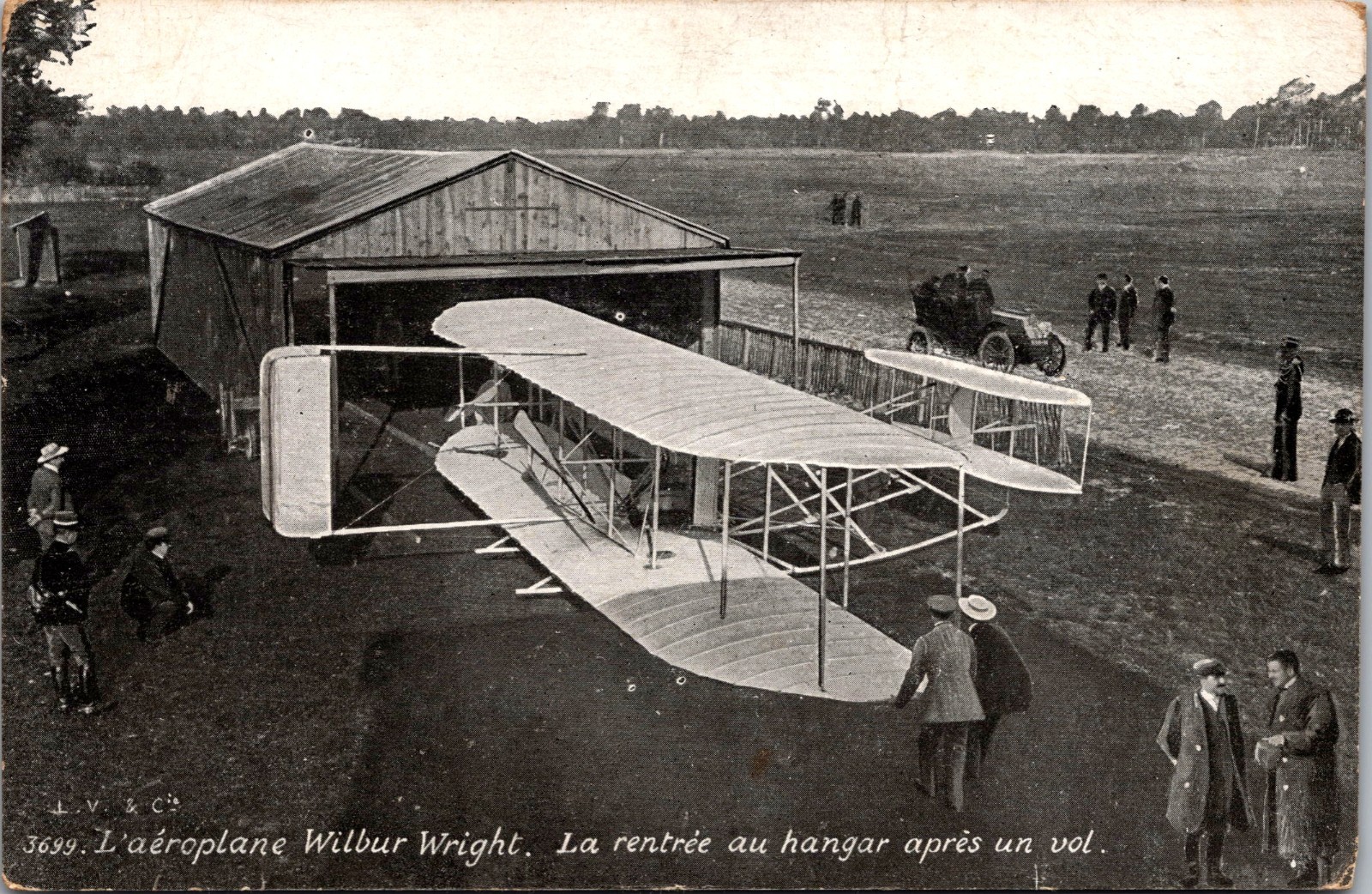
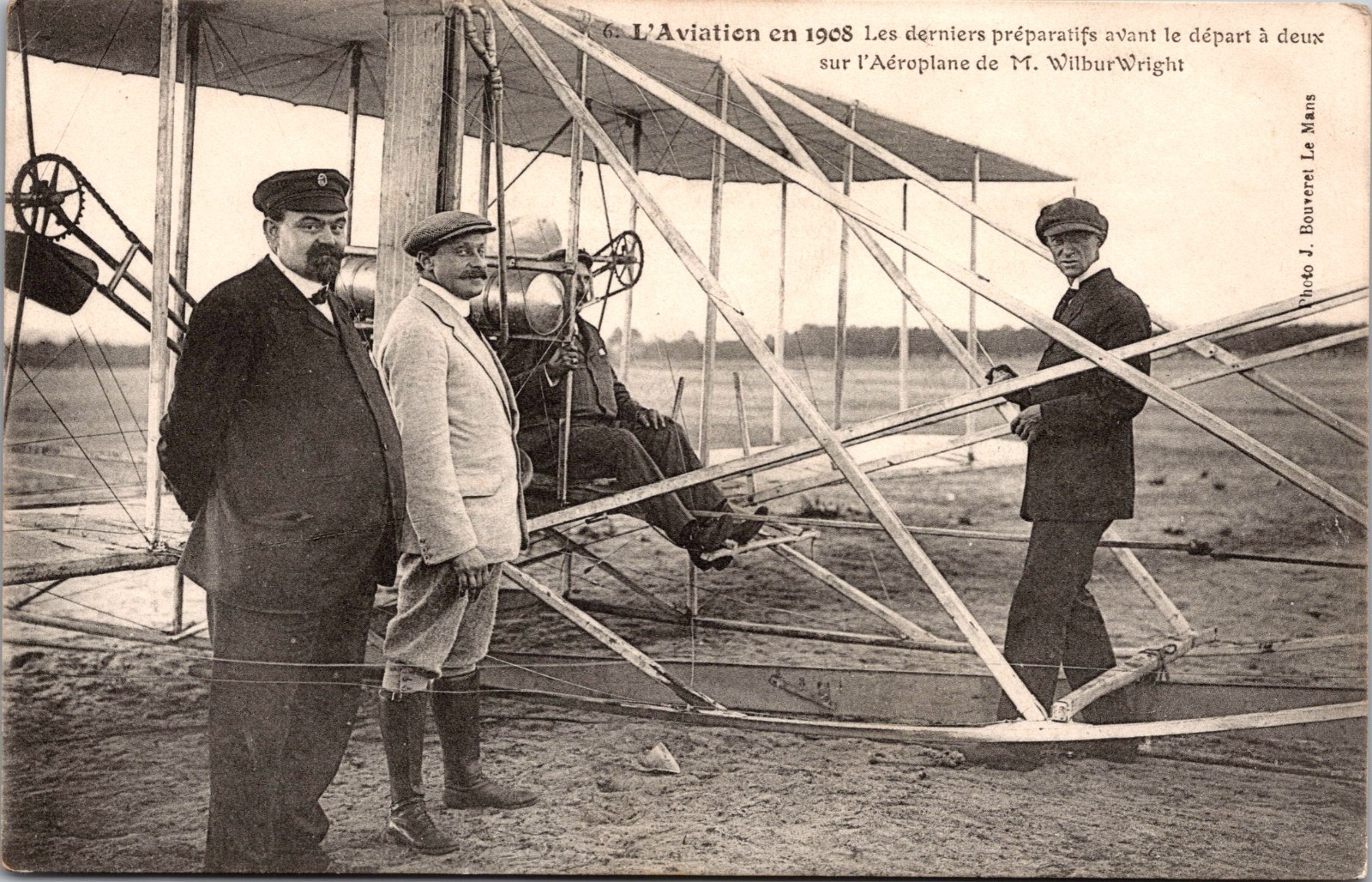
Wilbur Wright's extensive demonstrations in France during 1908, primarily at Camp d'Auvours near Le Mans, marked a turning point for European aviation. Flying the Wright Model A Flyer, a biplane featuring a forward elevator and twin pusher propellers, Wright performed numerous public flights between August and December, showcasing the aircraft's stability, maneuverability, and endurance, which far exceeded contemporary European designs. These exhibitions served to validate the Wright brothers' claims of controlled flight, which had previously been met with skepticism.
The 1908 demonstrations at Camp d'Auvours profoundly influenced the development of aeronautics in Europe, inspiring a generation of aviators and engineers. Wright set new records for flight duration and altitude, fundamentally altering public and scientific perception of powered flight and its potential. This period solidified the Wright Flyer's historical significance, paving the way for wider acceptance, investment, and rapid advancement in aviation technology across the continent.
The 1908 demonstrations at Camp d'Auvours profoundly influenced the development of aeronautics in Europe, inspiring a generation of aviators and engineers. Wright set new records for flight duration and altitude, fundamentally altering public and scientific perception of powered flight and its potential. This period solidified the Wright Flyer's historical significance, paving the way for wider acceptance, investment, and rapid advancement in aviation technology across the continent.