French Wrestlers In Leopardskin Briefs Real Photo Postcard
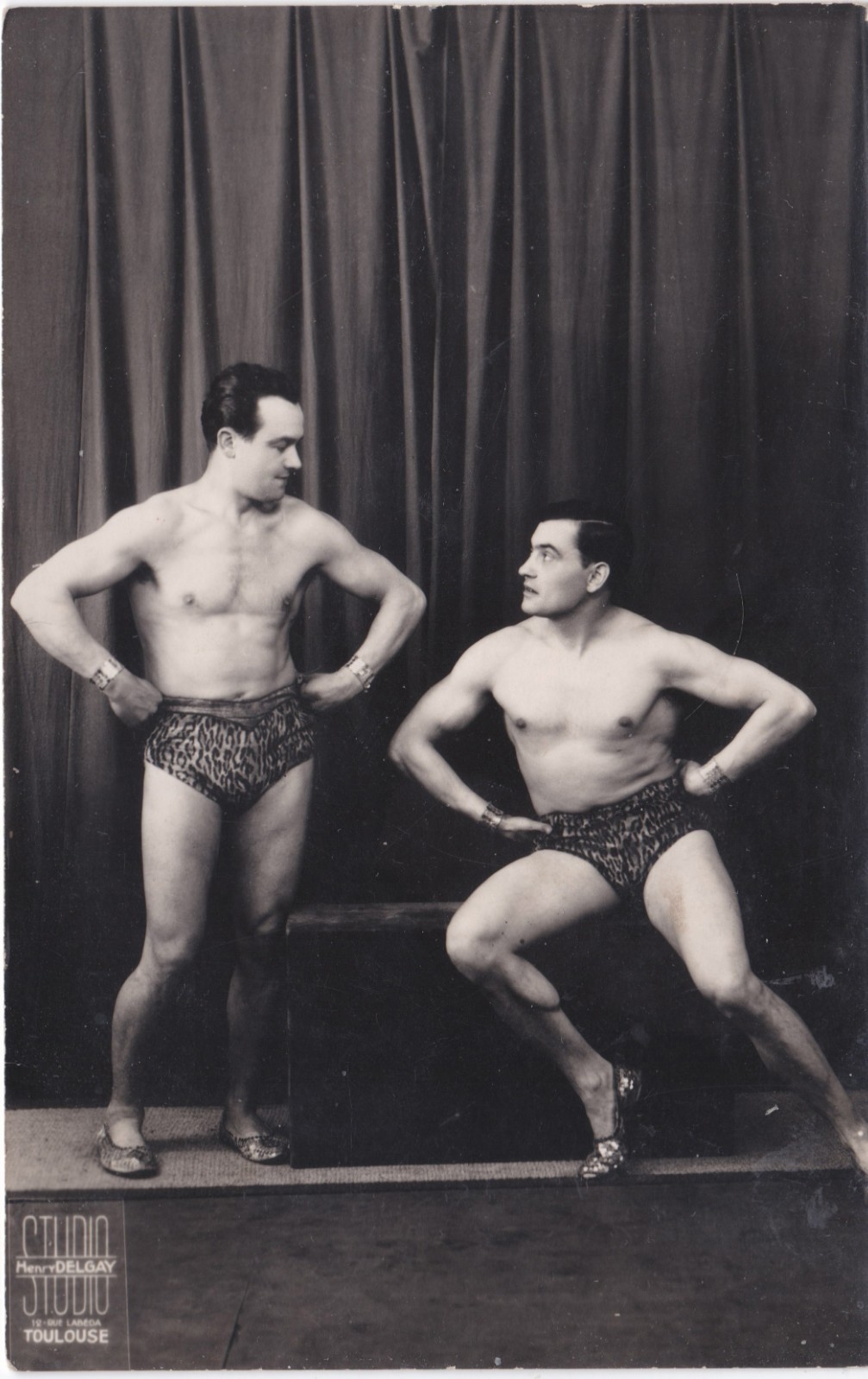
The era depicted in this studio portrait marks a significant period for physique culture and performance arts in Europe, likely spanning the 1920s to 1940s. Strongmen, acrobats, and variety performers were prominent figures in circuses, music halls, and vaudeville shows, showcasing feats of strength and athleticism. Studios like Henry Delgay's in Toulouse, France, catered to these artists, providing high-quality photographic portraits that served as essential promotional materials for their acts. The stylized poses, costumes such as leopard print briefs, and stage-like setting were carefully chosen to highlight muscularity and evoke a sense of exoticism and power.
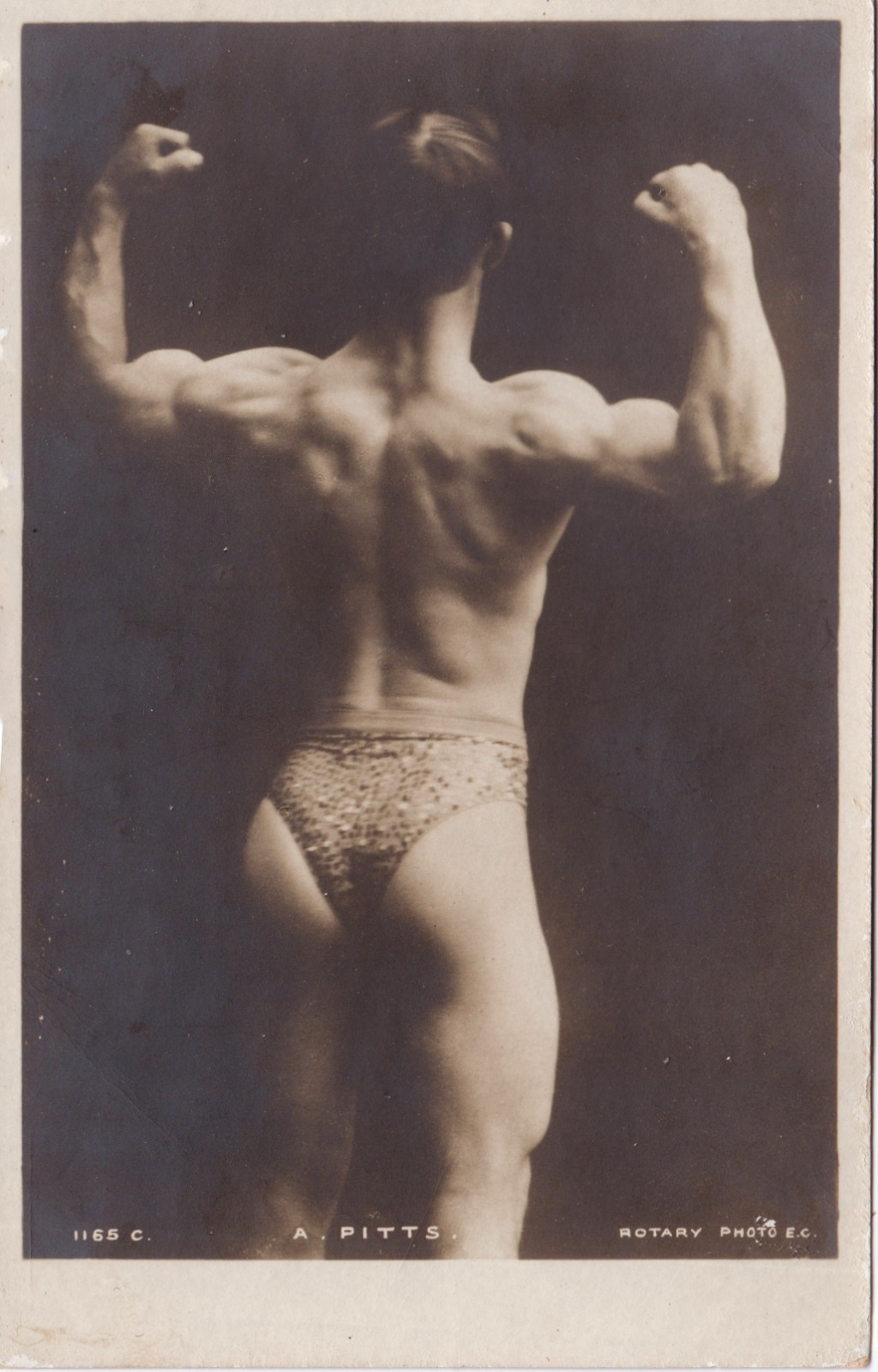
These photographs were crucial for publicity, often distributed as postcards to advertise upcoming performances or to satisfy an audience's fascination with the physically impressive. Beyond mere promotion, they reflect a broader cultural shift towards appreciating and celebrating the male form and physical prowess. This period saw a rise in fitness and bodybuilding as popular pursuits, influencing ideals of masculinity and contributing to the visual language of physical culture that would continue to evolve throughout the 20th century.
These photographs were crucial for publicity, often distributed as postcards to advertise upcoming performances or to satisfy an audience's fascination with the physically impressive. Beyond mere promotion, they reflect a broader cultural shift towards appreciating and celebrating the male form and physical prowess. This period saw a rise in fitness and bodybuilding as popular pursuits, influencing ideals of masculinity and contributing to the visual language of physical culture that would continue to evolve throughout the 20th century.