Hawaii The Surf Rider Woman With Huge Wooden Surfboard 1918 Real Photo Postcard
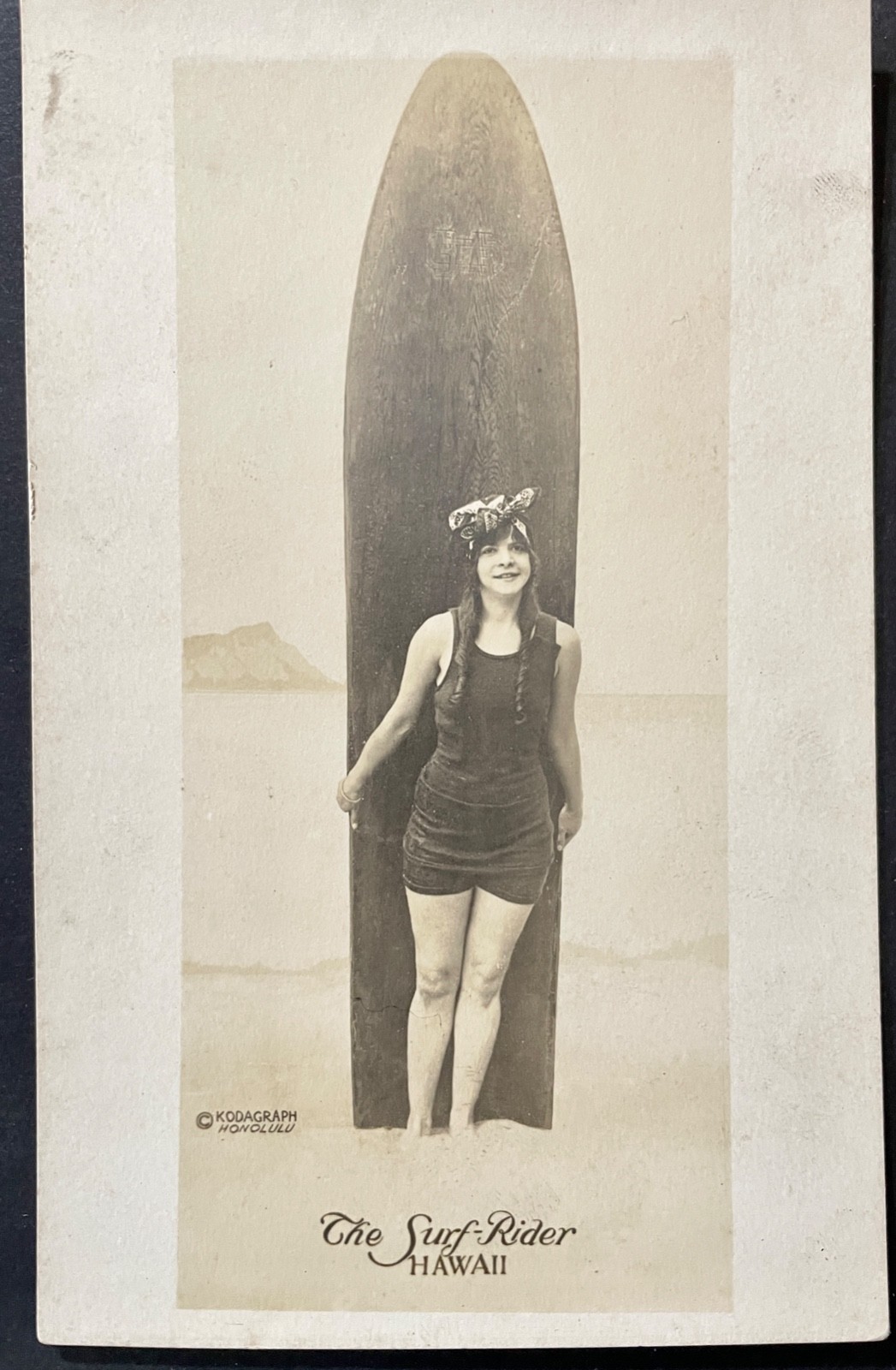
Surfing, an ancient sport of Hawaiian aliʻi (royalty), experienced a significant resurgence in the early 20th century, particularly around Waikiki Beach in Honolulu. This postcard likely dates from the 1910s or 1920s, a period when the sport was being revitalized and introduced to a broader international audience, largely through figures like Duke Kahanamoku. The large, heavy wooden surfboards depicted were characteristic of traditional Hawaiian designs, preceding the lighter, more maneuverable boards of later decades.
This era marked the emergence of Hawaii as a popular tourist destination, driven by its unique culture and appealing climate following its annexation by the United States. The postcard, produced by "Kodagraph Honolulu," reflects the commercialization of Hawaiian imagery and activities like surfing. The bathing attire worn by the "Surf-Rider" is typical of early 20th-century swimwear, while the visible Diamond Head (Lēʻahi) in the background firmly situates the scene at the iconic Waikiki coastline, then a prime location for surf culture and tourism.
This era marked the emergence of Hawaii as a popular tourist destination, driven by its unique culture and appealing climate following its annexation by the United States. The postcard, produced by "Kodagraph Honolulu," reflects the commercialization of Hawaiian imagery and activities like surfing. The bathing attire worn by the "Surf-Rider" is typical of early 20th-century swimwear, while the visible Diamond Head (Lēʻahi) in the background firmly situates the scene at the iconic Waikiki coastline, then a prime location for surf culture and tourism.