Hilton Manitoba Early Town View Bates Fairbanks & Morse Blacksmith Real Photo Postcard
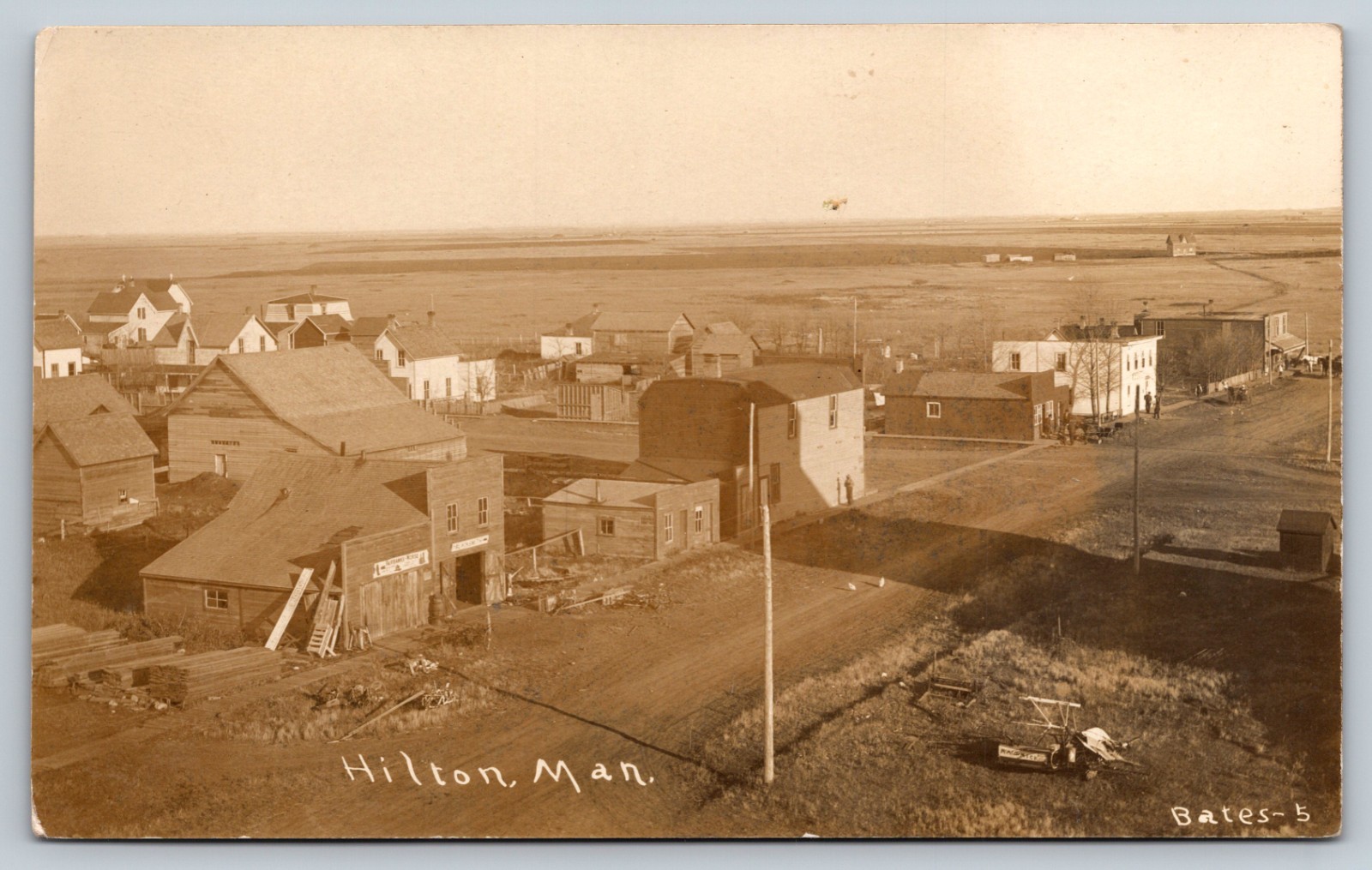
Hilton, Manitoba, emerged as a small agricultural settlement on the Canadian prairies, likely in the late 19th or early 20th century, characterized by the establishment of railway lines that facilitated grain shipment and attracted settlers. This image, probably from the 1900s or 1910s, captures a typical prairie village during its foundational decades, featuring a collection of wooden commercial and residential buildings surrounded by vast, open farmland.
Such communities were integral to Manitoba's development, serving as vital service centers for surrounding farming populations. They provided essential goods, trade, and social hubs, reflecting the rapid expansion of agriculture across the Canadian West. The landscape visible beyond the village underscores the primary economic activity: farming, which shaped the architecture, infrastructure, and daily life of these burgeoning prairie towns.
Such communities were integral to Manitoba's development, serving as vital service centers for surrounding farming populations. They provided essential goods, trade, and social hubs, reflecting the rapid expansion of agriculture across the Canadian West. The landscape visible beyond the village underscores the primary economic activity: farming, which shaped the architecture, infrastructure, and daily life of these burgeoning prairie towns.