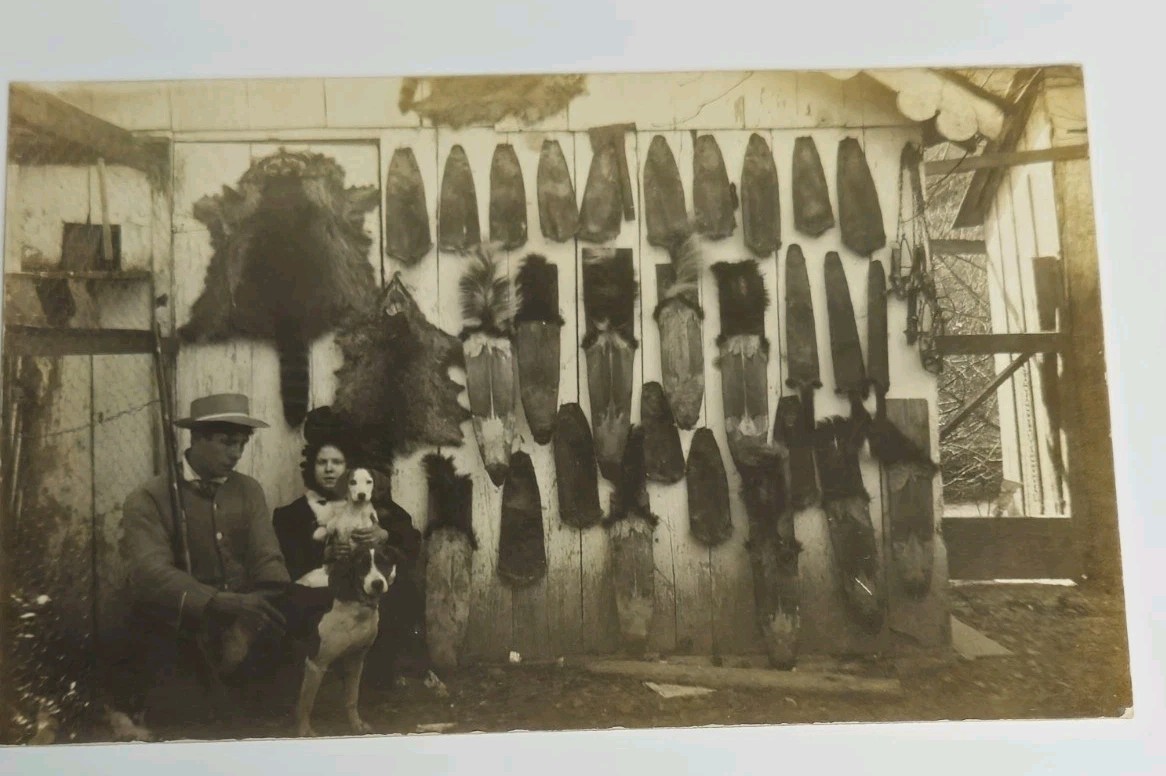
Hunting Skunks With Many Traps Real Photo Postcard
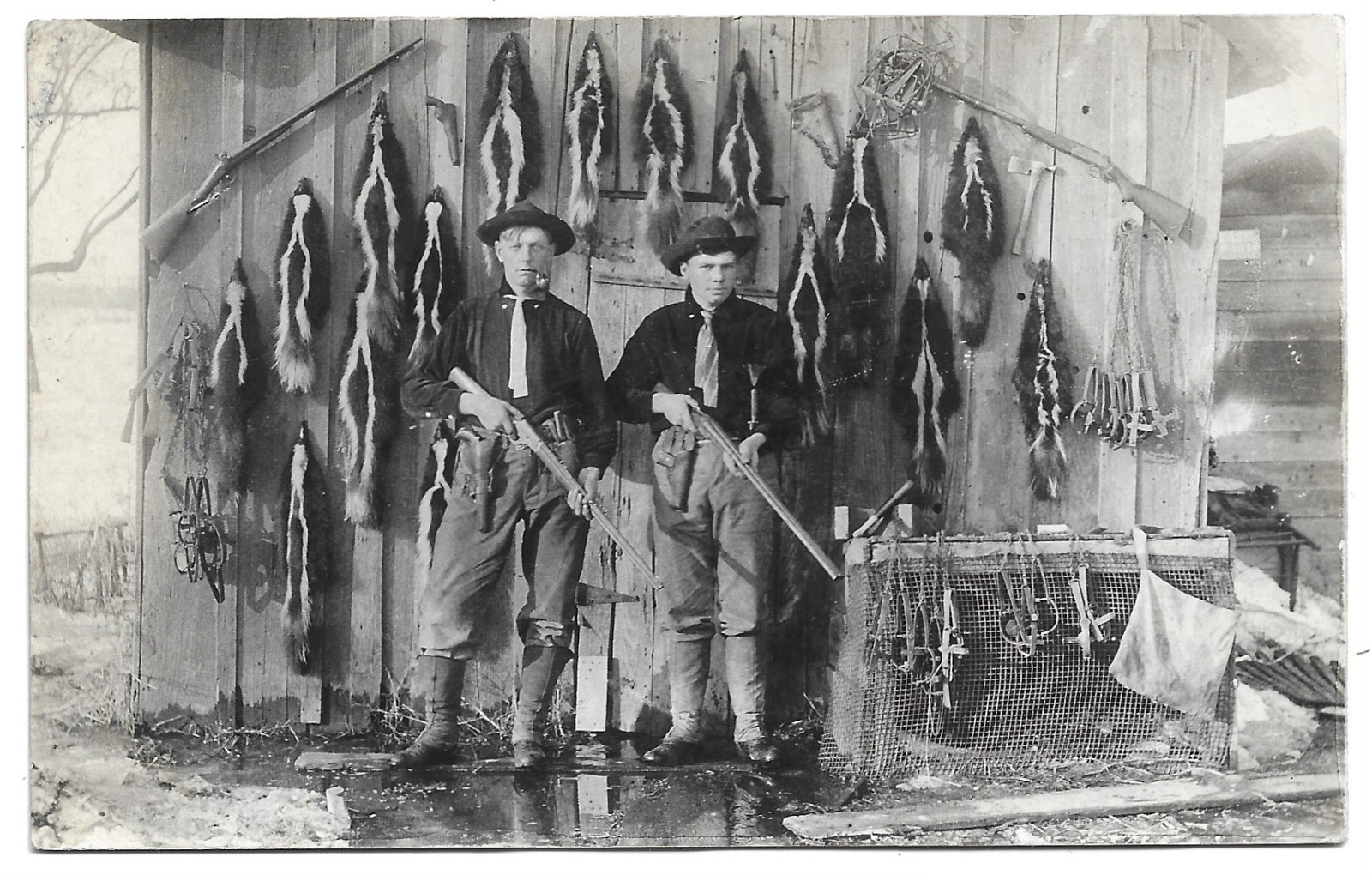
The image portrays two men, likely trappers or hunters, displaying a substantial catch of skunk pelts alongside their firearms and an array of traps. This scene represents a common facet of rural North American life in the late 19th and early 20th centuries, where fur trapping provided a crucial source of income and sustenance for individuals and families in burgeoning frontier and agricultural communities. The practical attire and equipment underscore the rugged, self-reliant nature of this profession.
The fur trade, particularly for species like skunks, was a significant economic enterprise during this period, with pelts often exported to urban centers or overseas markets for use in garments and accessories. Skunk fur, despite its origins, was frequently rebranded as more exotic sounding furs such as "Alaska Sable." This depiction offers a glimpse into the direct human interaction with natural resources that characterized the era, predating many modern conservation efforts and widespread industrialization.
The fur trade, particularly for species like skunks, was a significant economic enterprise during this period, with pelts often exported to urban centers or overseas markets for use in garments and accessories. Skunk fur, despite its origins, was frequently rebranded as more exotic sounding furs such as "Alaska Sable." This depiction offers a glimpse into the direct human interaction with natural resources that characterized the era, predating many modern conservation efforts and widespread industrialization.