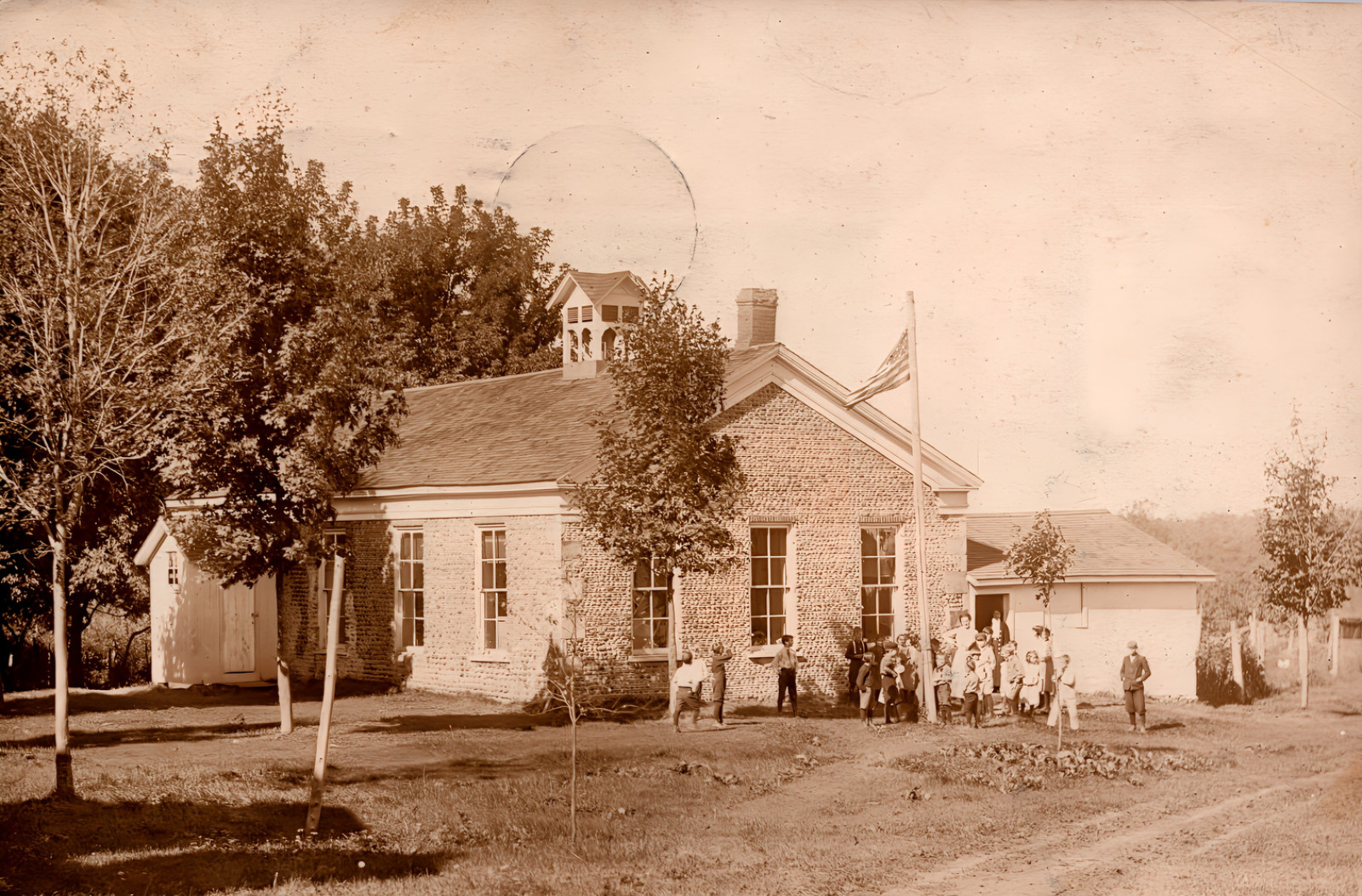
Lewiston Minnesota School House and Garden 1914 Real Photo Postcard

School gardens emerged as a significant educational movement in the United States during the late 19th and early 20th centuries, reflecting a broader Progressive Era emphasis on practical learning and civic responsibility. These initiatives aimed to connect children with nature, teach basic agricultural skills, foster an understanding of food production, and instill values such as diligence and cooperation. For communities like Lewiston, Minnesota, a predominantly agricultural region, school gardens served as a vital link between classroom instruction and the local economy and lifestyle.
The practice was particularly prevalent in rural and small-town settings, where hands-on experience in cultivation reinforced lessons in botany, arithmetic, and community engagement. The attire of the children and the architecture of the public school, featuring a prominent bell tower, are characteristic of the 1900s to 1920s, a period when school garden programs reached their peak. These gardens not only educated students but also contributed to local food supplies and promoted healthy habits, preparing a generation for an evolving agrarian society.
The practice was particularly prevalent in rural and small-town settings, where hands-on experience in cultivation reinforced lessons in botany, arithmetic, and community engagement. The attire of the children and the architecture of the public school, featuring a prominent bell tower, are characteristic of the 1900s to 1920s, a period when school garden programs reached their peak. These gardens not only educated students but also contributed to local food supplies and promoted healthy habits, preparing a generation for an evolving agrarian society.