Likely Washington Ezra Meeker Oregon Trail Monument Covered Wagon 1912 Real Photo Postcard

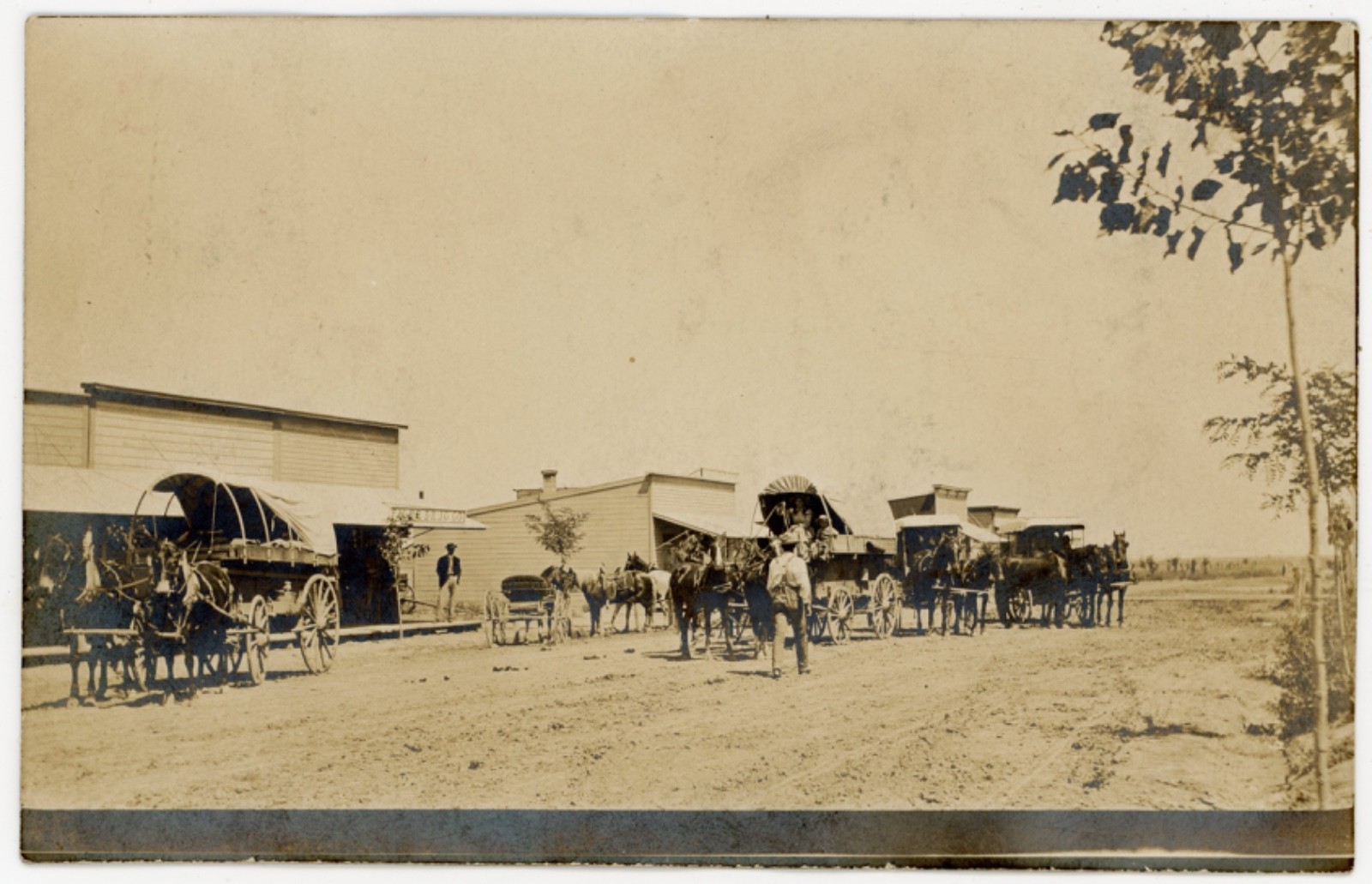
A covered wagon, while iconic of 19th-century pioneer migration, remained a practical mode of transport into the early 20th century for freight and specialized expeditions. The prominent canvas signage on this particular wagon indicates it was part of an "Expedition" likely associated with religious or evangelistic outreach, utilizing "Postal Card Views" as a means of fundraising. This mobile form of advocacy and promotion was effective in an era of expanding communication and continued settlement across the American frontier.
This scene is consistent with the early 1900s, a period marked by rapid development in the Western United States, with towns and infrastructure, as suggested by the background construction, continuously expanding. Such expeditions capitalized on the widespread popularity of postcards during their "Golden Age" (roughly 1900-1915), using them not only to share their message but also to generate essential revenue to sustain their travels and outreach efforts.
This scene is consistent with the early 1900s, a period marked by rapid development in the Western United States, with towns and infrastructure, as suggested by the background construction, continuously expanding. Such expeditions capitalized on the widespread popularity of postcards during their "Golden Age" (roughly 1900-1915), using them not only to share their message but also to generate essential revenue to sustain their travels and outreach efforts.