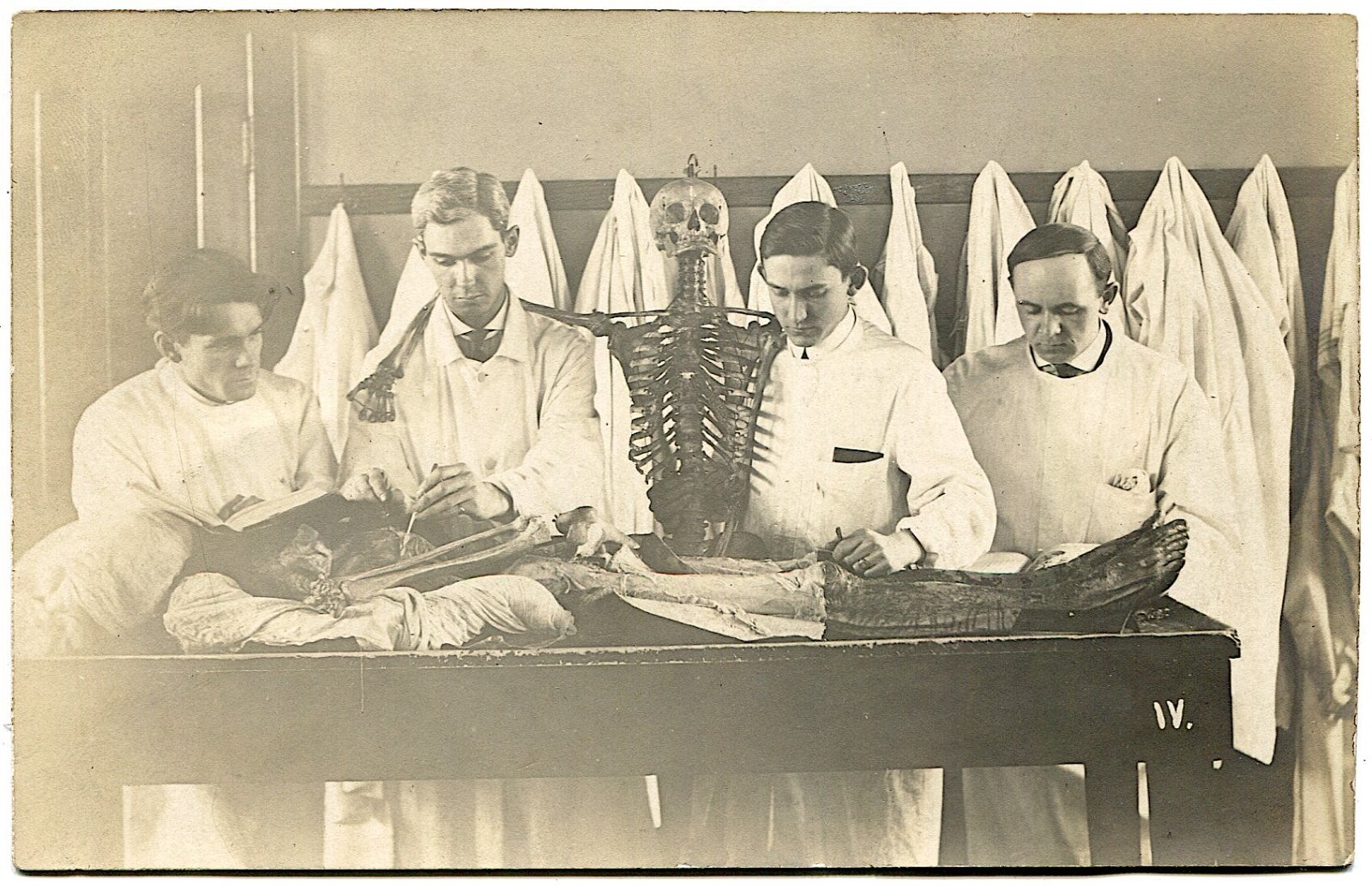
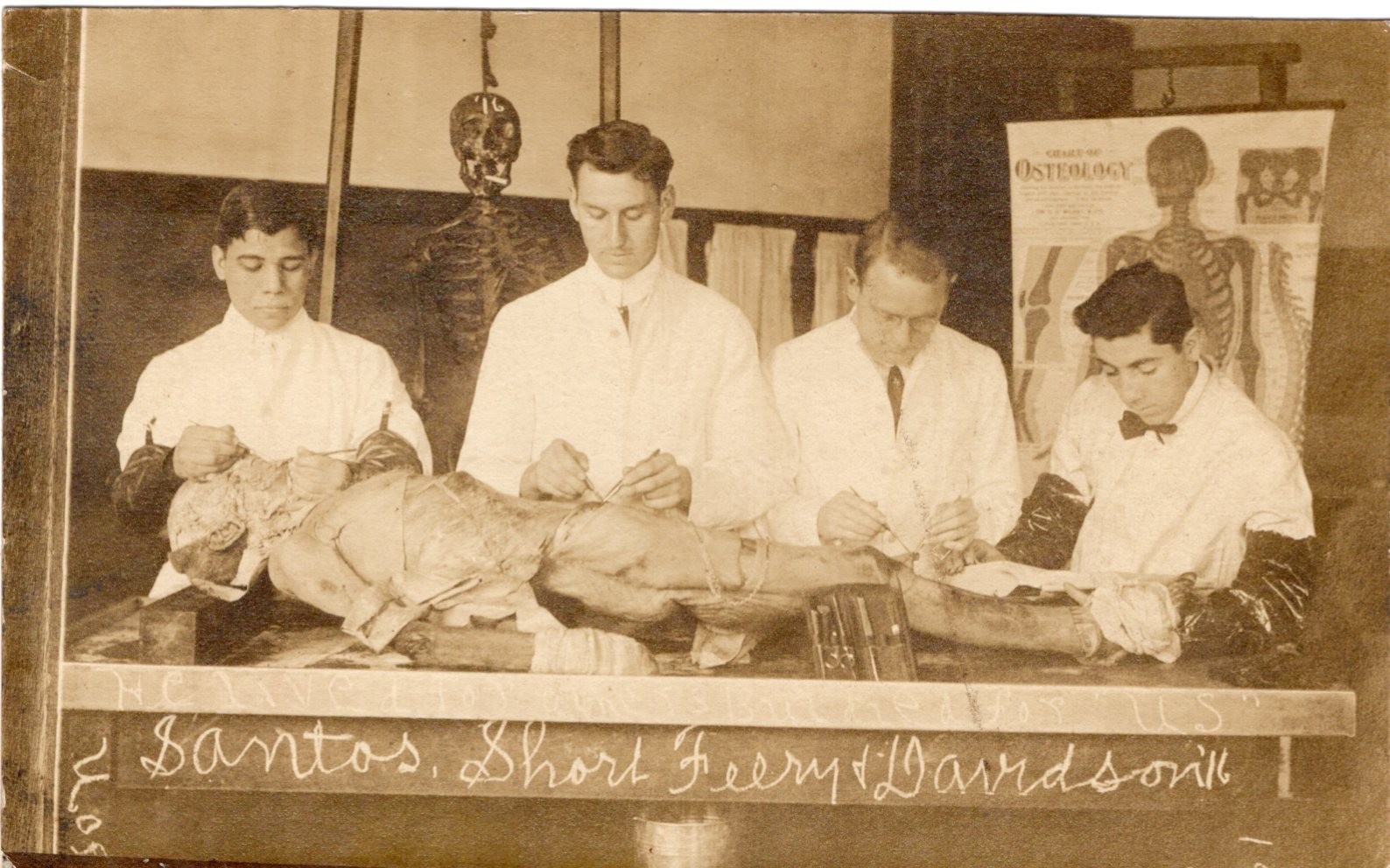
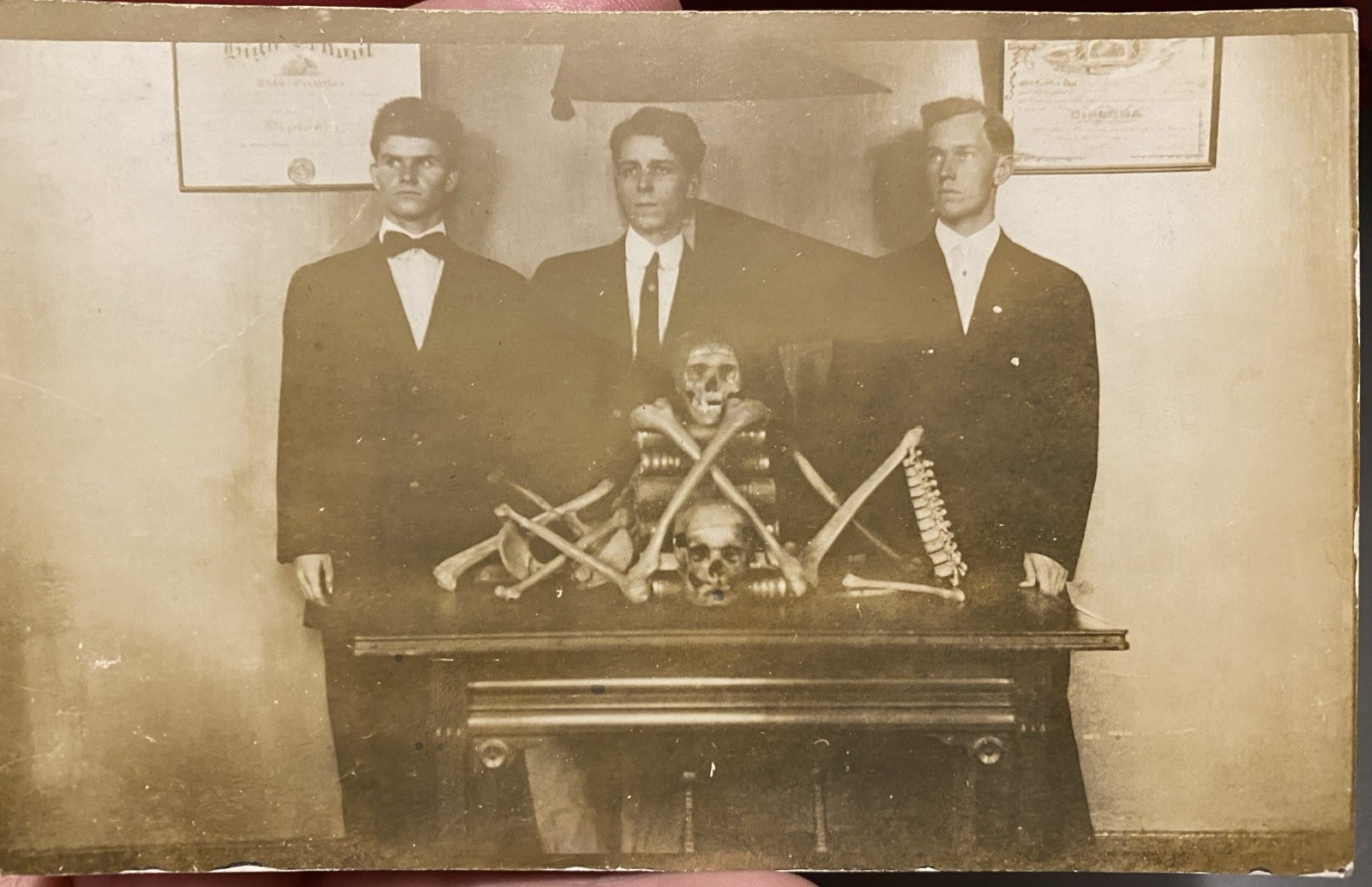
Medical Students with Cadaver and Skeleton 1910s Real Photo Postcard
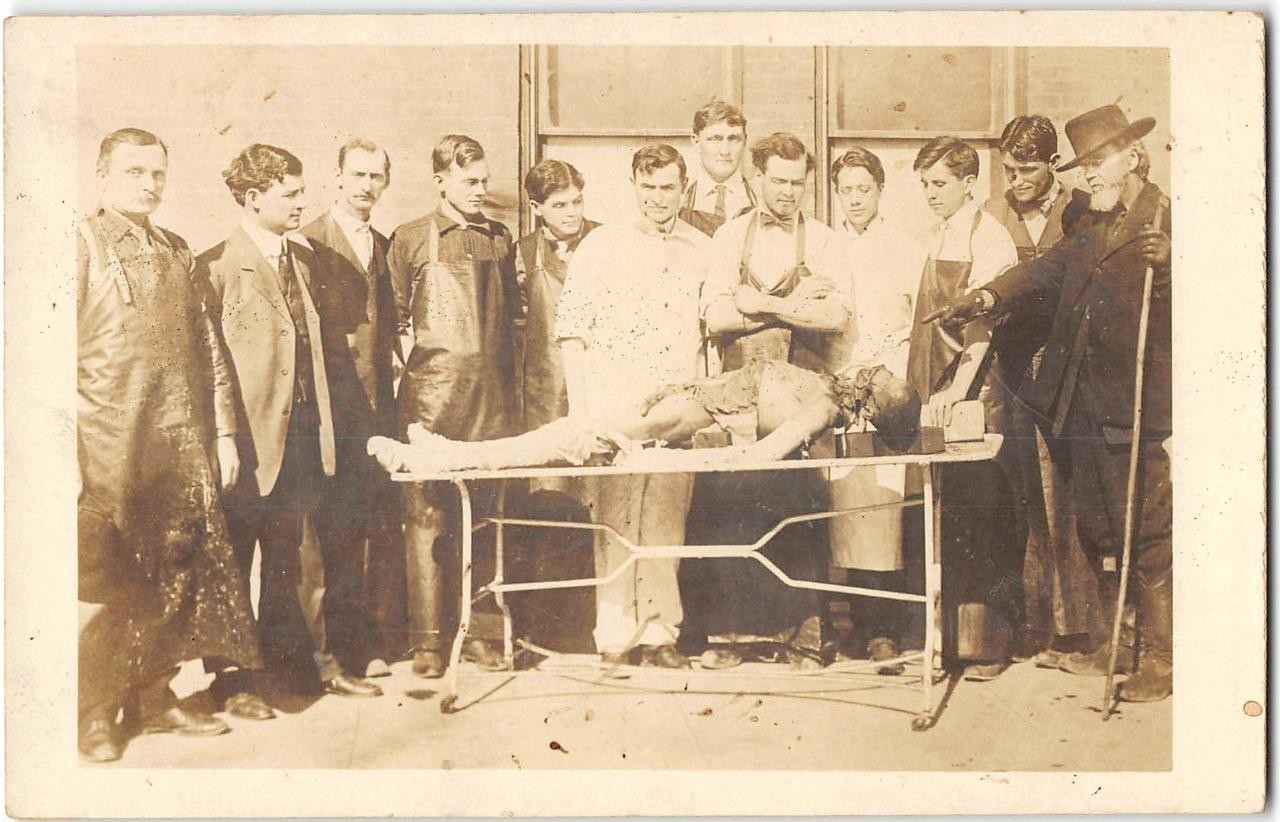
Medical dissection was a foundational component of anatomical study and medical education from the Renaissance well into the early 20th century. These anatomy classes provided aspiring medical professionals with indispensable direct observation and practical understanding of the human body, which was crucial for developing surgical skills and accurately diagnosing diseases. The practice represented a significant shift towards empirical, hands-on learning within medical training, moving away from purely theoretical instruction.
The late 19th and early 20th centuries marked a period of increasing professionalization in medicine, with formalized curricula emphasizing practical experience. The demand for cadavers for such intensive anatomical study led to the establishment of body donation programs and, historically, even illicit means of acquisition to meet educational needs. The detailed anatomical knowledge gained through these dissections directly contributed to profound advancements in surgical techniques, public health, and the overall understanding of human physiology, laying critical groundwork for modern medical science.
The late 19th and early 20th centuries marked a period of increasing professionalization in medicine, with formalized curricula emphasizing practical experience. The demand for cadavers for such intensive anatomical study led to the establishment of body donation programs and, historically, even illicit means of acquisition to meet educational needs. The detailed anatomical knowledge gained through these dissections directly contributed to profound advancements in surgical techniques, public health, and the overall understanding of human physiology, laying critical groundwork for modern medical science.