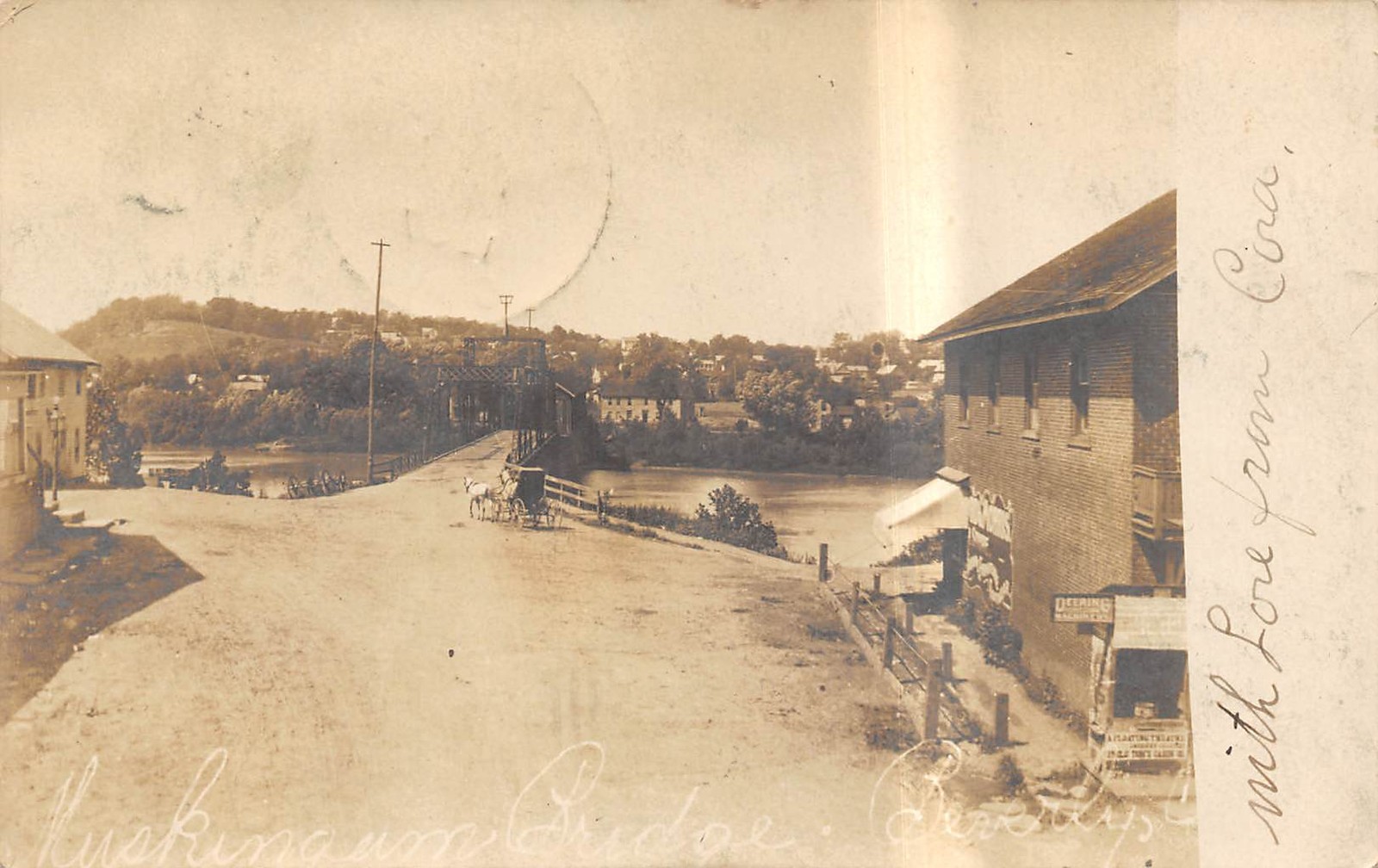
Nashport Ohio Indian Mound Adena Dillon Dam Defunct Real Photo Postcard

The term "Indian Mound" refers to ancient earthworks constructed by various Indigenous cultures across North America, notably prevalent in the Ohio River Valley. These mounds, created by peoples such as the Adena (1000 BCE – 200 CE) and Hopewell (200 BCE – 500 CE) cultures, served diverse purposes including burial sites, ceremonial platforms, and effigy figures. The designation "Indian Mound" was a common appellation for these prehistoric Native American structures, particularly in the late 19th and early 20th centuries when many such sites were first systematically documented and photographed.
The area around Nashport, Ohio, in Muskingum County, is part of a region historically rich in these significant prehistoric earthworks. These mounds represent advanced engineering and complex societal organization, providing invaluable archaeological evidence of ancient Native American lifeways, religious beliefs, and widespread trade networks that existed centuries before European arrival. Preserving these sites is crucial for understanding the deep history and cultural heritage of Indigenous peoples of North America.
The area around Nashport, Ohio, in Muskingum County, is part of a region historically rich in these significant prehistoric earthworks. These mounds represent advanced engineering and complex societal organization, providing invaluable archaeological evidence of ancient Native American lifeways, religious beliefs, and widespread trade networks that existed centuries before European arrival. Preserving these sites is crucial for understanding the deep history and cultural heritage of Indigenous peoples of North America.