North Dakota Standing Rock Indian School 1908 Real Photo Postcard

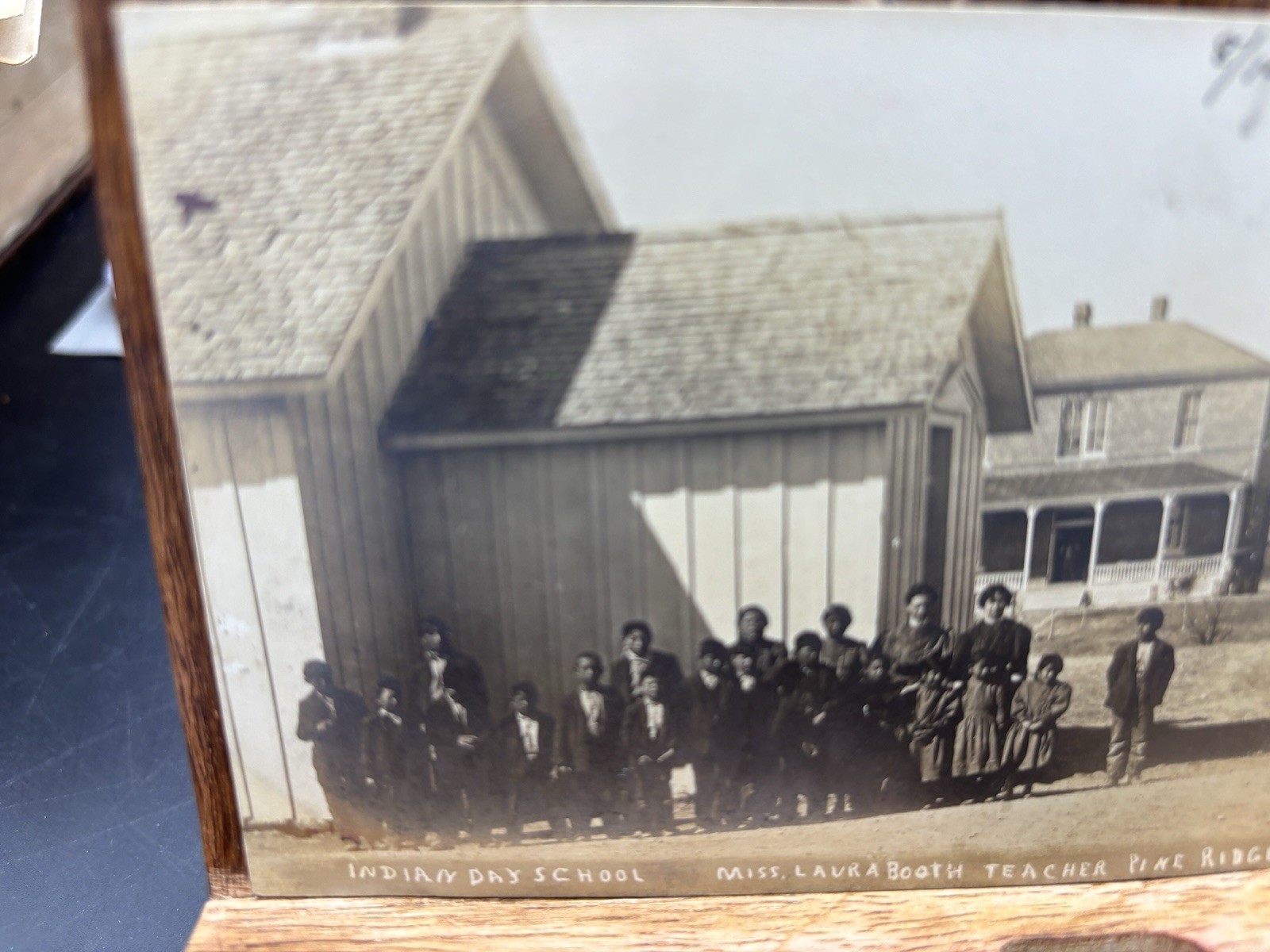
The No. 2 Day School on the Standing Rock Reservation, located across what is now parts of North and South Dakota, served the Lakota and Dakota peoples. Established as part of federal assimilation policies in the late 19th and early 20th centuries, these day schools aimed to integrate Native American children into American society through a curriculum focused on English, vocational training, and agriculture.
Unlike the more distant boarding schools, day schools allowed students to remain within their communities, though they still represented a significant departure from traditional Indigenous education. The substantial display of harvested crops, including pumpkins, potatoes, and other vegetables, highlights the emphasis placed on farming and agricultural self-sufficiency encouraged by reservation agents and the U.S. government during this era.
Unlike the more distant boarding schools, day schools allowed students to remain within their communities, though they still represented a significant departure from traditional Indigenous education. The substantial display of harvested crops, including pumpkins, potatoes, and other vegetables, highlights the emphasis placed on farming and agricultural self-sufficiency encouraged by reservation agents and the U.S. government during this era.