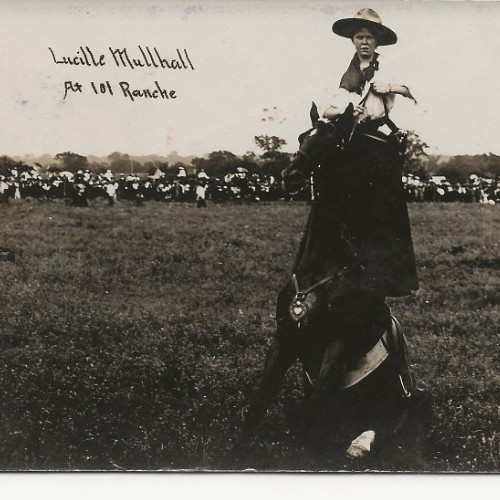
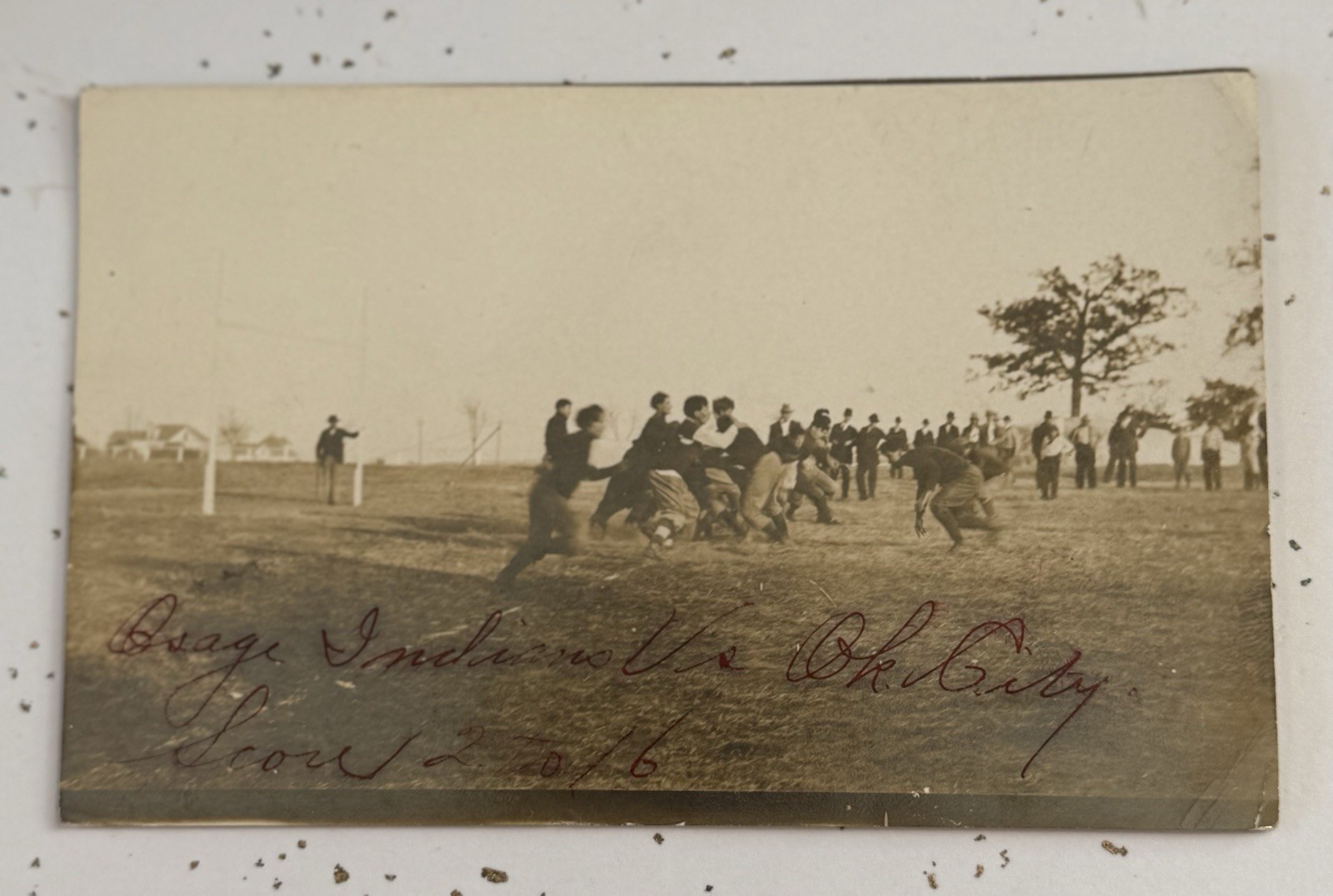
Oklahoma 101 Ranch Indians Trading With Cowboy Sign Language 1909 Real Photo Postcard
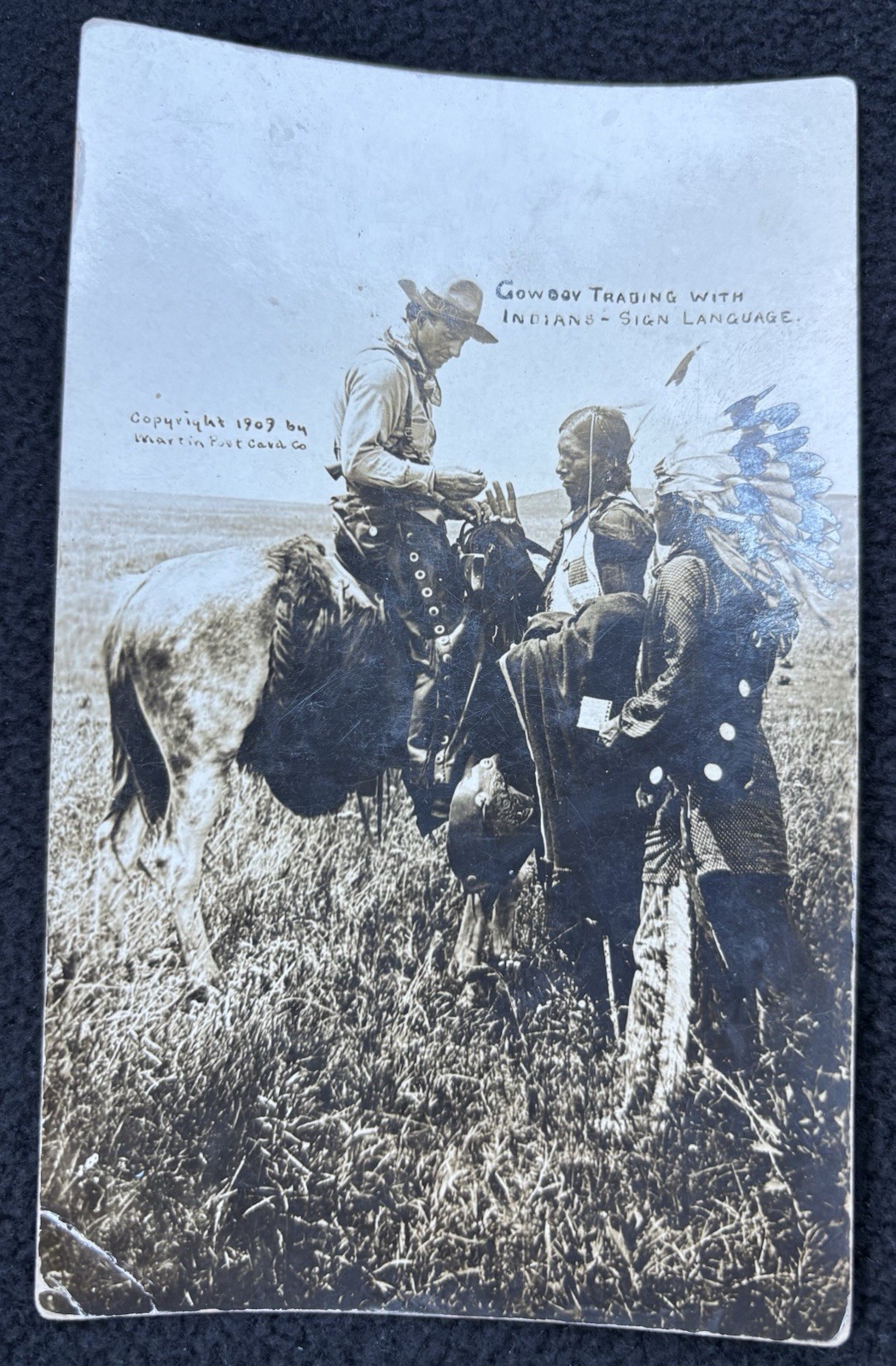
The scene of a cowboy trading with Native Americans via sign language encapsulates a significant aspect of interaction on the American frontier, particularly among diverse linguistic groups. Plains Indian Sign Language (PISL) served as a vital lingua franca across numerous tribes and with non-Native traders, trappers, and settlers, facilitating communication where spoken languages differed. Trading posts and chance encounters were common points for economic and cultural exchange, involving goods such as furs, buffalo hides, horses, tools, and manufactured items.
This postcard, copyrighted in 1907, reflects a period when the romanticized imagery of the "Wild West" deeply captivated the American public, long after the frontier was largely settled. Such depictions often served to mythologize the era of exploration and encounter, presenting a curated vision of cultural exchange that often simplified the complex realities of westward expansion. The inclusion of traditional Native American regalia, like the feathered warbonnet, further emphasizes the era's fascination with iconic representations of indigenous peoples.
This postcard, copyrighted in 1907, reflects a period when the romanticized imagery of the "Wild West" deeply captivated the American public, long after the frontier was largely settled. Such depictions often served to mythologize the era of exploration and encounter, presenting a curated vision of cultural exchange that often simplified the complex realities of westward expansion. The inclusion of traditional Native American regalia, like the feathered warbonnet, further emphasizes the era's fascination with iconic representations of indigenous peoples.