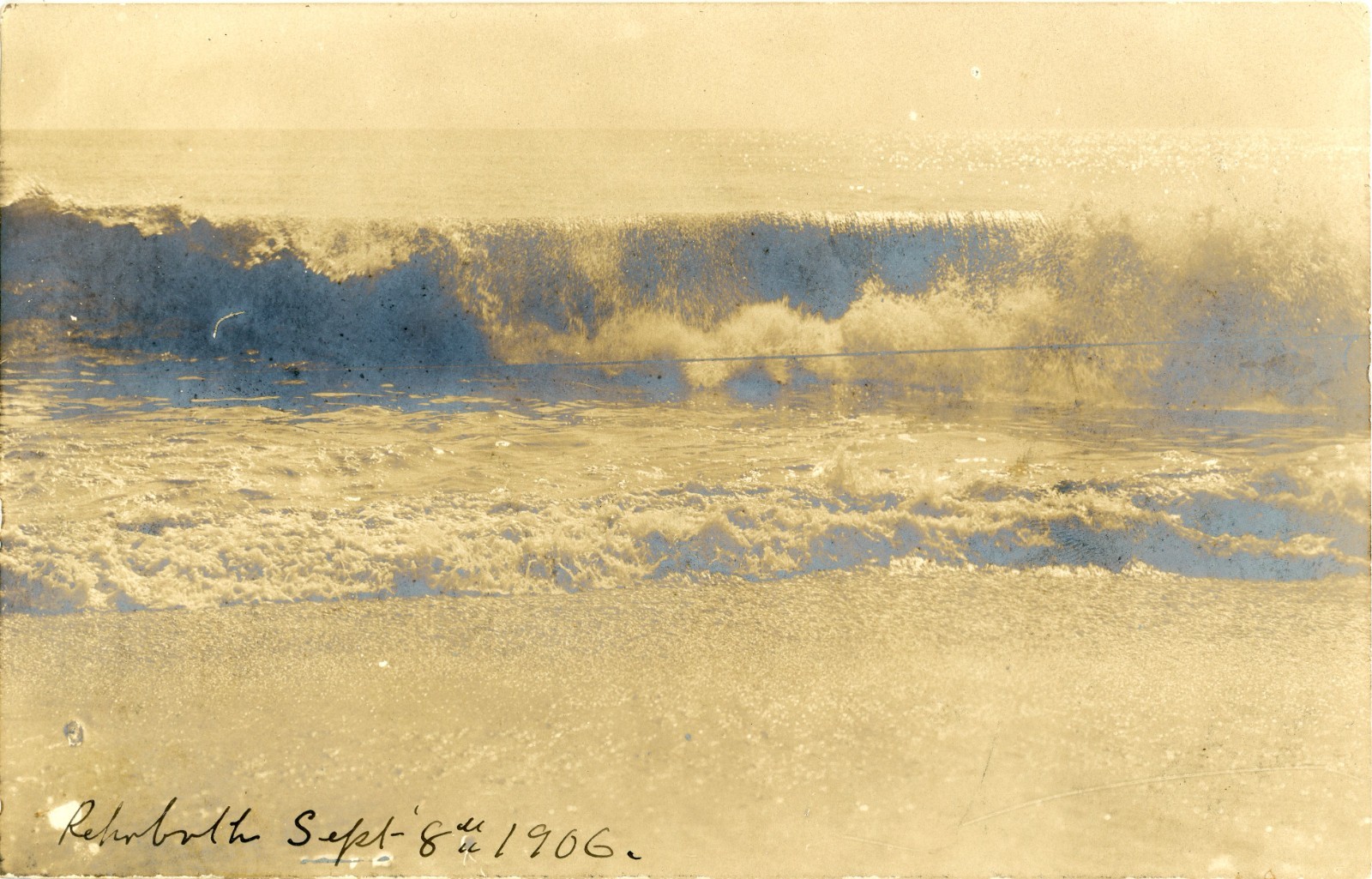
Rehobeth Beach Delaware Life Saving Station 1903 Real Photo Postcard
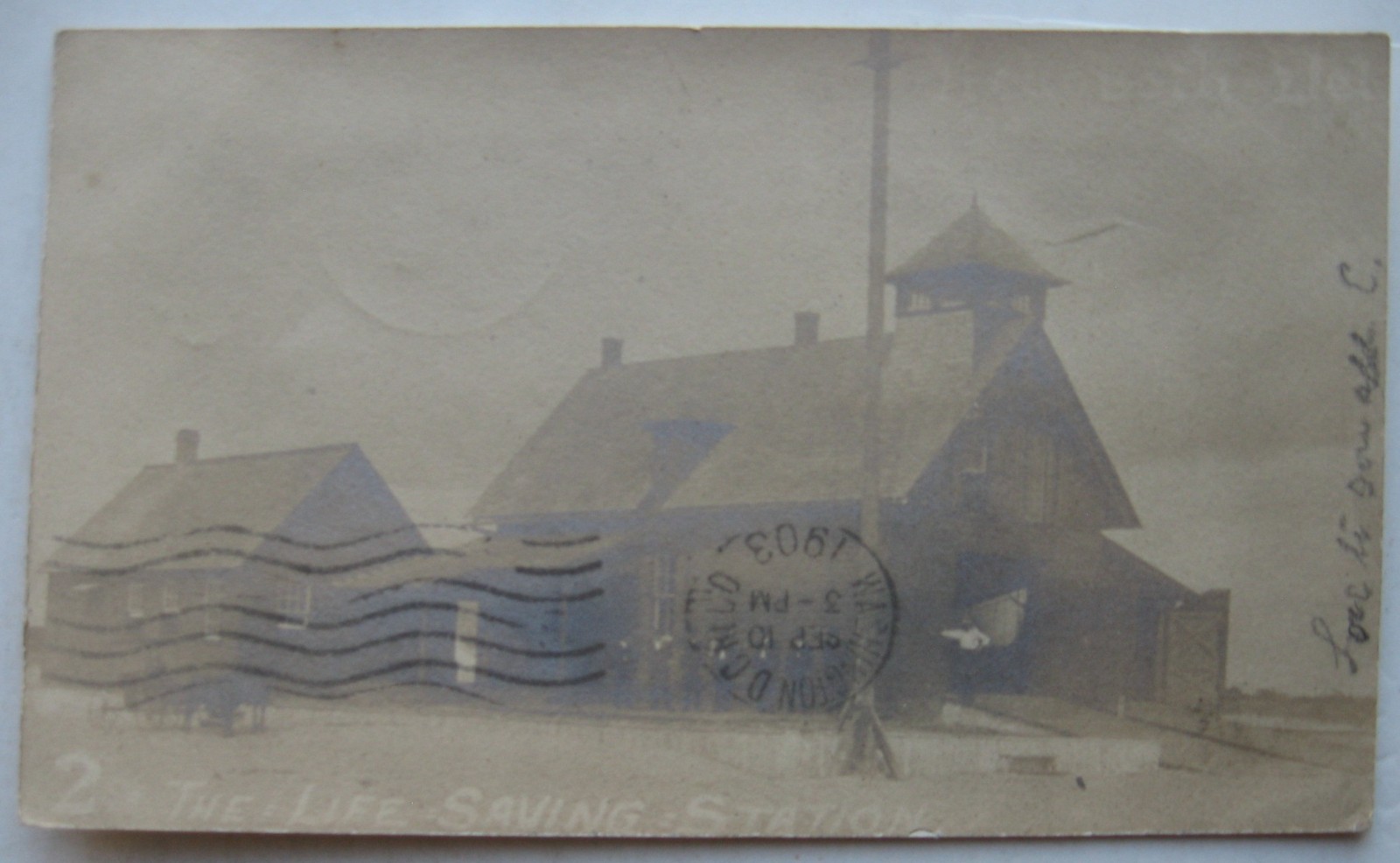
The U.S. Life-Saving Service operated coastal stations throughout the late 19th and early 20th centuries, dedicated to preventing maritime disasters and rescuing shipwrecked mariners. The architectural design shown, common for stations built after the Service's formal establishment in 1878, often featured a prominent lookout tower for spotting vessels in distress and a large boat room for launching surfboats. This postcard, dated September 1903, captures such a station during the peak operational period of the Service.
These stations were critical components of national maritime safety, with crews performing daily patrols, maintaining equipment, and conducting regular rescue drills. Surfmen were renowned for their bravery, utilizing specialized surfboats and the breeches buoy to bring people ashore from stranded vessels. The U.S. Life-Saving Service's vital role in safeguarding lives at sea concluded in 1915 when it merged with the Revenue Cutter Service to form the United States Coast Guard.
These stations were critical components of national maritime safety, with crews performing daily patrols, maintaining equipment, and conducting regular rescue drills. Surfmen were renowned for their bravery, utilizing specialized surfboats and the breeches buoy to bring people ashore from stranded vessels. The U.S. Life-Saving Service's vital role in safeguarding lives at sea concluded in 1915 when it merged with the Revenue Cutter Service to form the United States Coast Guard.