RMS Titanic Disaster Sinking 1912 Real Photo Postcard
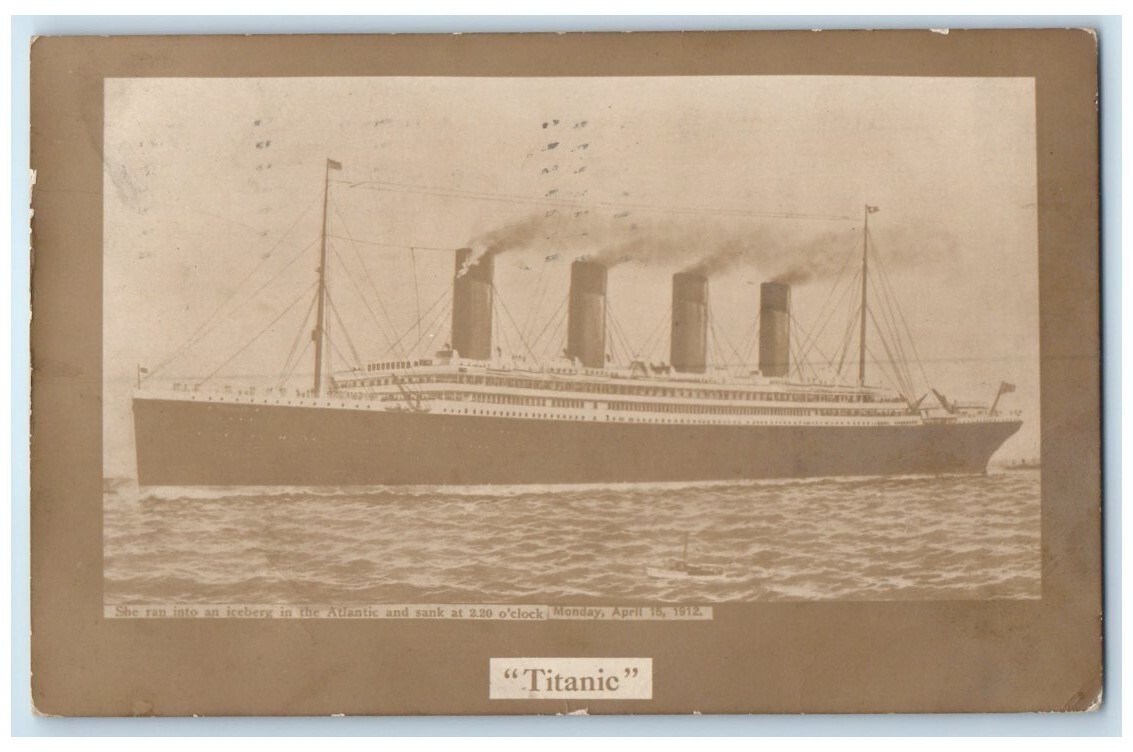
The RMS Titanic, a British passenger liner operated by the White Star Line, was the largest ship afloat upon its completion. Dubbed "unsinkable," the vessel commenced its maiden transatlantic voyage from Southampton to New York City on April 10, 1912. The ship tragically struck an iceberg in the North Atlantic late on April 14, 1912, leading to its sinking in the early hours of April 15 and the loss of over 1,500 lives.
This catastrophic event had a profound and lasting impact on maritime safety. It directly led to the establishment of the International Ice Patrol and significant reforms in shipping regulations, including requirements for sufficient lifeboats for all passengers and crew, and continuous 24-hour radio watch. The sinking of the Titanic remains a powerful cultural symbol of human overconfidence in technological advancement and the unpredictable forces of nature.
This catastrophic event had a profound and lasting impact on maritime safety. It directly led to the establishment of the International Ice Patrol and significant reforms in shipping regulations, including requirements for sufficient lifeboats for all passengers and crew, and continuous 24-hour radio watch. The sinking of the Titanic remains a powerful cultural symbol of human overconfidence in technological advancement and the unpredictable forces of nature.


