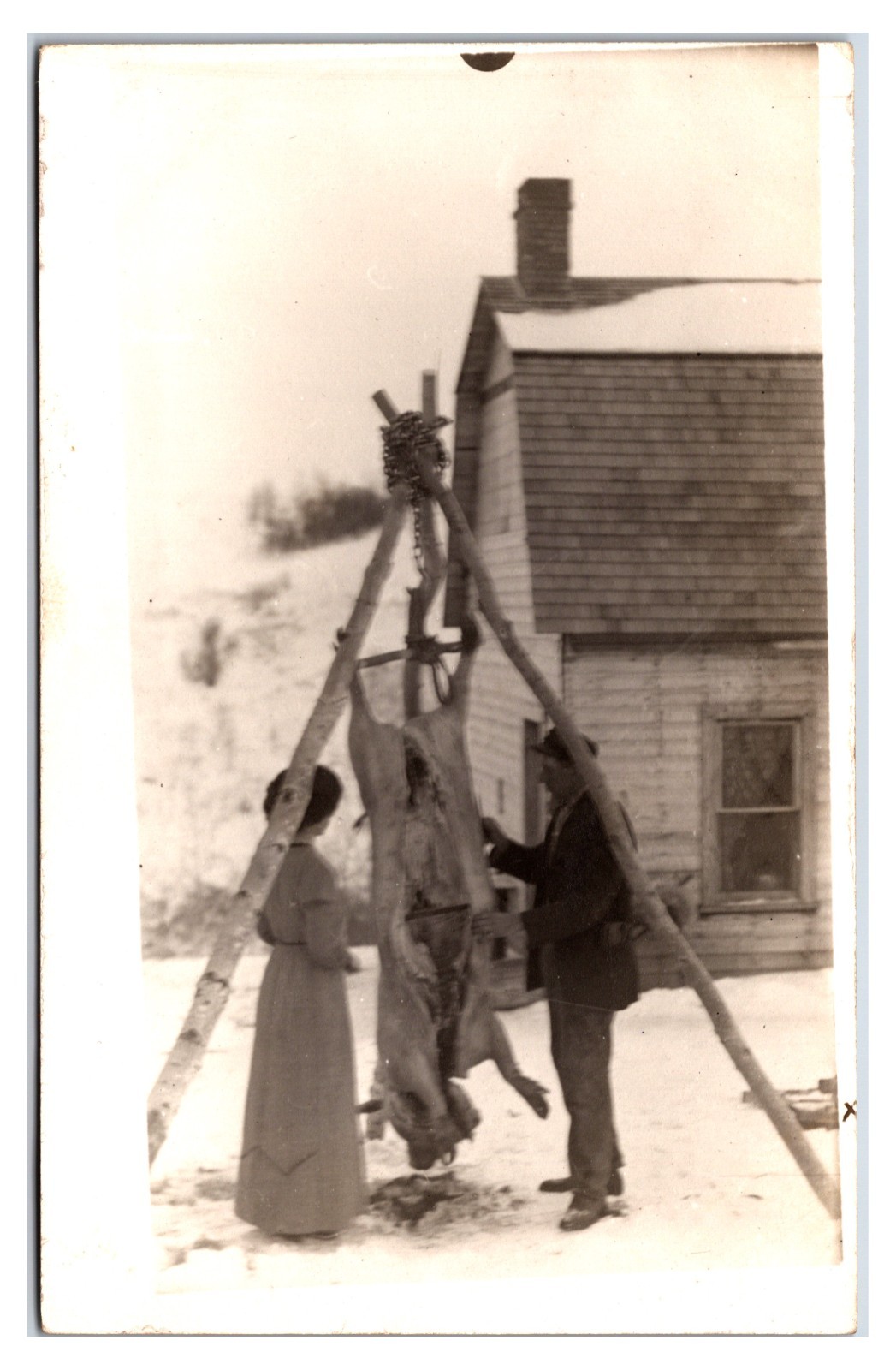
Rural Pennsylvania Primitive Farm Butchering Pigs 1910s Real Photo Postcard
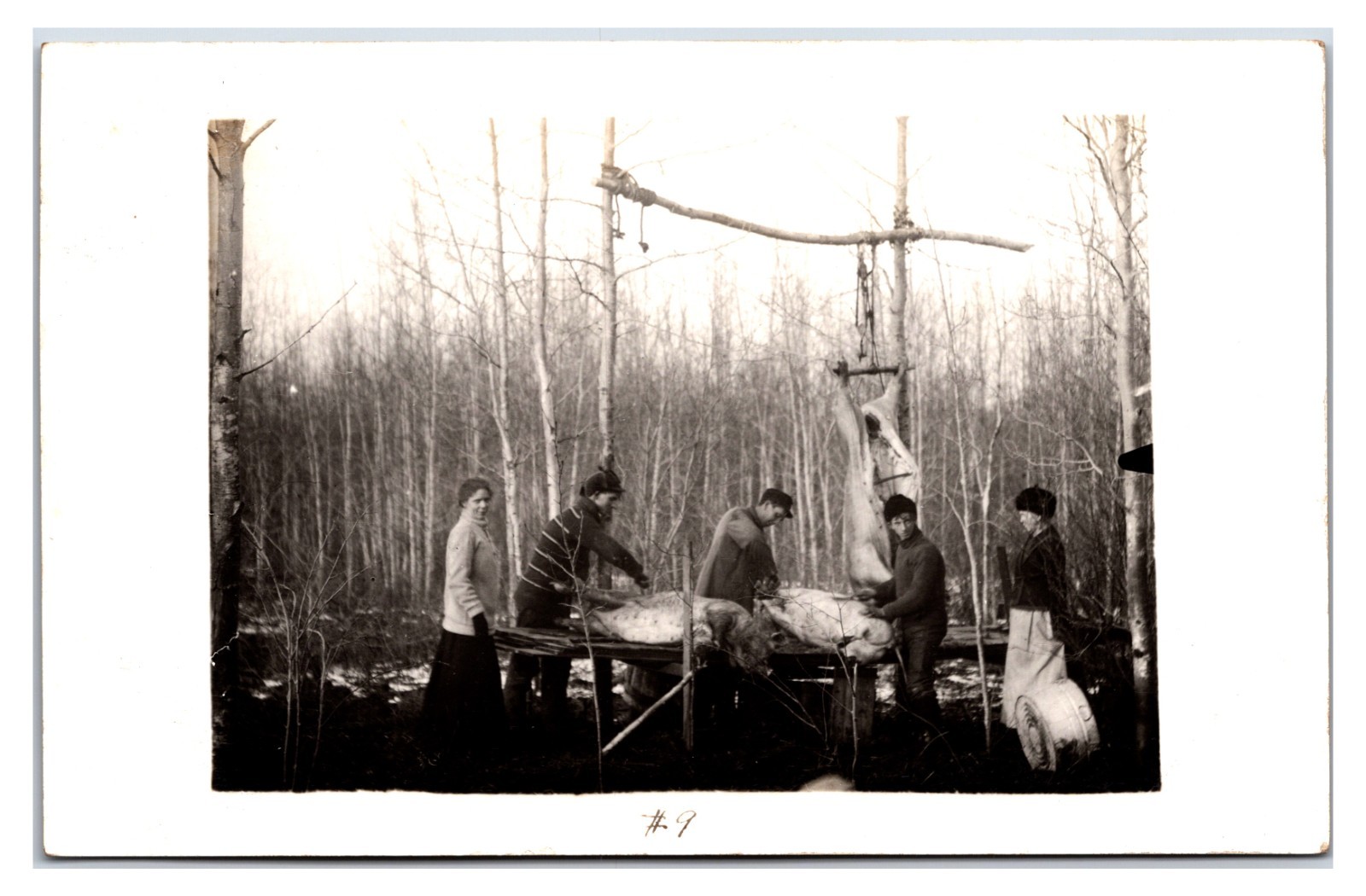
Communal game processing, as depicted, was a fundamental aspect of subsistence living in many North American and northern European rural areas, particularly during the late 19th and early 20th centuries. The labor-intensive task of butchering large game, likely deer or moose, after a successful hunt provided essential protein and sustenance for families and communities, especially in regions with limited access to commercial food markets. This practice required practical skills in field dressing, butchering, and preservation.
Such scenes underscore the self-reliance and close connection to the natural environment prevalent in wilderness and frontier communities. The bare trees suggest a late fall or winter setting, a common hunting season when the meat could be more easily preserved in cold temperatures. This type of activity was critical for economic survival and cultural continuity, representing a direct engagement with local resources before the advent of industrialized food systems.
Such scenes underscore the self-reliance and close connection to the natural environment prevalent in wilderness and frontier communities. The bare trees suggest a late fall or winter setting, a common hunting season when the meat could be more easily preserved in cold temperatures. This type of activity was critical for economic survival and cultural continuity, representing a direct engagement with local resources before the advent of industrialized food systems.