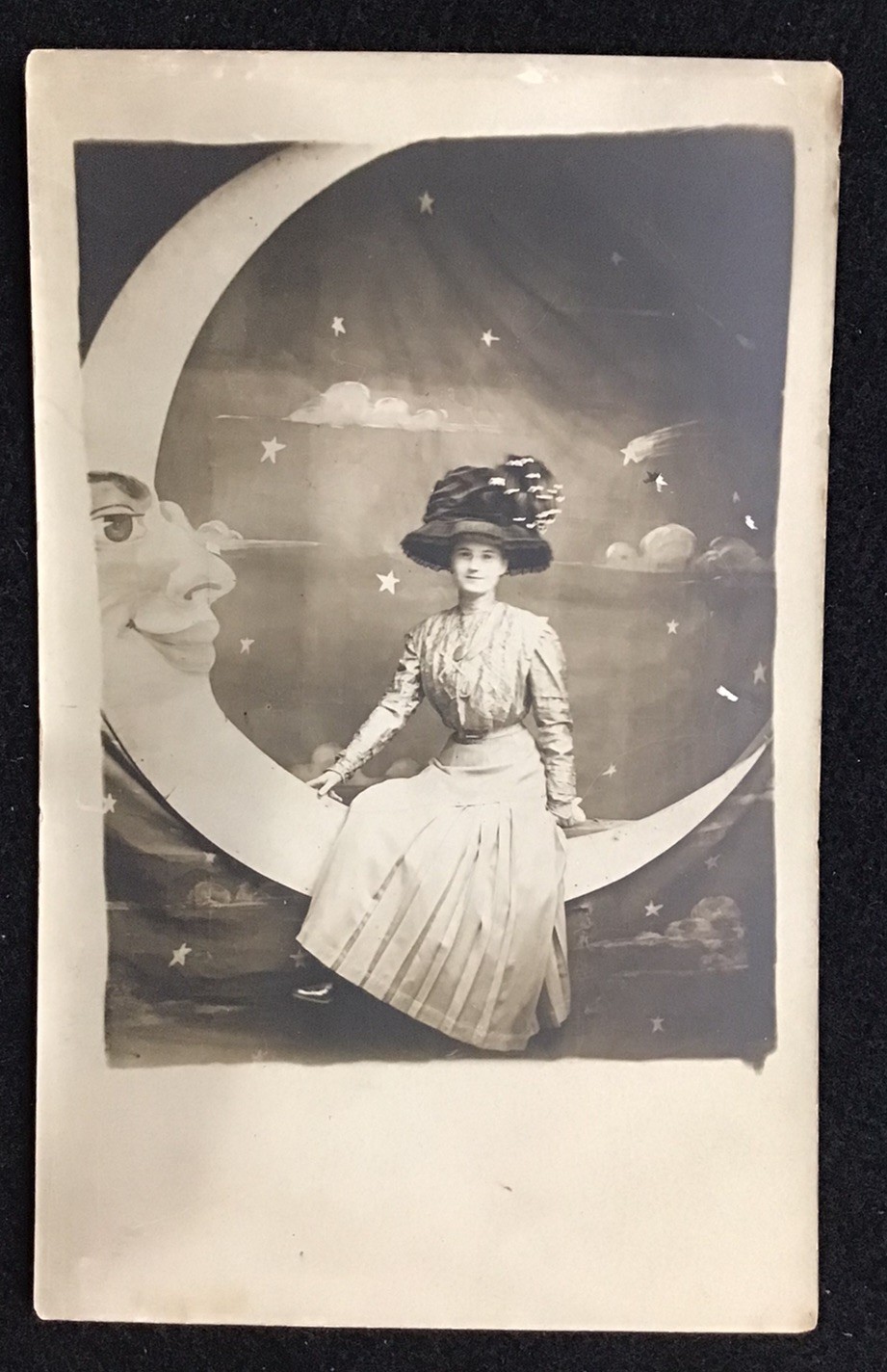
Ruth Blackman Woman Skydiver Acrobat Biplane 1920 Real Photo Postcard

This postcard captures two early aviators posing alongside a biplane, a predominant aircraft design during the formative years of powered flight. The individuals' attire, featuring leather helmets and goggles, is characteristic of pilots and crew from the late 1910s through the 1920s. The biplane, with its dual wings and exposed engine, represents the rapidly evolving technology that transitioned from military applications in World War I to civilian and commercial ventures.
The inscription "W.R. Bonsall, Elmira, NY" suggests a local connection to the burgeoning aviation scene in the United States. Following World War I, a surplus of aircraft and trained pilots fueled the "barnstorming" era, where aviators performed stunts and offered rides, popularizing air travel across the nation. This period also marked significant developments in airmail service and the nascent stages of commercial passenger aviation, with communities like Elmira participating in the broader expansion of powered flight.
The inscription "W.R. Bonsall, Elmira, NY" suggests a local connection to the burgeoning aviation scene in the United States. Following World War I, a surplus of aircraft and trained pilots fueled the "barnstorming" era, where aviators performed stunts and offered rides, popularizing air travel across the nation. This period also marked significant developments in airmail service and the nascent stages of commercial passenger aviation, with communities like Elmira participating in the broader expansion of powered flight.