Sawyer Kansas Atchison, Topeka And Santa Fe Railroad Depot 1909 Real Photo Postcard
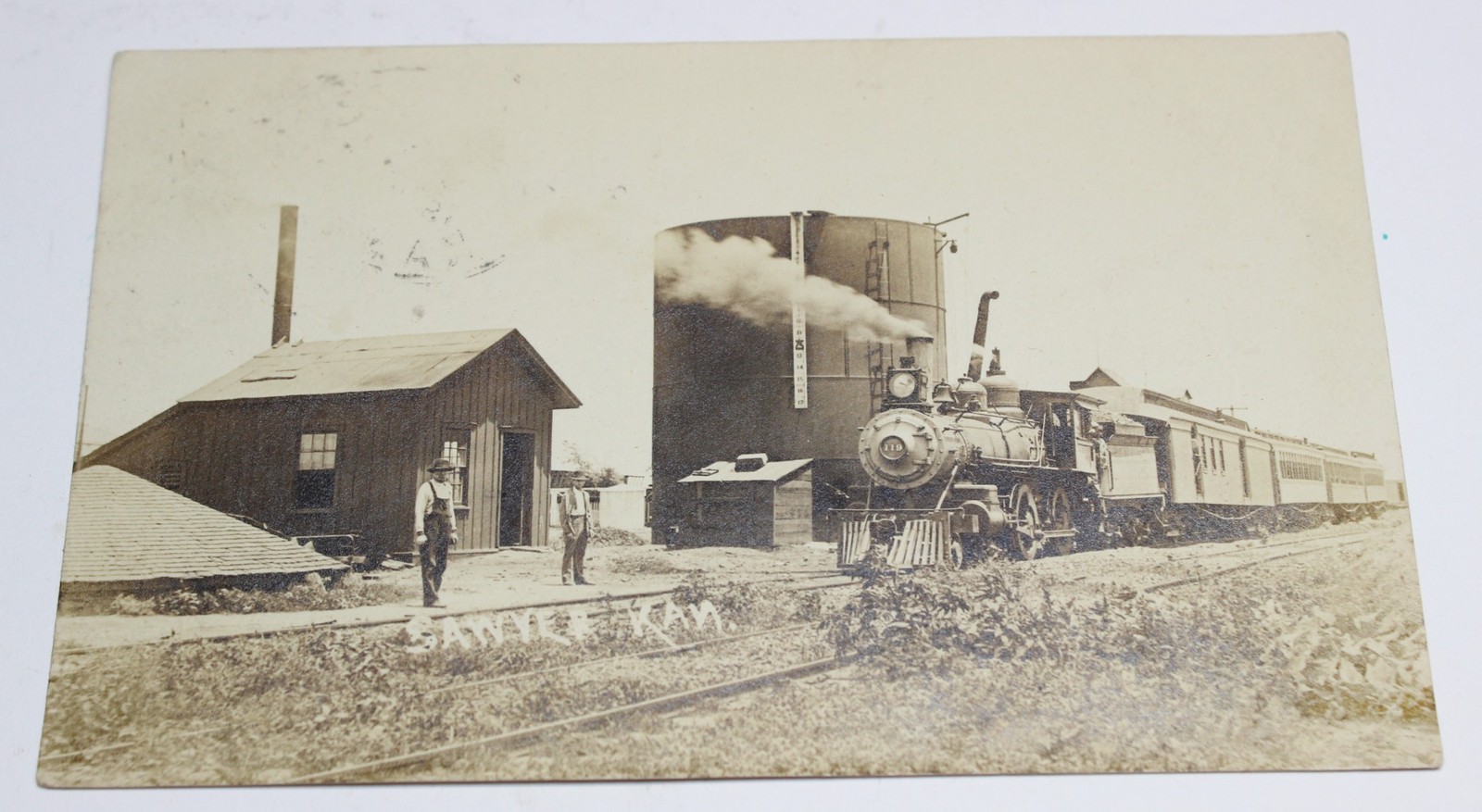
The scene captures a typical railroad water stop, likely dating from the late 19th to early 20th century, a period when steam locomotives were the primary mode of transportation. These facilities, often centered around a large water tower, were essential infrastructure for replenishing the vast amounts of water required by steam engines to generate propulsion during their journeys. The visible inscription "SAWYER" likely identifies the name of this specific station or community.
Railroads were the vital arteries of commerce, communication, and expansion across many regions during this era, connecting isolated towns and facilitating economic growth. A station with a water tower signifies a regularly scheduled stop, crucial for maintaining train operations and schedules. This image provides a historical snapshot of daily life along the railway, illustrating the functional importance of such stops in sustaining the golden age of rail travel.
Railroads were the vital arteries of commerce, communication, and expansion across many regions during this era, connecting isolated towns and facilitating economic growth. A station with a water tower signifies a regularly scheduled stop, crucial for maintaining train operations and schedules. This image provides a historical snapshot of daily life along the railway, illustrating the functional importance of such stops in sustaining the golden age of rail travel.