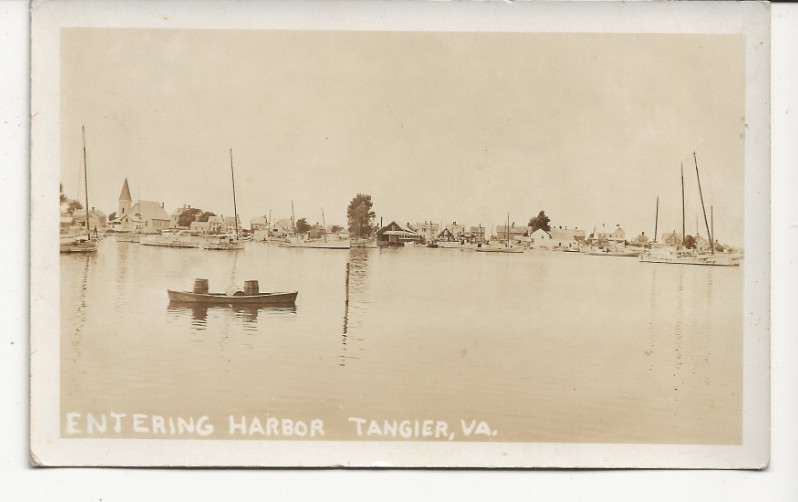
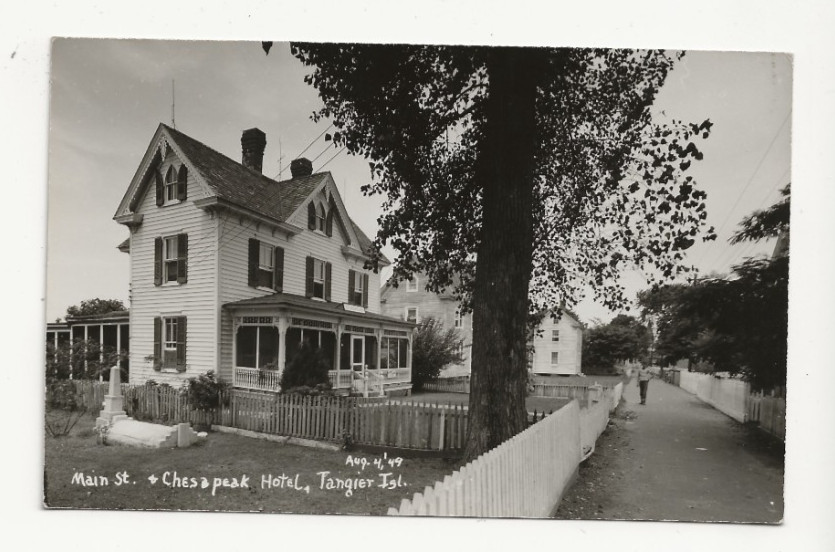
Tangier Island Eastern Shore Virginia Harbor Close Up Real Photo Postcard
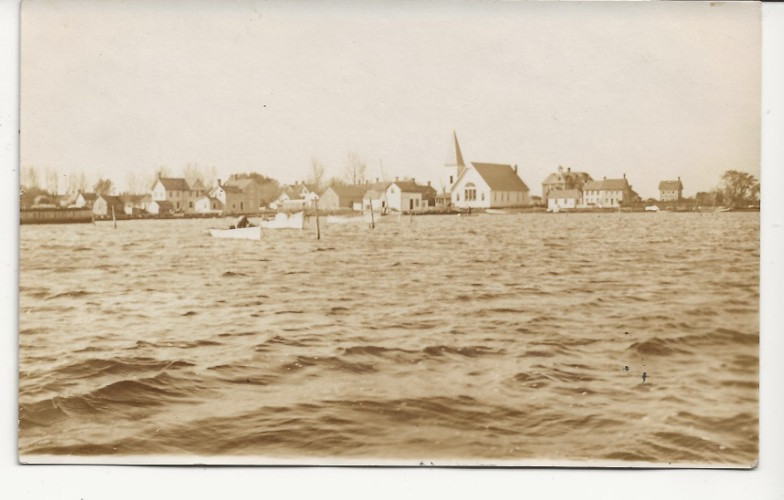
Waterfront villages in North America during the early 20th century were often defined by their proximity to the sea, lakes, or rivers, serving as hubs for fishing, maritime trade, and local industry. Communities frequently developed around a central landmark like a church, which often represented the social and spiritual core of the residents. The architecture typically featured modest, functional structures, reflecting the practical needs of a working waterfront population.
The presence of small boats in the water suggests local maritime activity, common for transport, fishing, or leisure in these coastal or lakeside settings. Such scenes capture a period before extensive urbanization and widespread automotive travel, when waterways remained crucial for daily life and economic sustenance. These communities fostered close-knit social structures, with daily routines heavily influenced by the natural environment and seasonal changes.
The presence of small boats in the water suggests local maritime activity, common for transport, fishing, or leisure in these coastal or lakeside settings. Such scenes capture a period before extensive urbanization and widespread automotive travel, when waterways remained crucial for daily life and economic sustenance. These communities fostered close-knit social structures, with daily routines heavily influenced by the natural environment and seasonal changes.