Unionville Connecticut Trolley Bound For Hartford H.P. Foote 1910s Real Photo Postcard
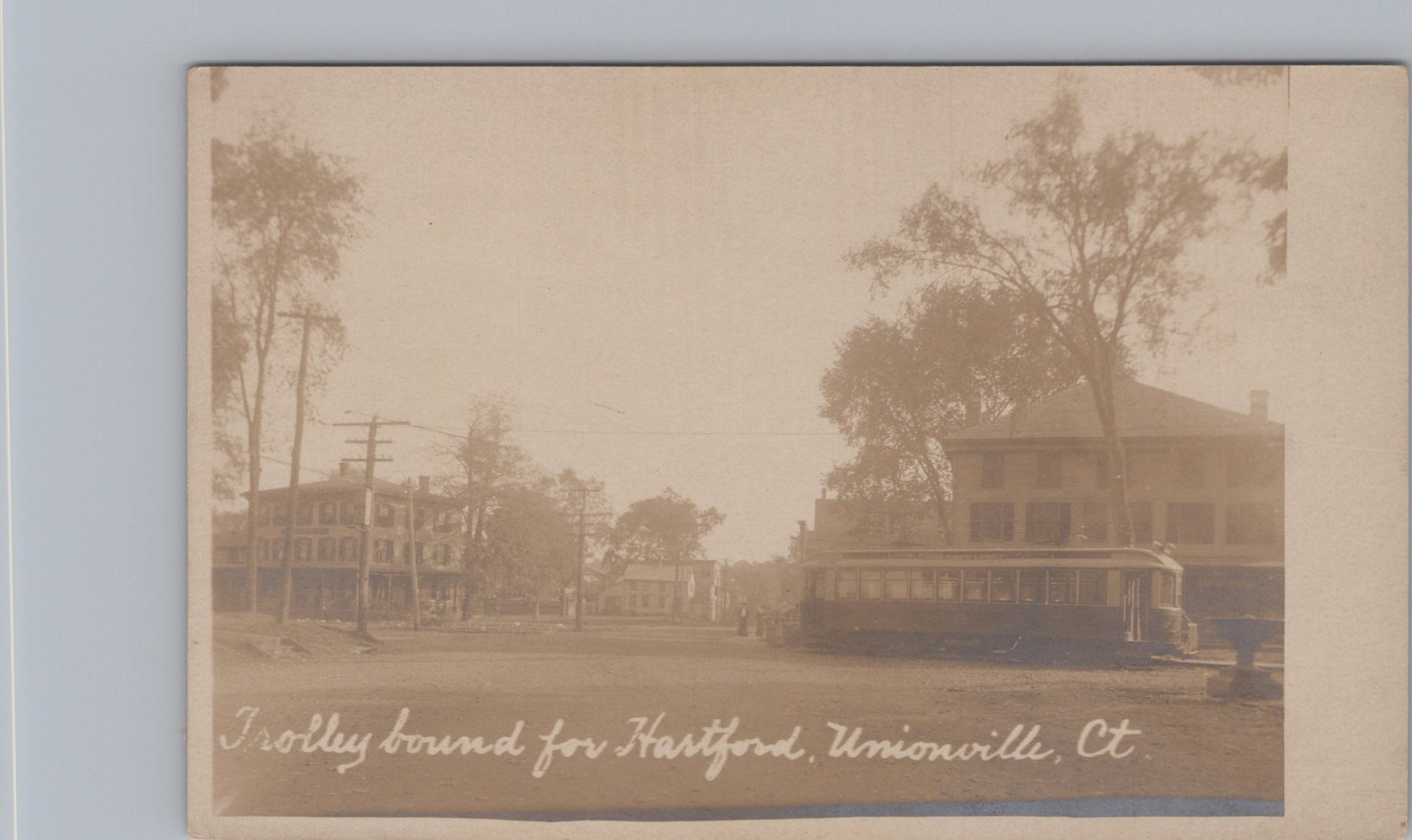
Electric trolley systems were a dominant form of public transportation in the United States from the late 19th century through the early decades of the 20th century, connecting established urban centers like Hartford with smaller, surrounding communities such as Unionville, a village within Farmington, Connecticut. These interurban lines facilitated daily commutes, commerce, and social connections, providing accessible and relatively swift travel before the widespread advent of the automobile. The trolley depicted represents a critical period of regional development in New England.
The Farmington Street Railway, which began operations in 1901 and connected Unionville to Hartford via Farmington, Avon, and West Hartford, was typical of such enterprises. These rail lines enabled residents of smaller towns to work or shop in larger cities, fostering suburban growth and integrating local economies. The visual captures a common street scene of the era, illustrating the vital role of the trolley in the daily rhythm of American life, likely dating from the 1900s to the 1920s before the decline of streetcar systems.
The Farmington Street Railway, which began operations in 1901 and connected Unionville to Hartford via Farmington, Avon, and West Hartford, was typical of such enterprises. These rail lines enabled residents of smaller towns to work or shop in larger cities, fostering suburban growth and integrating local economies. The visual captures a common street scene of the era, illustrating the vital role of the trolley in the daily rhythm of American life, likely dating from the 1900s to the 1920s before the decline of streetcar systems.