Urbana Illinois University Of Illinois Lloyde Hobo Band 1910 Real Photo Postcard
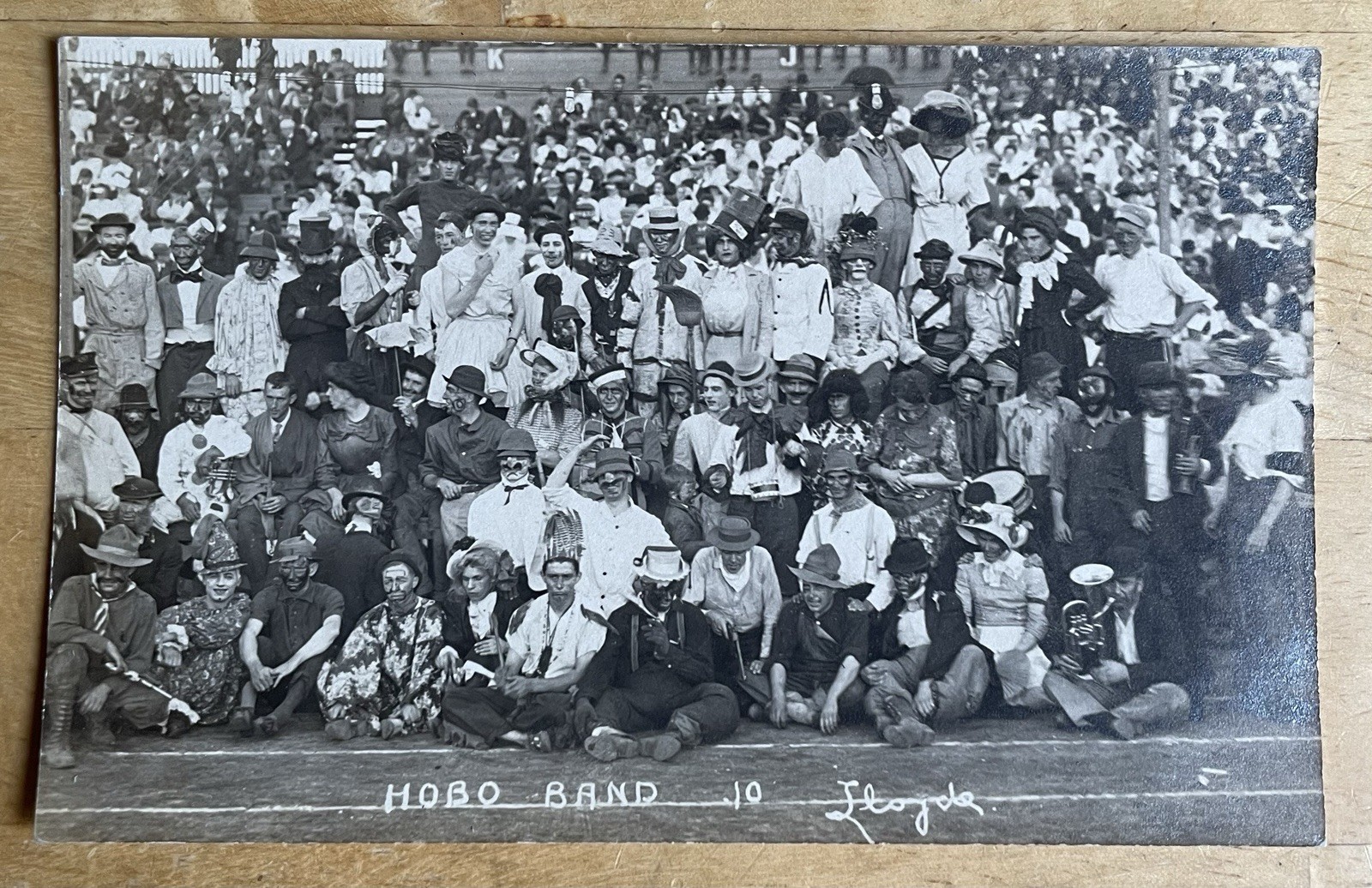
"Hobo bands" were a common fixture in American popular culture during the early 20th century, frequently appearing in community parades, fairs, and local celebrations. These informal musical groups typically comprised individuals dressed in mismatched, exaggerated, or tattered clothing to satirize or comically portray the figure of the hobo, a transient worker prominent during periods of economic flux. Their performances often combined music with comedic antics and unusual instrumentation, serving as lighthearted entertainment for crowds.
The presence of performers in blackface within such groups reflects a darker aspect of early 20th-century American entertainment, indicative of the pervasive influence of minstrelsy. This widely popular yet inherently racist theatrical tradition involved white performers caricaturing Black individuals through exaggerated makeup and stereotypes for comedic effect. Even when integrated into non-minstrel performances like hobo bands, blackface perpetuated harmful racial prejudices that were deeply ingrained in the popular culture of the era.
The presence of performers in blackface within such groups reflects a darker aspect of early 20th-century American entertainment, indicative of the pervasive influence of minstrelsy. This widely popular yet inherently racist theatrical tradition involved white performers caricaturing Black individuals through exaggerated makeup and stereotypes for comedic effect. Even when integrated into non-minstrel performances like hobo bands, blackface perpetuated harmful racial prejudices that were deeply ingrained in the popular culture of the era.