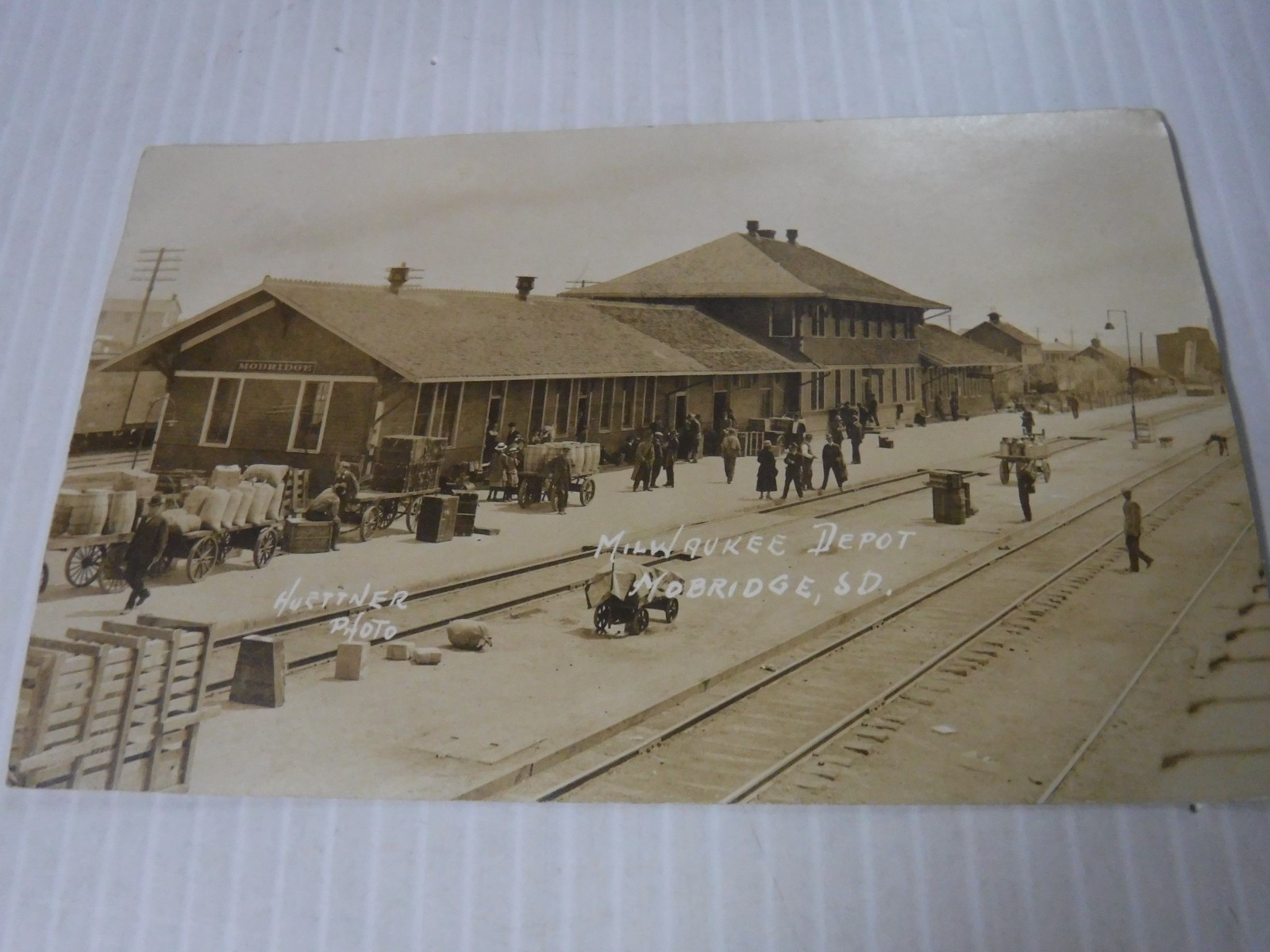
White South Dakota Railroad Depot C.B.&Q Rock Island Real Photo Postcard
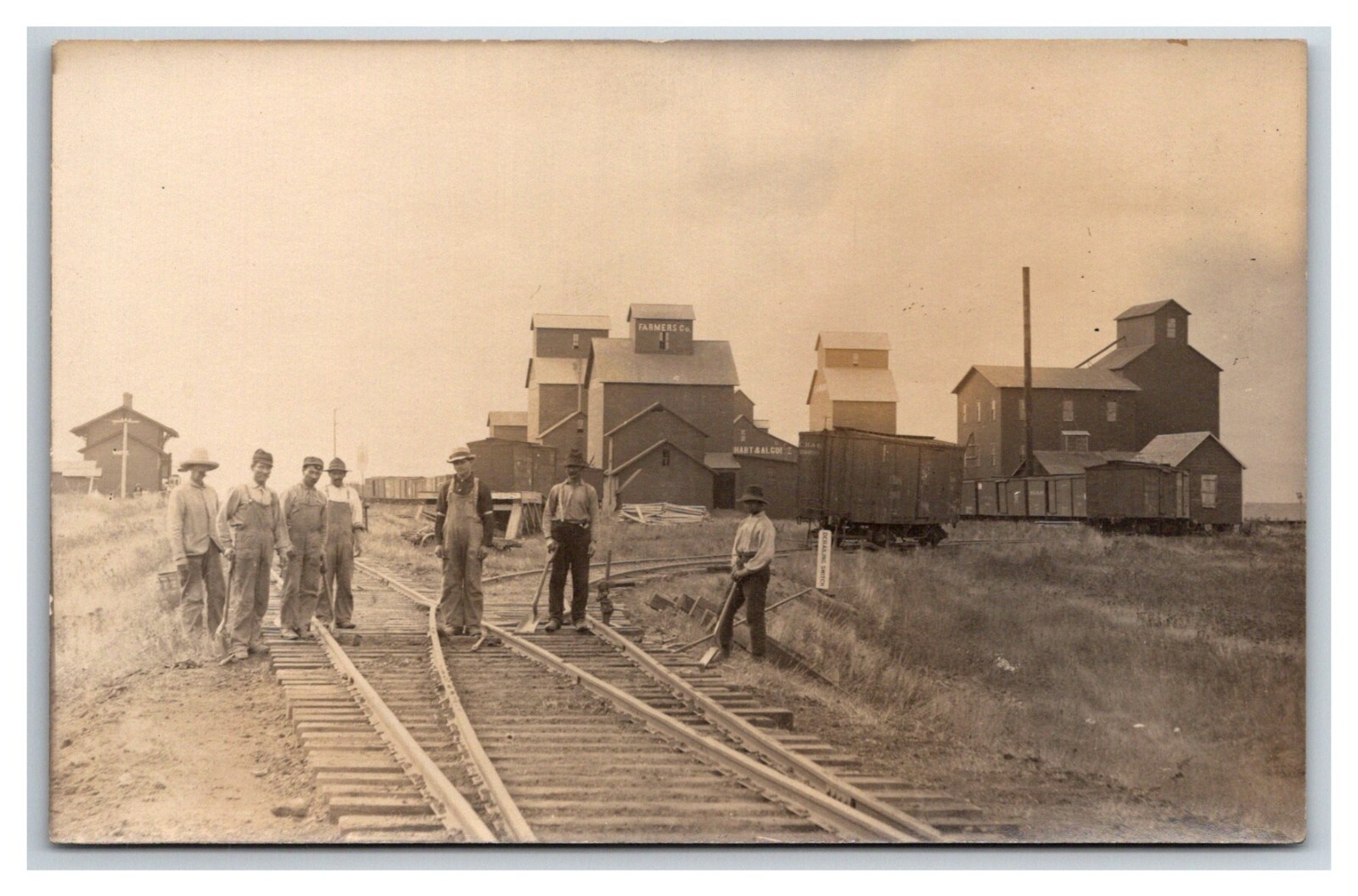
Grain elevators were fundamental to the development of agricultural economies across North America in the late 19th and early 20th centuries. These towering wooden structures, strategically positioned along railway lines, served as collection points for vast quantities of grain harvested from surrounding farms. Their design allowed for efficient storage and loading onto railcars, transforming isolated rural communities into vital hubs for national and international trade. The presence of multiple elevators, including those labeled "FARMERS Co." and "HART & ALCORN," signifies a competitive or cooperative market for agricultural produce.
This scene highlights the symbiotic relationship between agriculture and the burgeoning railway network during a period of rapid industrial expansion. Railroads were the essential arteries for transporting bulk commodities like grain from production areas to urban centers and ports. The men standing on the tracks, likely railroad workers or a section gang, were integral to maintaining the infrastructure that sustained this crucial economic pipeline, defining the landscape and commerce of agricultural regions in the early 20th century.
This scene highlights the symbiotic relationship between agriculture and the burgeoning railway network during a period of rapid industrial expansion. Railroads were the essential arteries for transporting bulk commodities like grain from production areas to urban centers and ports. The men standing on the tracks, likely railroad workers or a section gang, were integral to maintaining the infrastructure that sustained this crucial economic pipeline, defining the landscape and commerce of agricultural regions in the early 20th century.