Zambrow Poland Jewish Man Judaica Yiddish 1929 Real Photo Postcard

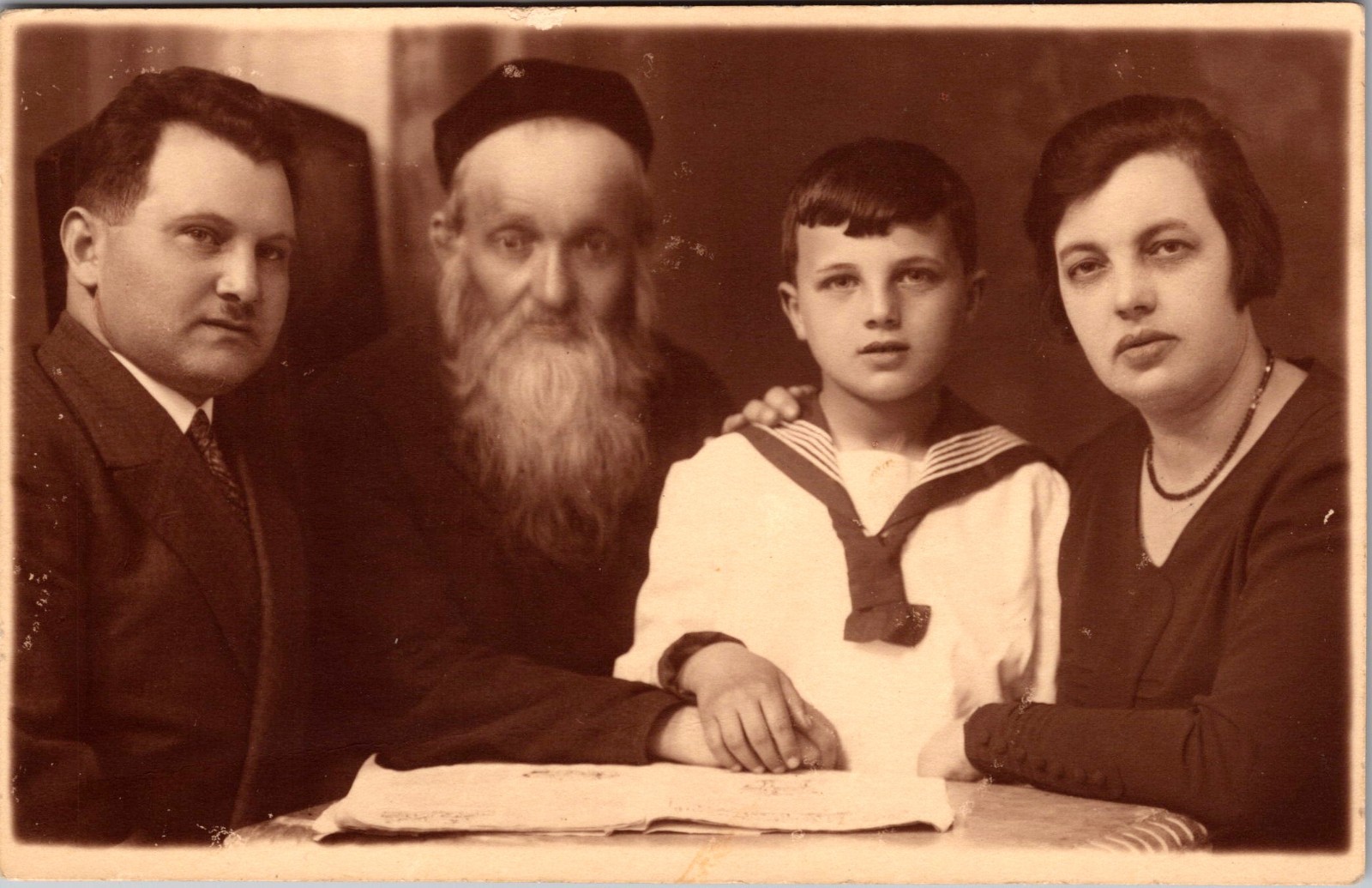
The man in this early 20th-century studio portrait wears a distinctive *kalpak*, a tall, brimless cap typically made of felt or sheepskin. This form of headwear was widely worn across Central Asia, the Caucasus, Turkey, and parts of Eastern Europe, often signifying ethnic identity, social status, or traditional attire within Turkic and other related cultures. His formal double-breasted overcoat with a fur collar further indicates a period of tailored fashion and an individual of probable standing or means, posing for a lasting image.
Such portraits captured individuals in their finest attire, reflecting personal and cultural identity during a period of rapid societal change. The *kalpak* tradition, while ancient, persisted into the early 20th century, even as Western fashion influences grew. This image provides insight into the sartorial customs and formal representation of individuals from regions where the *kalpak* remained a significant cultural emblem.
Such portraits captured individuals in their finest attire, reflecting personal and cultural identity during a period of rapid societal change. The *kalpak* tradition, while ancient, persisted into the early 20th century, even as Western fashion influences grew. This image provides insight into the sartorial customs and formal representation of individuals from regions where the *kalpak* remained a significant cultural emblem.