Alexander Graham Bell Undocumented Prototype Airplane Kites 1908 Real Photo Postcard
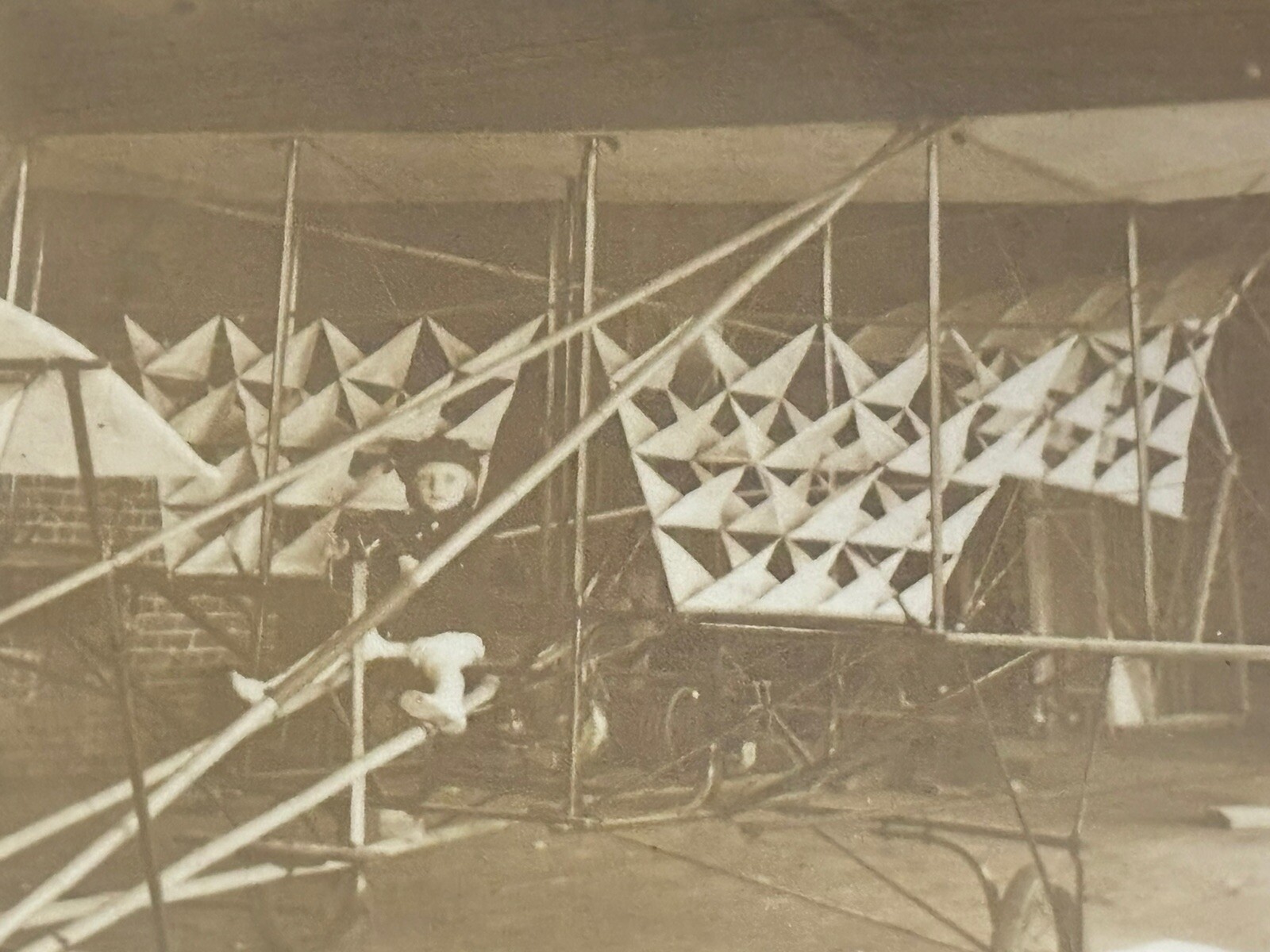
This image captures an early experimental aircraft, likely dating from the late 19th or early 20th century. Its distinctive cellular wing structure, composed of numerous triangular cells, is characteristic of designs inspired by Lawrence Hargrave's pioneering box kites. Hargrave's work, particularly his 1893 invention of the box kite, demonstrated inherent stability and lift capabilities, profoundly influencing early biplane configurations and the development of winged flight. The presence of a child within the frame suggests a static display or perhaps a promotional photograph, highlighting public engagement with nascent aeronautical technology.
This period represents the dawn of aviation, an era marked by intense experimentation and diverse approaches to achieving sustained flight. Before standardized aircraft designs became prevalent, innovators explored various aerodynamic principles, including multi-wing configurations and cellular structures like those seen here. Such designs were crucial stepping stones in understanding lift, drag, and stability, contributing directly to the breakthroughs of powered flight pioneers. The postcard offers a glimpse into this formative stage, reflecting the widespread fascination and scientific inquiry that would soon revolutionize transport.
This period represents the dawn of aviation, an era marked by intense experimentation and diverse approaches to achieving sustained flight. Before standardized aircraft designs became prevalent, innovators explored various aerodynamic principles, including multi-wing configurations and cellular structures like those seen here. Such designs were crucial stepping stones in understanding lift, drag, and stability, contributing directly to the breakthroughs of powered flight pioneers. The postcard offers a glimpse into this formative stage, reflecting the widespread fascination and scientific inquiry that would soon revolutionize transport.