Bali Indonesia Native Woman Temple Dress Offering Real Photo Postcard
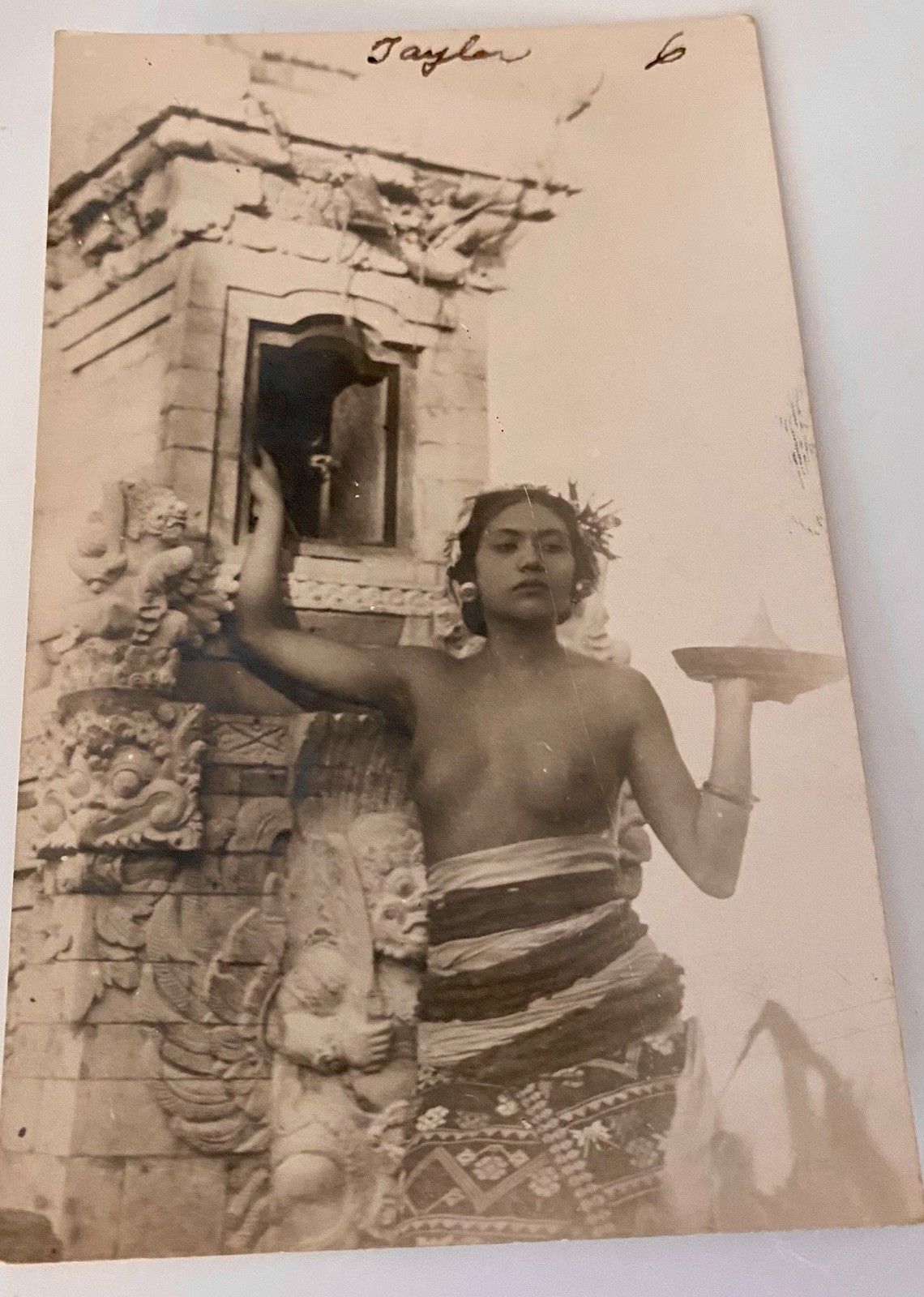
The postcard depicts a Balinese woman, likely a dancer or participant in a religious ceremony, adorned in traditional attire, holding an offering, beside an intricately carved stone temple structure. Such imagery became prominent in the early to mid-20th century, a period when Bali began attracting Western artists, anthropologists, and tourists who were captivated by its rich Hindu culture and distinct artistic traditions.
Balinese culture is deeply intertwined with Hinduism, and ceremonial dance and offerings (Canang Sari) are integral to daily life and religious festivals. During the Dutch colonial period and post-WWI, Western portrayals often romanticized Bali as a pristine "last paradise," leading to an influx of photography and ethnographic studies that documented its people, rituals, and unique architectural styles like the Pura (temple) featured here.
Balinese culture is deeply intertwined with Hinduism, and ceremonial dance and offerings (Canang Sari) are integral to daily life and religious festivals. During the Dutch colonial period and post-WWI, Western portrayals often romanticized Bali as a pristine "last paradise," leading to an influx of photography and ethnographic studies that documented its people, rituals, and unique architectural styles like the Pura (temple) featured here.