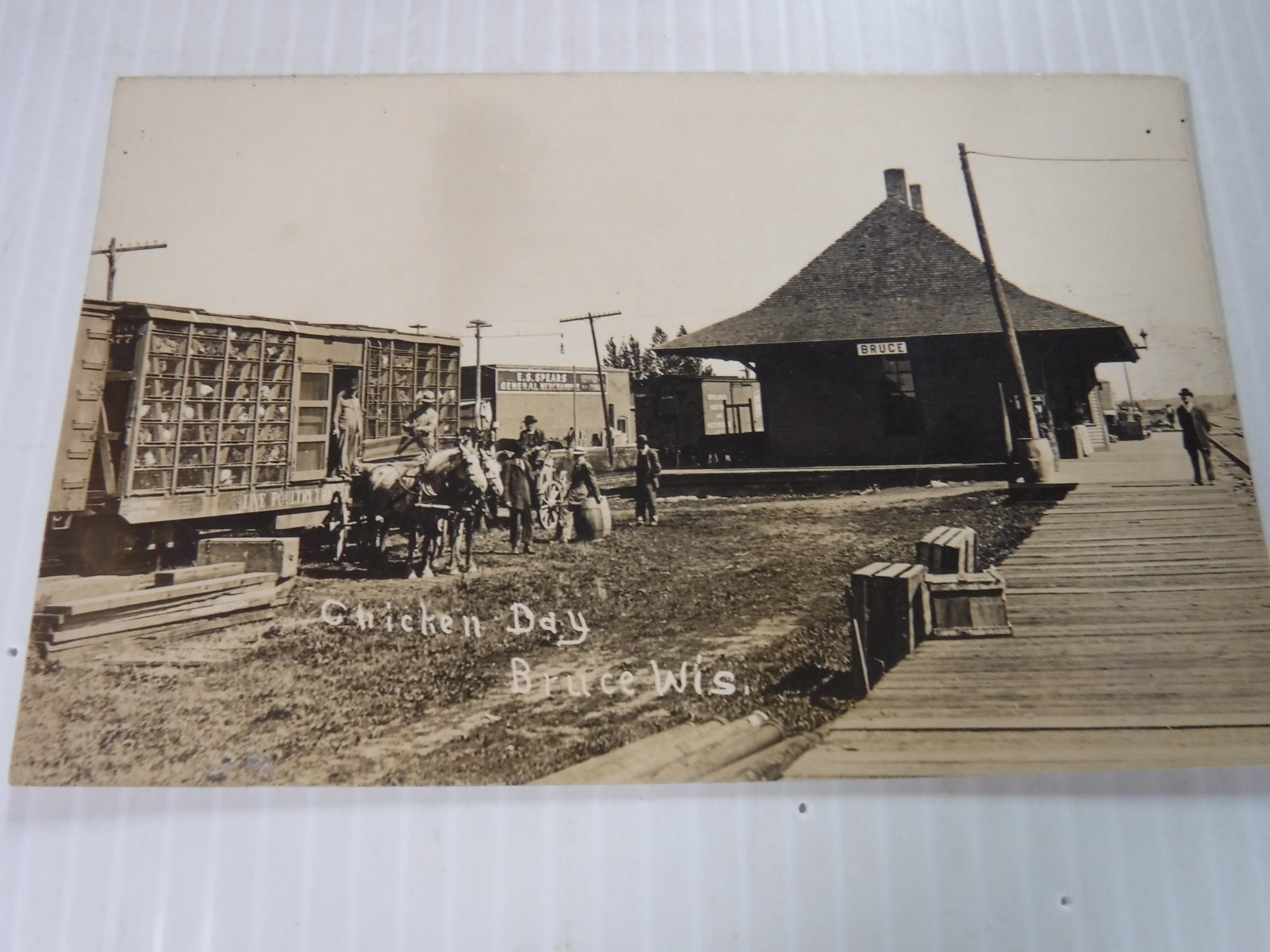
Clarksville Missouri Pike County CB&Q Railroad Depot Real Photo Postcard

Train stations like the one depicted in "Clarksville" were integral to the economic and social fabric of communities during the late 19th and early 20th centuries. As railway networks expanded across the United States, particularly through industrial heartlands such as the Ohio Valley, these depots served as critical junctions for both passenger travel and the transportation of goods, driving local commerce and connecting remote areas to larger markets.
The wooden construction and functional design, typical of smaller town stations from the era, highlight the practical focus of railway infrastructure. Elements like the visible semaphore signal were essential for train control and safety, regulating traffic along the line. Such stations were not merely points of transit but symbols of progress, underpinning the rapid industrialization and growth that characterized the period.
The wooden construction and functional design, typical of smaller town stations from the era, highlight the practical focus of railway infrastructure. Elements like the visible semaphore signal were essential for train control and safety, regulating traffic along the line. Such stations were not merely points of transit but symbols of progress, underpinning the rapid industrialization and growth that characterized the period.