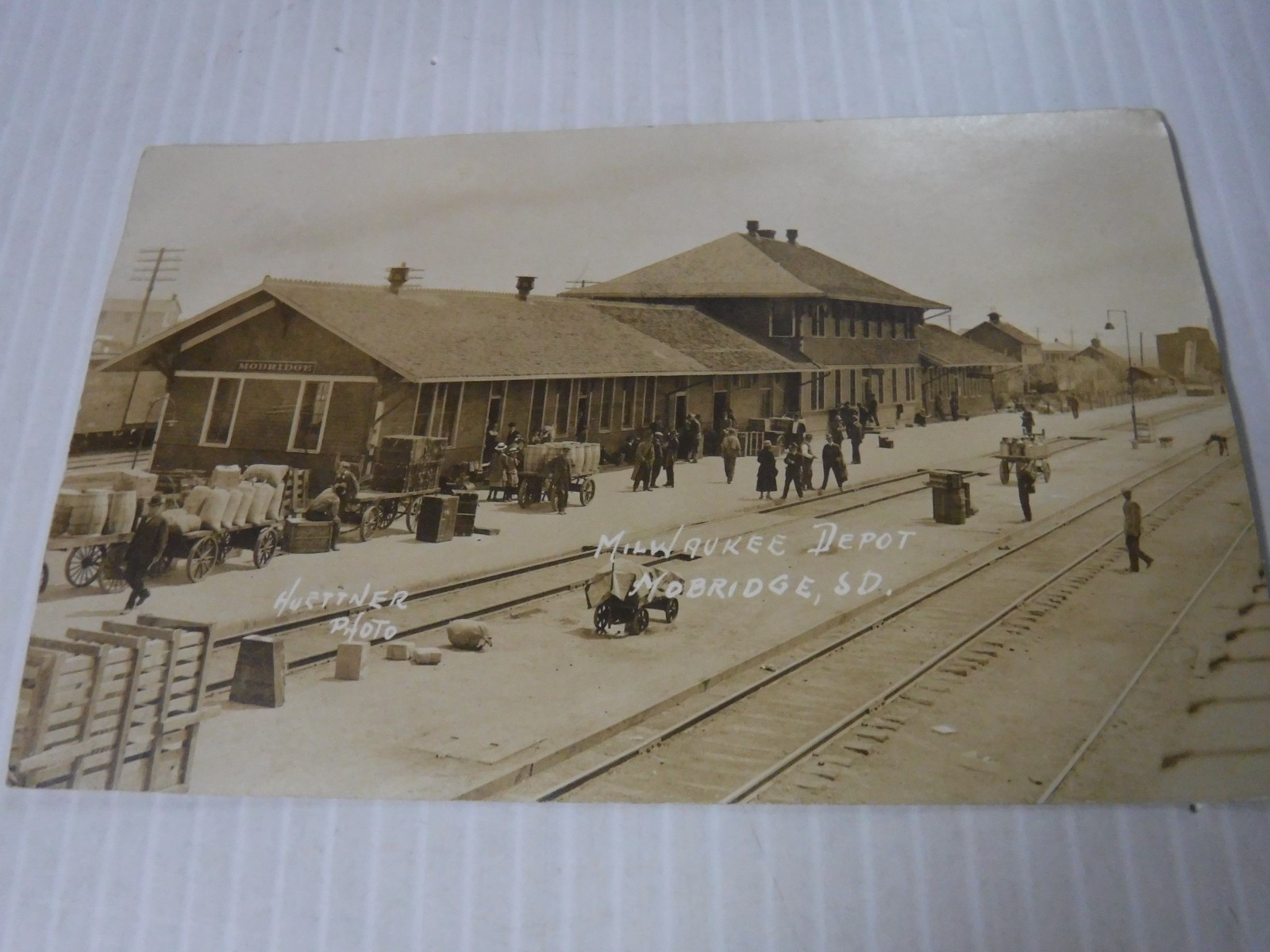
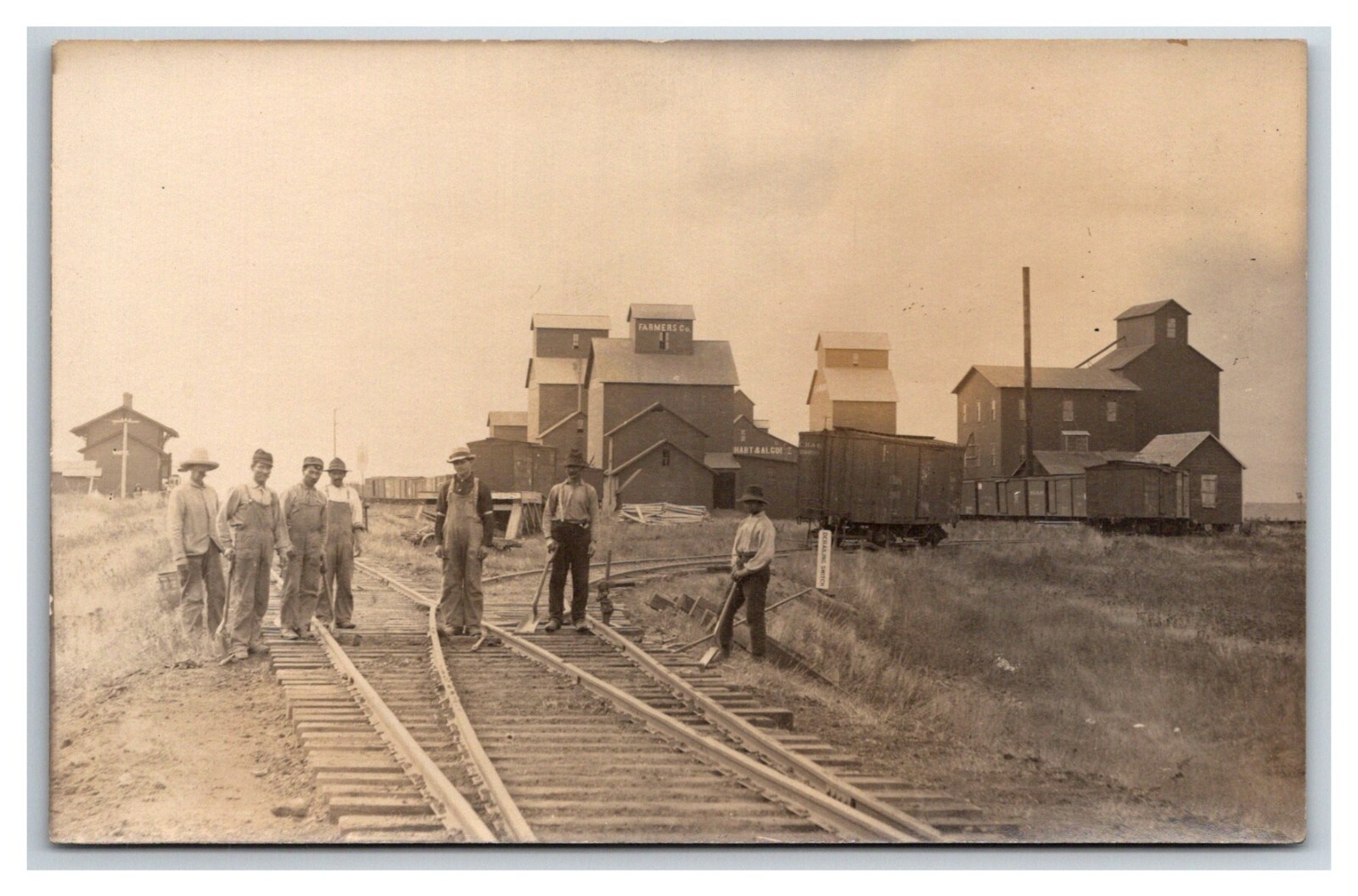
Geddes South Dakota Charles Mix Railroad Depot Elevators Real Photo Postcard

Geddes, South Dakota, founded in 1900, quickly developed as an agricultural service center, a common trajectory for towns across the Great Plains during the turn of the 20th century. Grain elevators were indispensable to these burgeoning communities, acting as crucial collection points for the vast quantities of wheat, corn, and other crops harvested from surrounding farms. This array of elevators, likely dating from the early 1900s through the 1930s, exemplifies the essential infrastructure that connected local farmers to broader markets.
The presence of multiple distinct elevators, including visible names like "Western Terminal Grain Co." and "Farmers Co-Operative Elevator Co.", illustrates the competitive and cooperative dynamics of the era's grain trade. Situated strategically along a railroad line, these structures emphasize the critical reliance on rail transport for moving agricultural products to regional and national distribution networks. Such facilities were economic linchpins, fostering the growth and sustaining the prosperity of towns like Geddes during the period of intense agricultural development in the Dakotas.
The presence of multiple distinct elevators, including visible names like "Western Terminal Grain Co." and "Farmers Co-Operative Elevator Co.", illustrates the competitive and cooperative dynamics of the era's grain trade. Situated strategically along a railroad line, these structures emphasize the critical reliance on rail transport for moving agricultural products to regional and national distribution networks. Such facilities were economic linchpins, fostering the growth and sustaining the prosperity of towns like Geddes during the period of intense agricultural development in the Dakotas.