Gibson Art Co. Halloween Black And White Cats Postcard
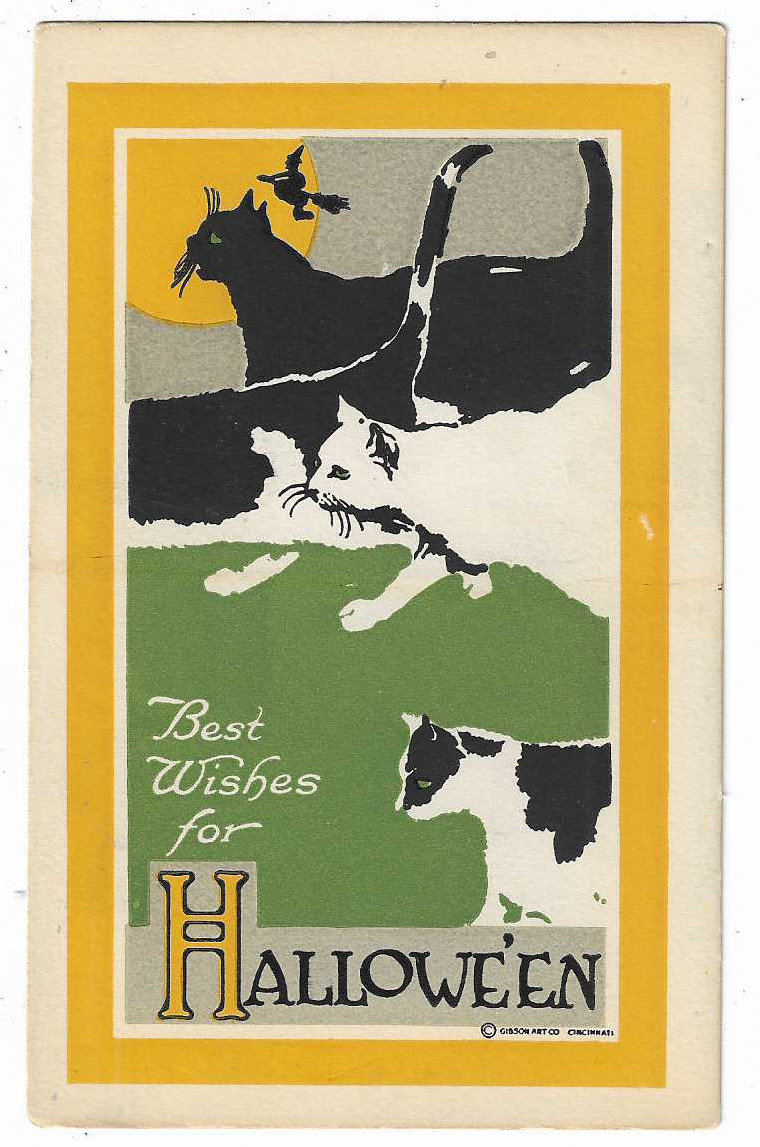
Halloween, as depicted in this early 20th-century postcard, saw its most significant transformation into a secular, community-focused holiday during the late 19th and early 20th centuries in North America. Rooted in ancient Celtic traditions like Samhain and influenced by medieval Christian observances, the holiday evolved from its more somber origins to embrace playful symbolism, costume parties, and communal celebrations. This period marked a move towards a distinct American form of Halloween, emphasizing revelry and harmless spooky fun.
The imagery featured, including black cats, witches, and a full moon, became quintessential symbols of Halloween during this era, drawing heavily from folklore and superstition that linked these elements to the supernatural. Publishers like Gibson Art Co. of Cincinnati, a prominent American greeting card and postcard company, played a significant role in standardizing and popularizing these visual motifs through mass-produced holiday cards, thereby shaping the visual identity of Halloween for generations.
The imagery featured, including black cats, witches, and a full moon, became quintessential symbols of Halloween during this era, drawing heavily from folklore and superstition that linked these elements to the supernatural. Publishers like Gibson Art Co. of Cincinnati, a prominent American greeting card and postcard company, played a significant role in standardizing and popularizing these visual motifs through mass-produced holiday cards, thereby shaping the visual identity of Halloween for generations.