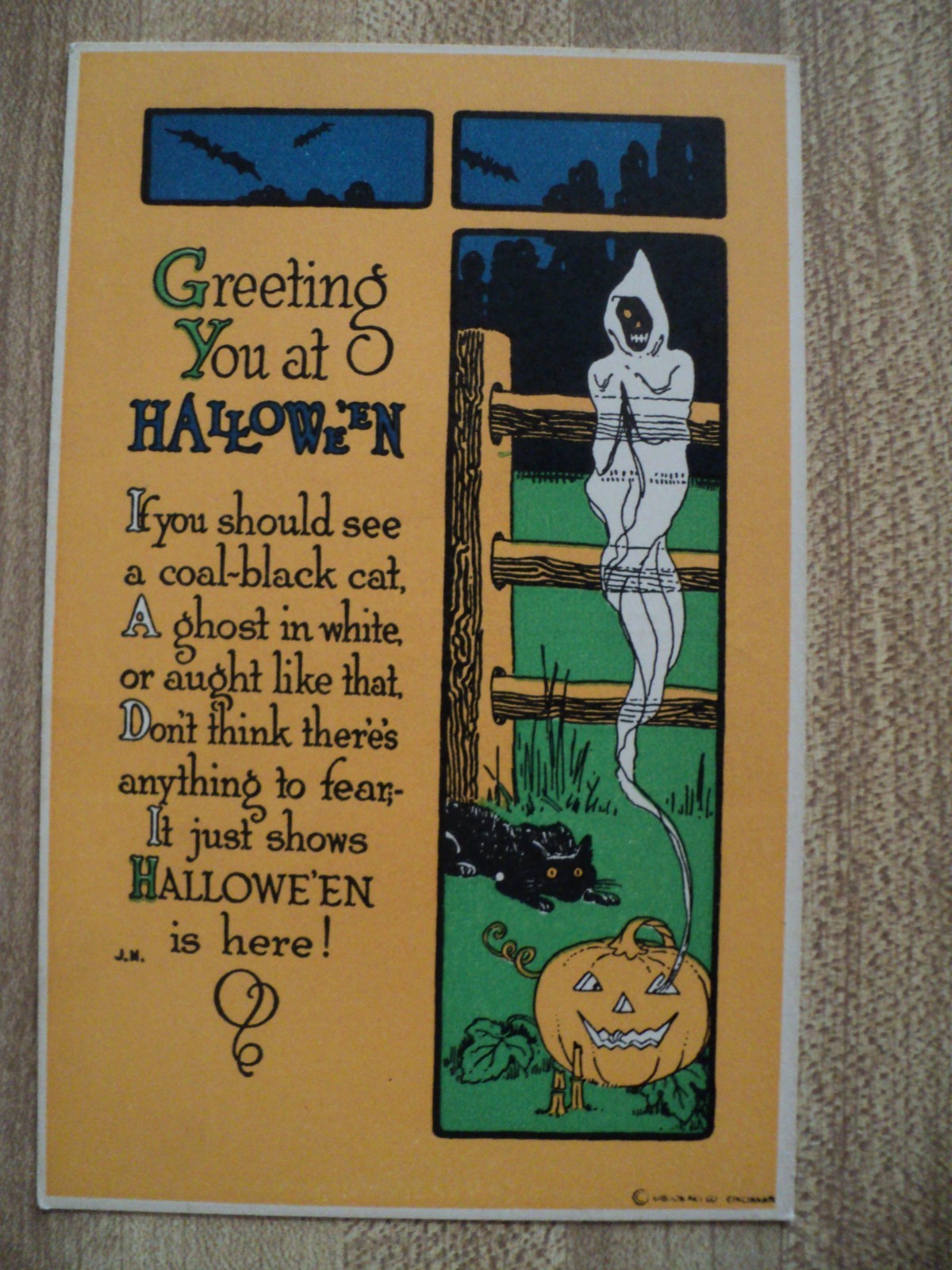
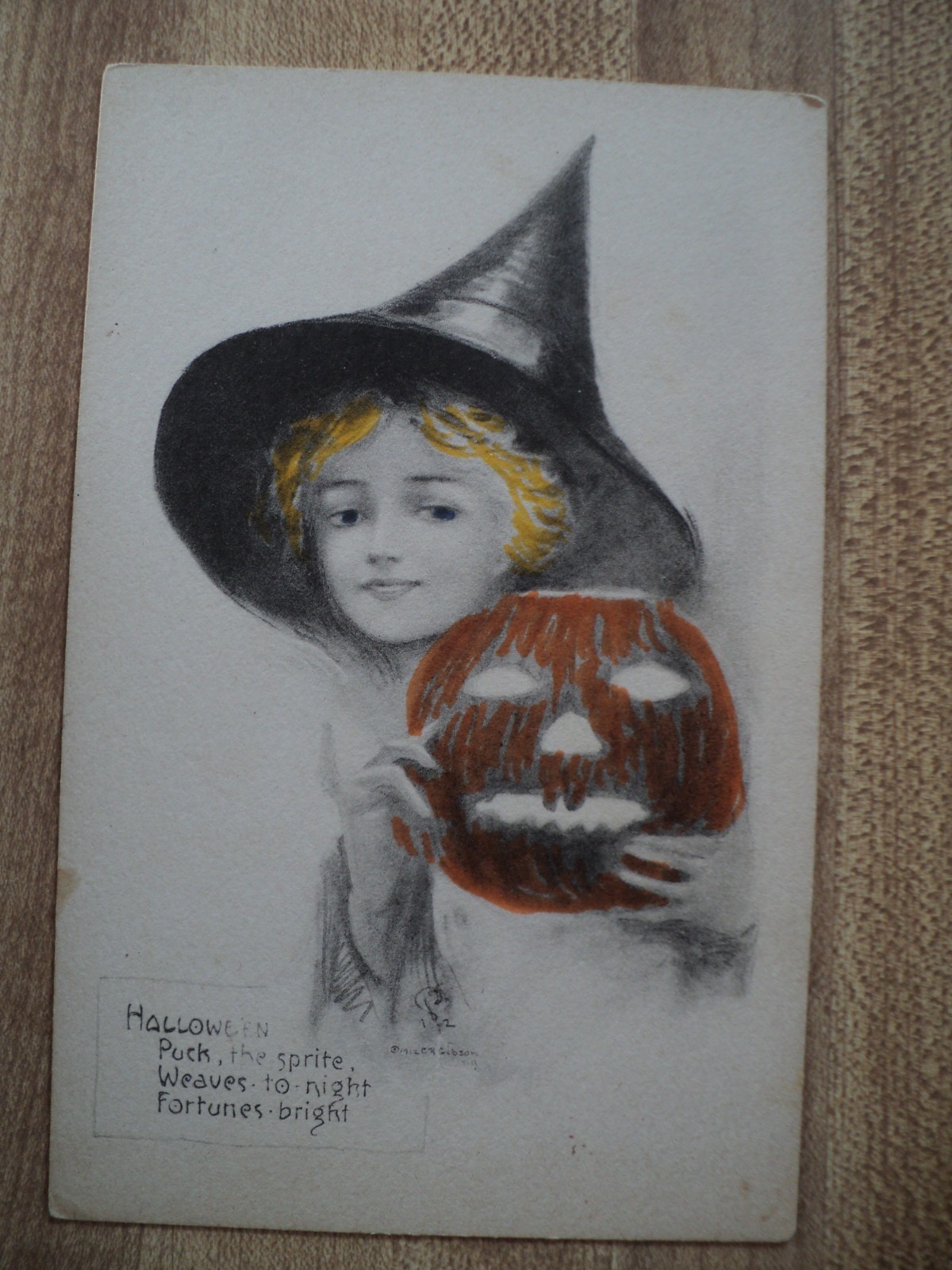
Halloween Jack-O-Lantern and Goblin Gibson Art Company Postcard

Hallowe'en celebrations in the late 19th and early 20th centuries evolved significantly from their ancient Celtic and medieval Christian roots. The imagery of jack-o'-lanterns, originally carved from turnips or potatoes in Ireland and Scotland to ward off spirits, became widely adopted using pumpkins in North America. Postcards from this era often depicted a blend of the holiday's traditional mysticism with emerging, more playful elements, marking a shift towards domestic and community-based festivities.
This period saw the popularization of folklore figures such as goblins, sprites, and mischievous elves as central to Halloween narratives, reflecting a Victorian and Edwardian fascination with the supernatural and fantasy. These characters, often portrayed engaging in revelry under a crescent moon, reinforced the idea of Halloween as a night when the veil between worlds thinned, allowing magical beings to interact with mortals in an "enchanted world," as the card's inscription suggests.
This period saw the popularization of folklore figures such as goblins, sprites, and mischievous elves as central to Halloween narratives, reflecting a Victorian and Edwardian fascination with the supernatural and fantasy. These characters, often portrayed engaging in revelry under a crescent moon, reinforced the idea of Halloween as a night when the veil between worlds thinned, allowing magical beings to interact with mortals in an "enchanted world," as the card's inscription suggests.