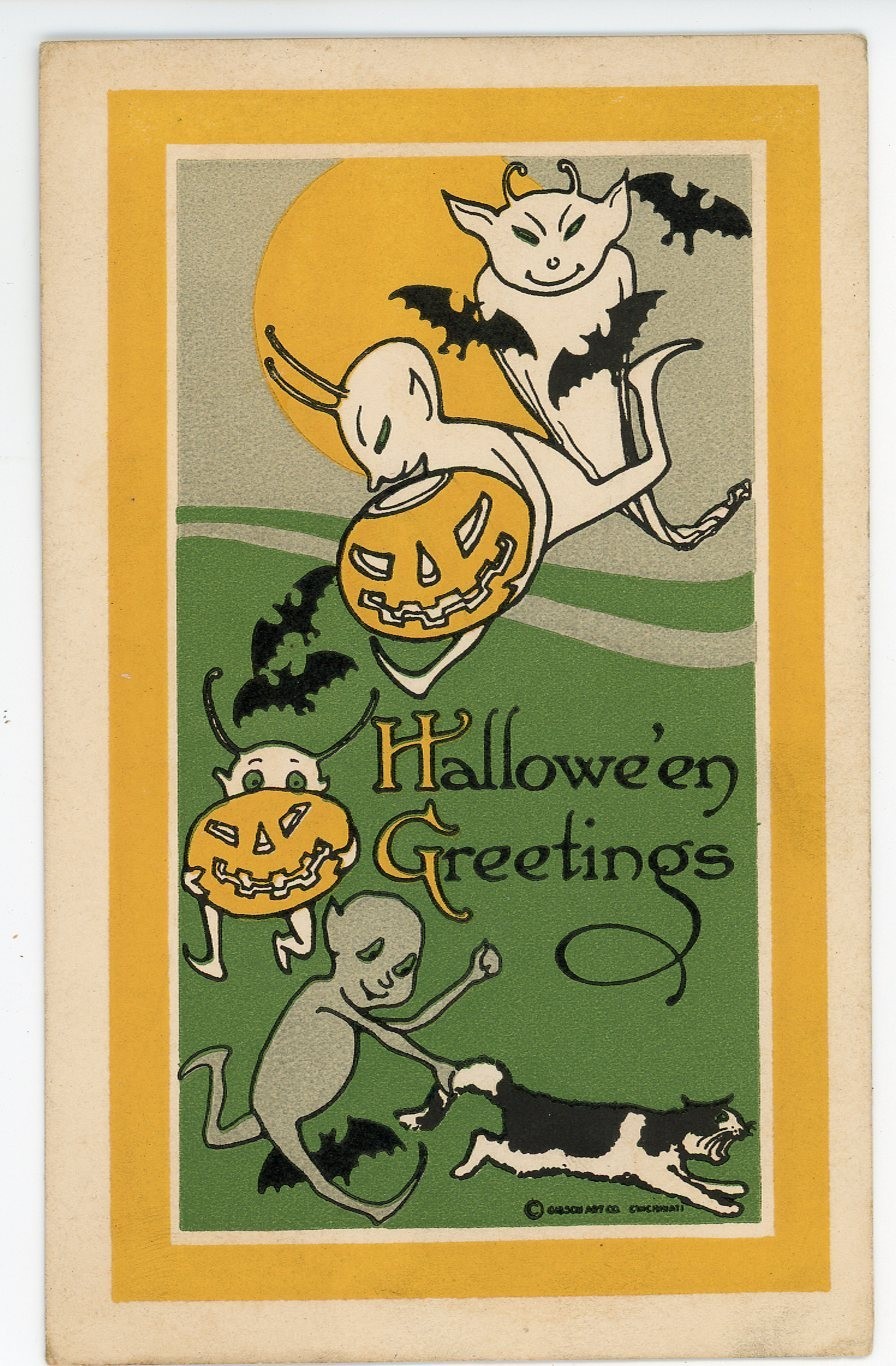
Halloween Putting The Tail On The Cat Game Postcard

Halloween, as depicted in this postcard, reflects its transformation into a popular social holiday in the early 20th century, particularly in America. Originating from ancient Celtic harvest festivals and later influenced by Christian observances, it evolved from traditions focused on warding off spirits to a more community-oriented celebration by the late 19th and early 20th centuries. Parlor games like "Pin the Tail on the Cat," a variation of the well-known "Pin the Tail on the Donkey," were common entertainment at these festive gatherings, emphasizing lighthearted fun over solemn rituals.
The inclusion of elements such as the black cat, traditionally associated with superstition, and the pumpkin adorned with candles, a staple of harvest celebrations and jack-o'-lanterns, highlights the blend of traditional iconography with new forms of amusement. Postcards became a popular medium for conveying holiday greetings during this period, and images like this demonstrate the era's shift towards depicting Halloween as a joyous occasion for adults and children alike, fostering social interaction and community spirit through festive activities. The formal dress of the observers suggests a sophisticated social event, indicating Halloween's broader acceptance across various societal strata.
The inclusion of elements such as the black cat, traditionally associated with superstition, and the pumpkin adorned with candles, a staple of harvest celebrations and jack-o'-lanterns, highlights the blend of traditional iconography with new forms of amusement. Postcards became a popular medium for conveying holiday greetings during this period, and images like this demonstrate the era's shift towards depicting Halloween as a joyous occasion for adults and children alike, fostering social interaction and community spirit through festive activities. The formal dress of the observers suggests a sophisticated social event, indicating Halloween's broader acceptance across various societal strata.