Laurinburg North Carolina Convict Labor Camp Chain Gang Mostly African American Real Photo Postcard
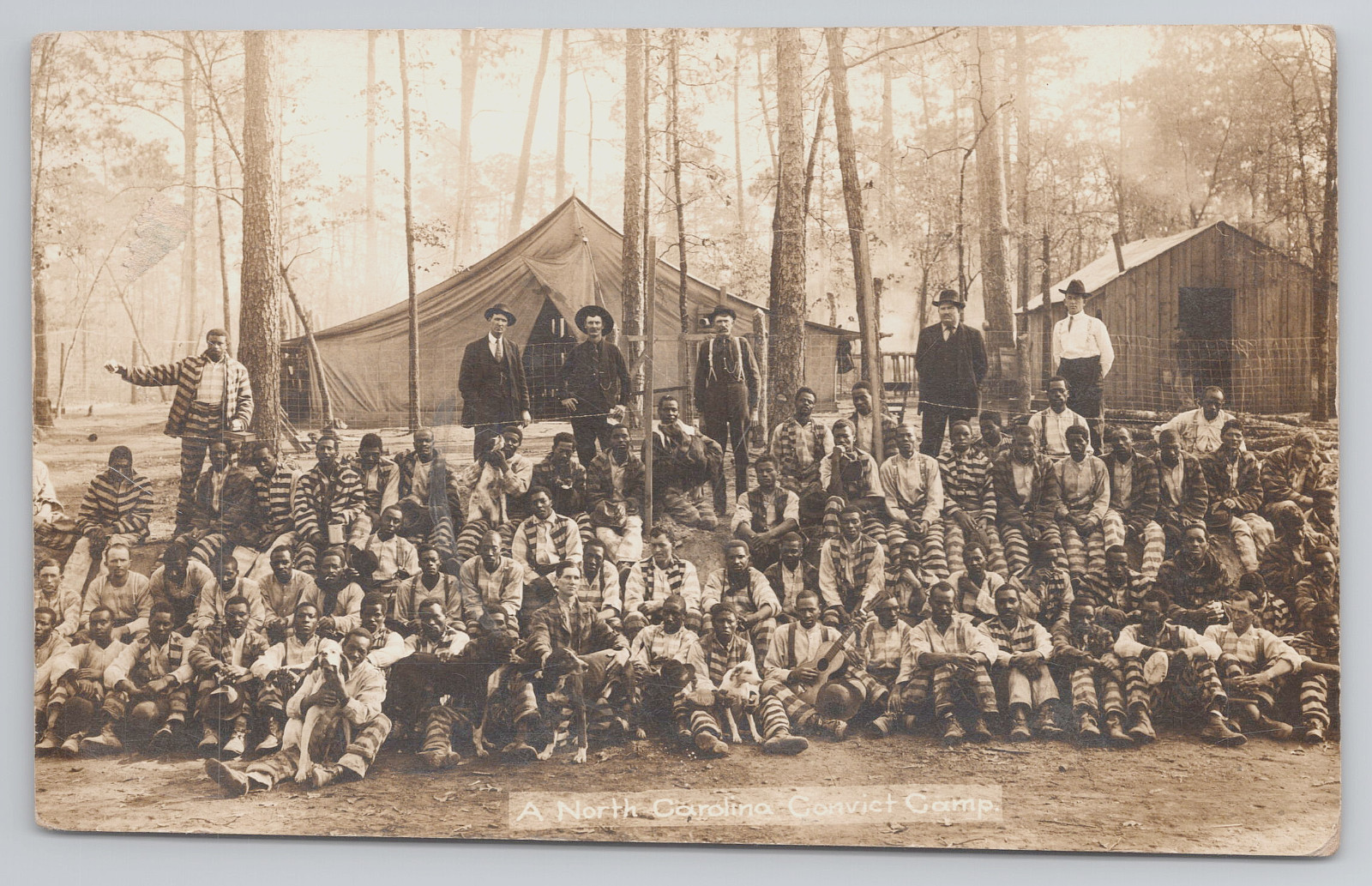
Convict camps in North Carolina, like those across the post-Reconstruction American South, utilized incarcerated individuals for forced labor, often operating under a brutal convict leasing system. These camps provided cheap manpower for infrastructure projects such as road construction, logging, and railway building, filling the labor void left by the abolition of slavery. The striped uniforms visible in the image were standard attire, signifying inmate status within these arduous environments, typically dating this scene to the late 19th or early 20th century.
The system disproportionately targeted African Americans through discriminatory vagrancy laws and Jim Crow-era legal mechanisms, leading to widespread abuses, inhumane living conditions, and high mortality rates. While official convict leasing was abolished in North Carolina by 1933, variations of forced labor in prison farms and road gangs persisted for decades, representing a profound and often violent chapter in American correctional and racial history.
The system disproportionately targeted African Americans through discriminatory vagrancy laws and Jim Crow-era legal mechanisms, leading to widespread abuses, inhumane living conditions, and high mortality rates. While official convict leasing was abolished in North Carolina by 1933, variations of forced labor in prison farms and road gangs persisted for decades, representing a profound and often violent chapter in American correctional and racial history.