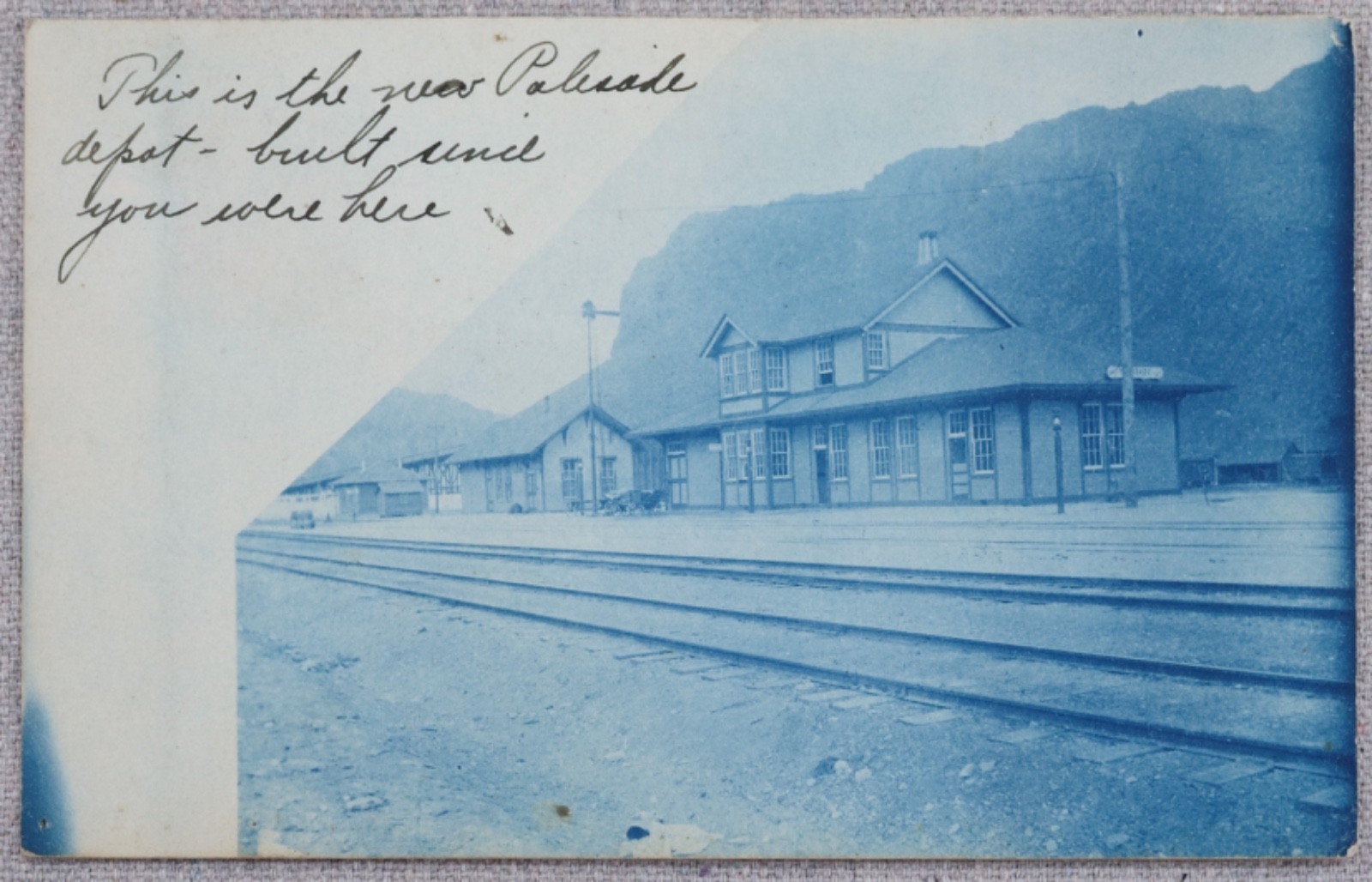
Palisade Nevada S.P Train Station Depot 1908 Cyanotype Real Photo Postcard
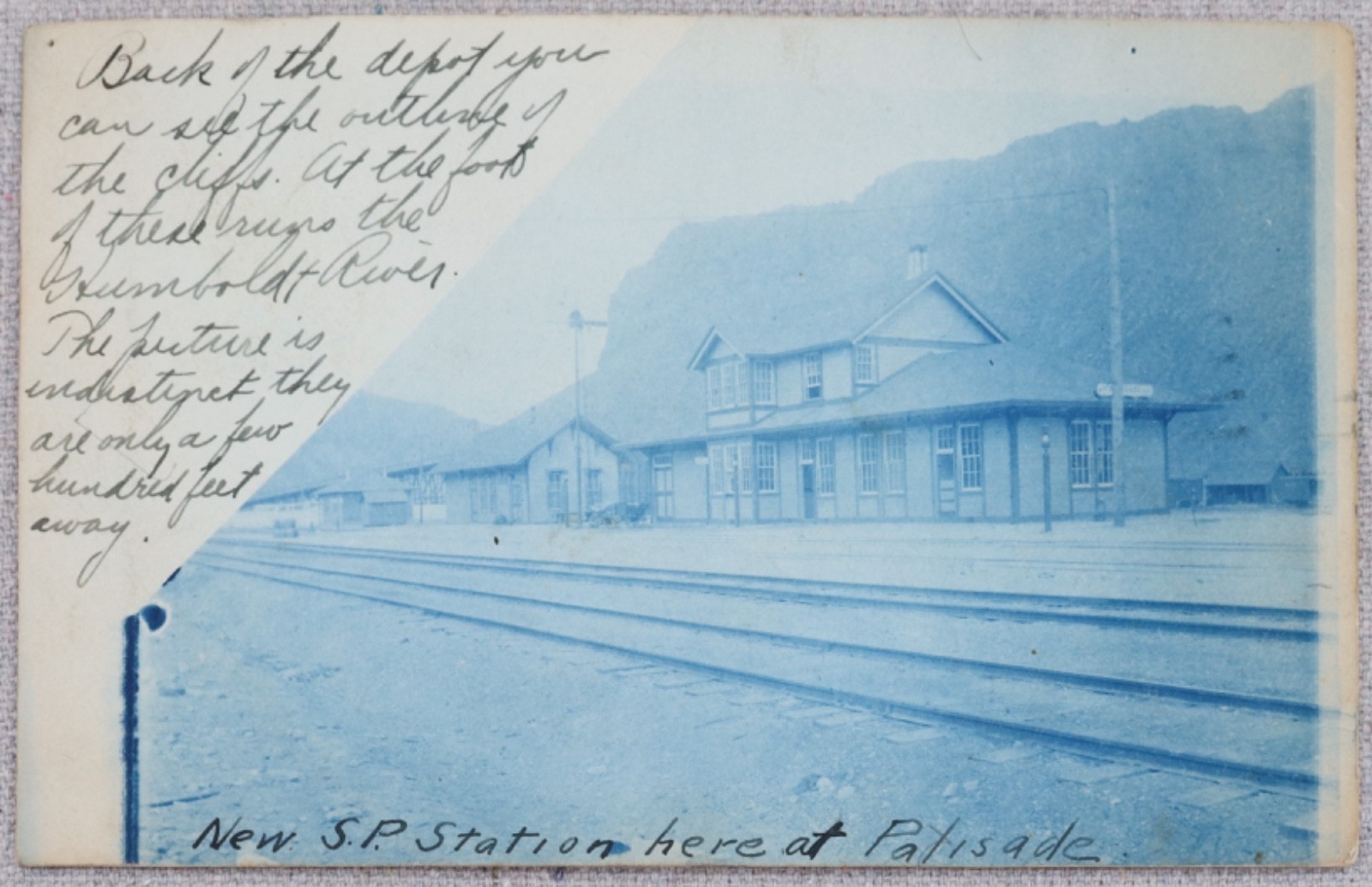
Palisade, Nevada, developed as a crucial railroad town in the late 19th and early 20th centuries, serving as a division point for the Central Pacific, later Southern Pacific Railroad, along the transcontinental route. The "new" Southern Pacific station depicted signifies a period of expansion and modernization, reflecting the town's importance as a logistical hub for maintaining trains, transferring freight, and accommodating passengers in the rugged Western landscape.
Situated within the Humboldt River canyon, Palisade's existence was entirely dependent on the railroad, also serving as the western terminus for the narrow-gauge Eureka and Palisade Railroad that accessed mining regions to the south. The eventual decline of such specialized railroad towns, including Palisade becoming a ghost town by the mid-20th century, illustrates the impact of changing rail technology, centralized operations, and the rise of alternative transportation methods on the American West.
Situated within the Humboldt River canyon, Palisade's existence was entirely dependent on the railroad, also serving as the western terminus for the narrow-gauge Eureka and Palisade Railroad that accessed mining regions to the south. The eventual decline of such specialized railroad towns, including Palisade becoming a ghost town by the mid-20th century, illustrates the impact of changing rail technology, centralized operations, and the rise of alternative transportation methods on the American West.