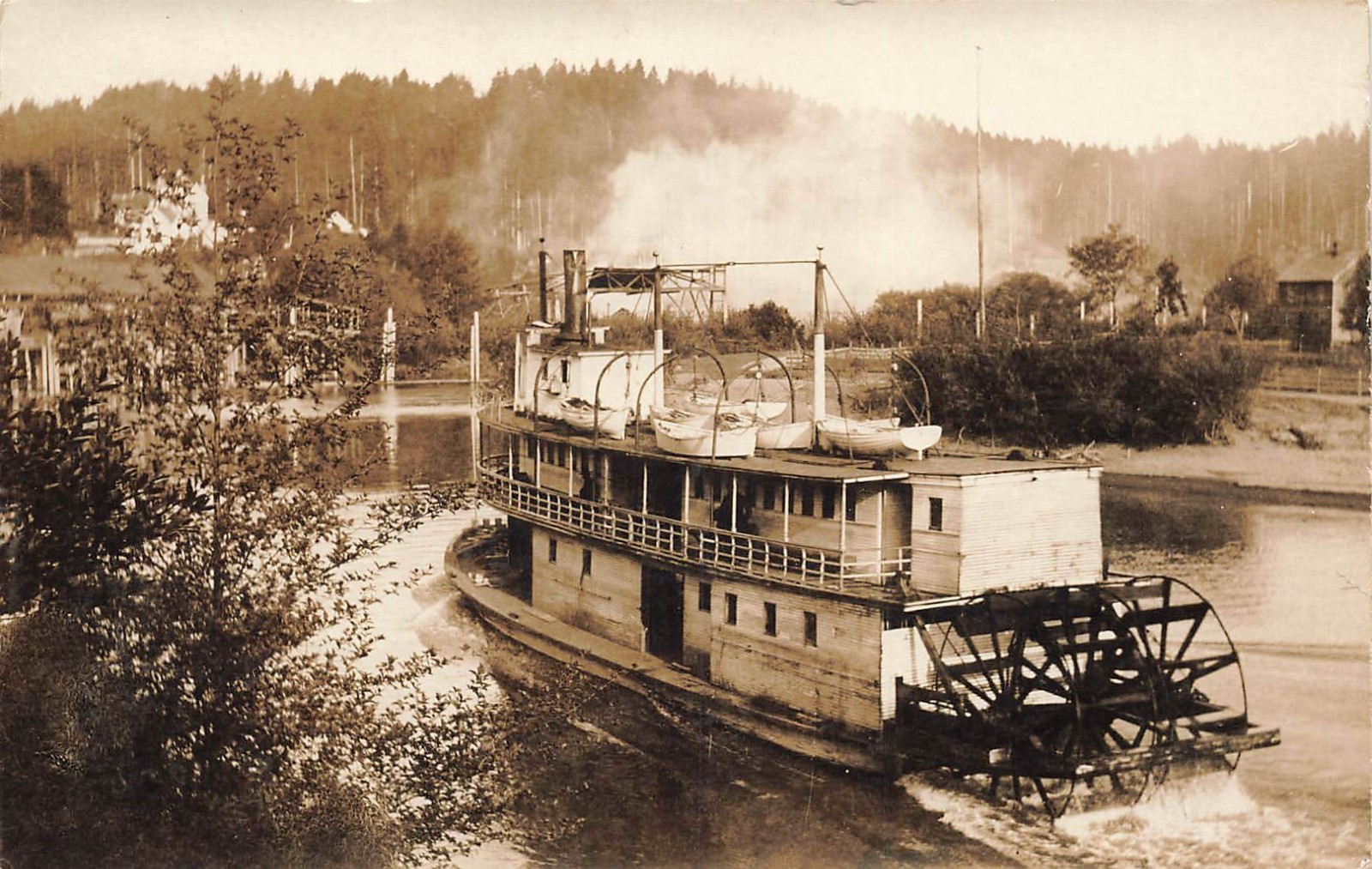
South Hanover Cambridge Massachusetts 1907 Real Photo Postcard
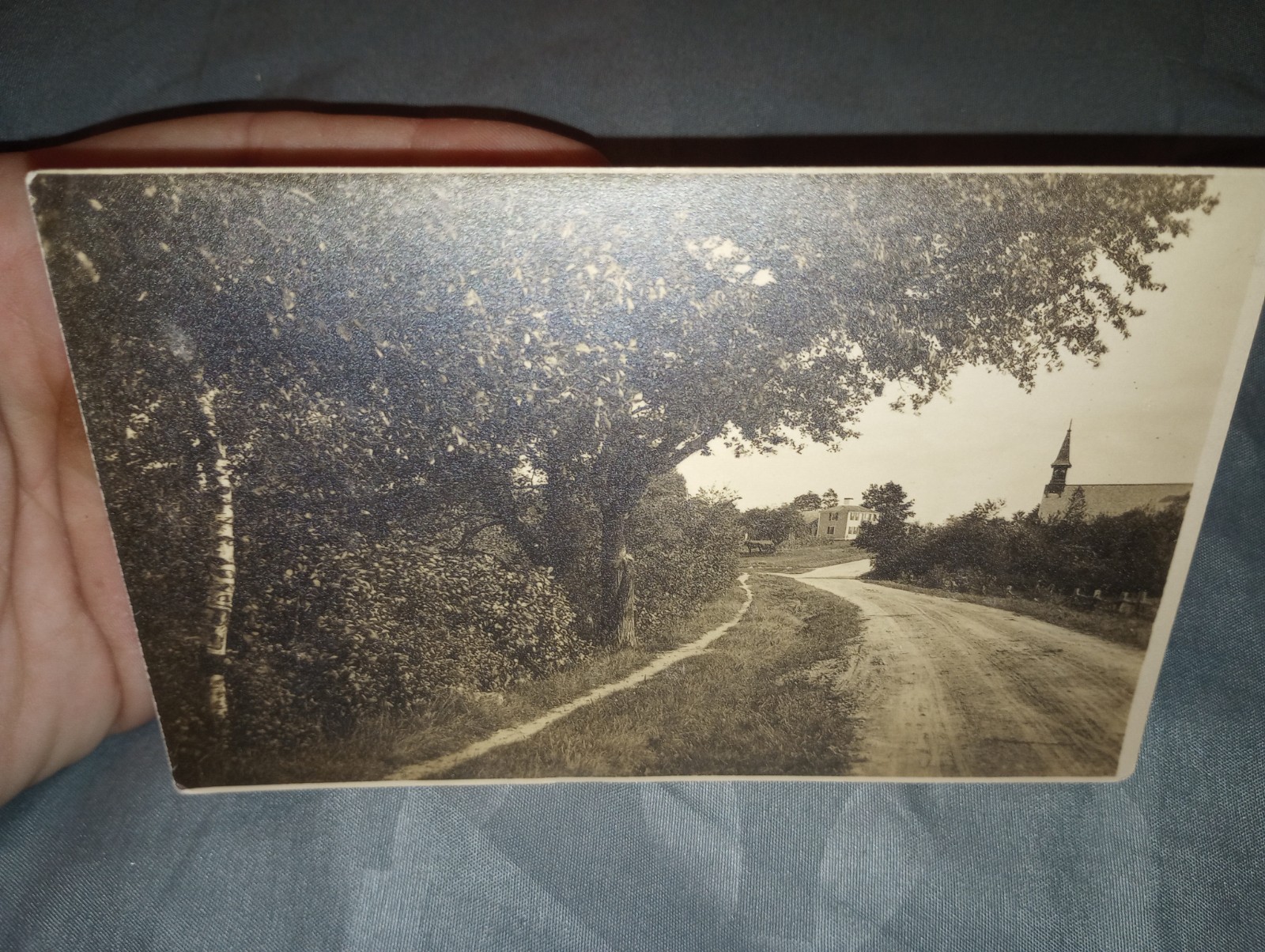
Unpaved dirt roads were a ubiquitous feature of rural and semi-rural landscapes in the early 20th century, serving as primary transportation arteries for communities before the advent of widespread asphalt paving. Such roads facilitated travel by horse-drawn vehicles and early automobiles, connecting isolated farmsteads to village centers. The presence of a church with a distinct steeple and a large house reflects common architectural elements found in many smaller communities of the period, often built with local materials and traditional designs.
Churches like the one shown often served as central hubs for social and spiritual life in these communities, embodying local identity and cohesion. Large houses typically belonged to prominent families or landowners, signifying economic standing within the agricultural or burgeoning industrial economy. This scene captures a moment of transition in rural development, pre-dating extensive electrification, modern road networks, and significant suburban expansion, preserving a snapshot of early 20th-century countryside life.
Churches like the one shown often served as central hubs for social and spiritual life in these communities, embodying local identity and cohesion. Large houses typically belonged to prominent families or landowners, signifying economic standing within the agricultural or burgeoning industrial economy. This scene captures a moment of transition in rural development, pre-dating extensive electrification, modern road networks, and significant suburban expansion, preserving a snapshot of early 20th-century countryside life.