St Helen Michigan Single Plant Of Mammoth Clover Real Photo Postcard
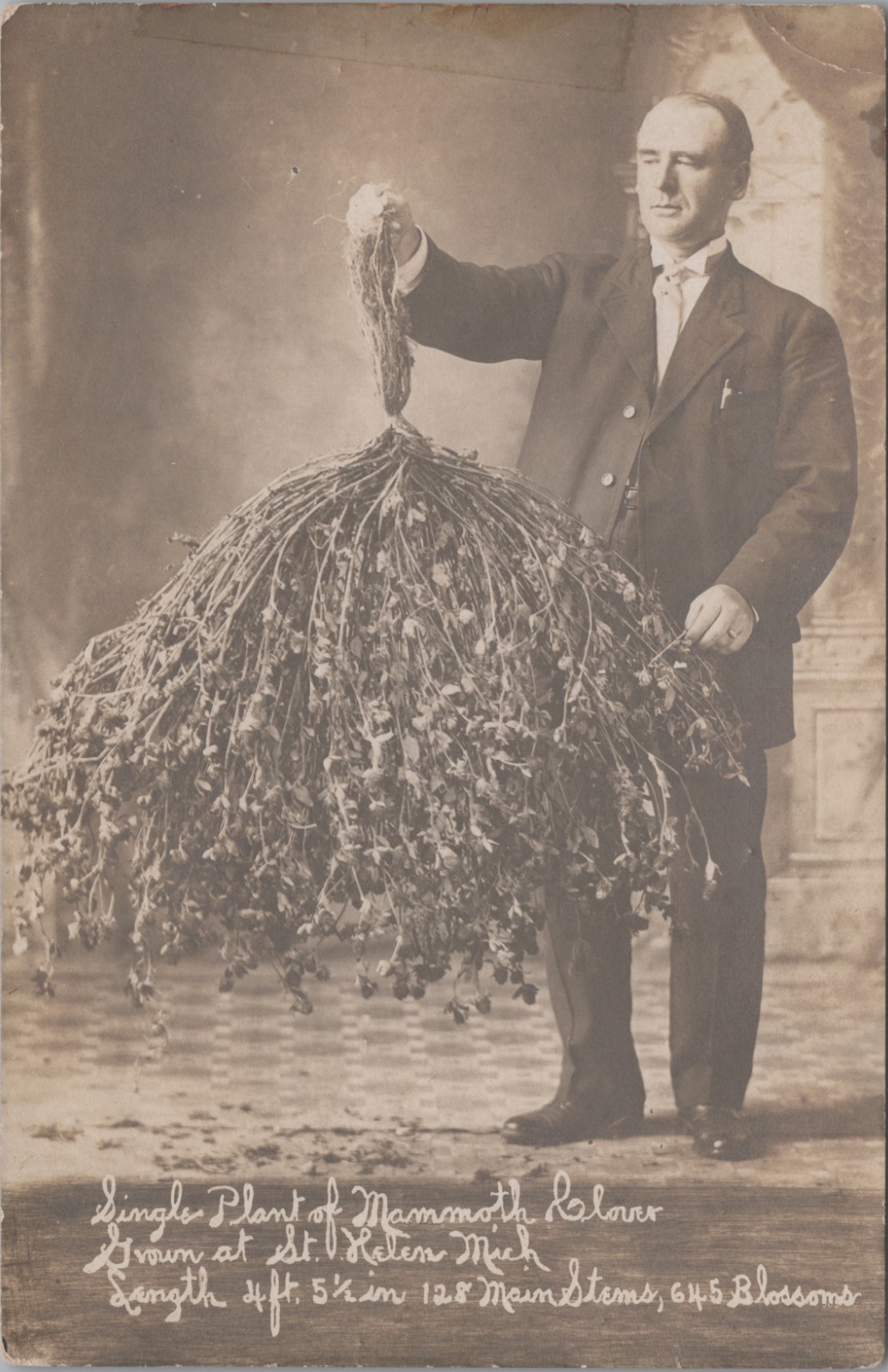
Mammoth Clover (Trifolium pratense var. giganteum), a perennial red clover, held significant agricultural importance in the early 20th century, primarily as a robust forage crop, for hay production, and as a green manure for soil improvement through nitrogen fixation. Cultivating and displaying exceptionally large or prolific plants, like this specimen from St. Helen, Michigan, was a common practice that showcased agricultural prowess, celebrated local fertility, and often featured prominently in rural fairs and community events of the era.
St. Helen, Michigan, a community that emerged with the logging industry in the late 19th century, saw a shift towards diversified agriculture and resort development by the early 1900s. Such impressive agricultural yields, like this clover plant measuring over 4.5 feet with numerous stems and blossoms, highlighted the region's productive capacity and reflected the era's widespread agrarian pride in maximizing yields and demonstrating successful farming practices across American farmlands.
St. Helen, Michigan, a community that emerged with the logging industry in the late 19th century, saw a shift towards diversified agriculture and resort development by the early 1900s. Such impressive agricultural yields, like this clover plant measuring over 4.5 feet with numerous stems and blossoms, highlighted the region's productive capacity and reflected the era's widespread agrarian pride in maximizing yields and demonstrating successful farming practices across American farmlands.


