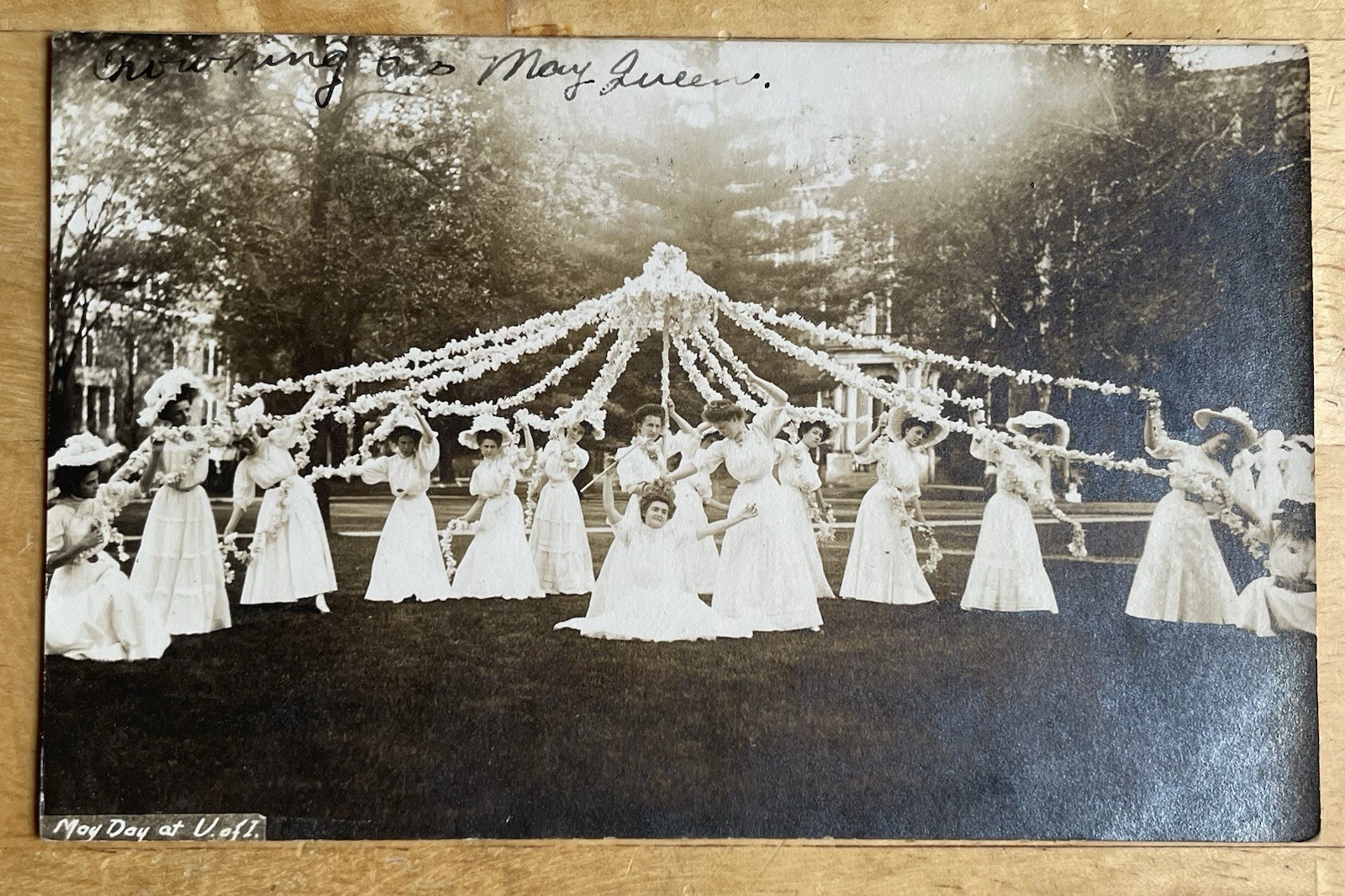
Urbana Illinois University Strauch's May Day Queen Crowned 1909 Real Photo Postcard

May Day celebrations, particularly the crowning of a May Queen, are deeply rooted in ancient pagan fertility rituals marking the arrival of spring. These traditions, prominent in pre-Christian Europe, symbolized renewal, growth, and the earth's bounty. Over centuries, they evolved, often incorporating elements like dancing around a maypole, processions, and the ceremonial selection of a young woman to personify the season's queen, a custom that continued well into the modern era.
By the late 19th and early 20th centuries, May Day festivities, as depicted in this postcard, became popular community and school events in many Western nations. These pageants often featured children and young women dressed in white or historical attire, adorned with floral garlands, emphasizing themes of innocence, tradition, and communal joy. This scene likely captures such a meticulously organized spring festival, showcasing a beloved cultural practice that celebrated the return of warmth and life.
By the late 19th and early 20th centuries, May Day festivities, as depicted in this postcard, became popular community and school events in many Western nations. These pageants often featured children and young women dressed in white or historical attire, adorned with floral garlands, emphasizing themes of innocence, tradition, and communal joy. This scene likely captures such a meticulously organized spring festival, showcasing a beloved cultural practice that celebrated the return of warmth and life.