Winnebago Nebraska Native American Indian Camp Tepee Olson Real Photo Postcard
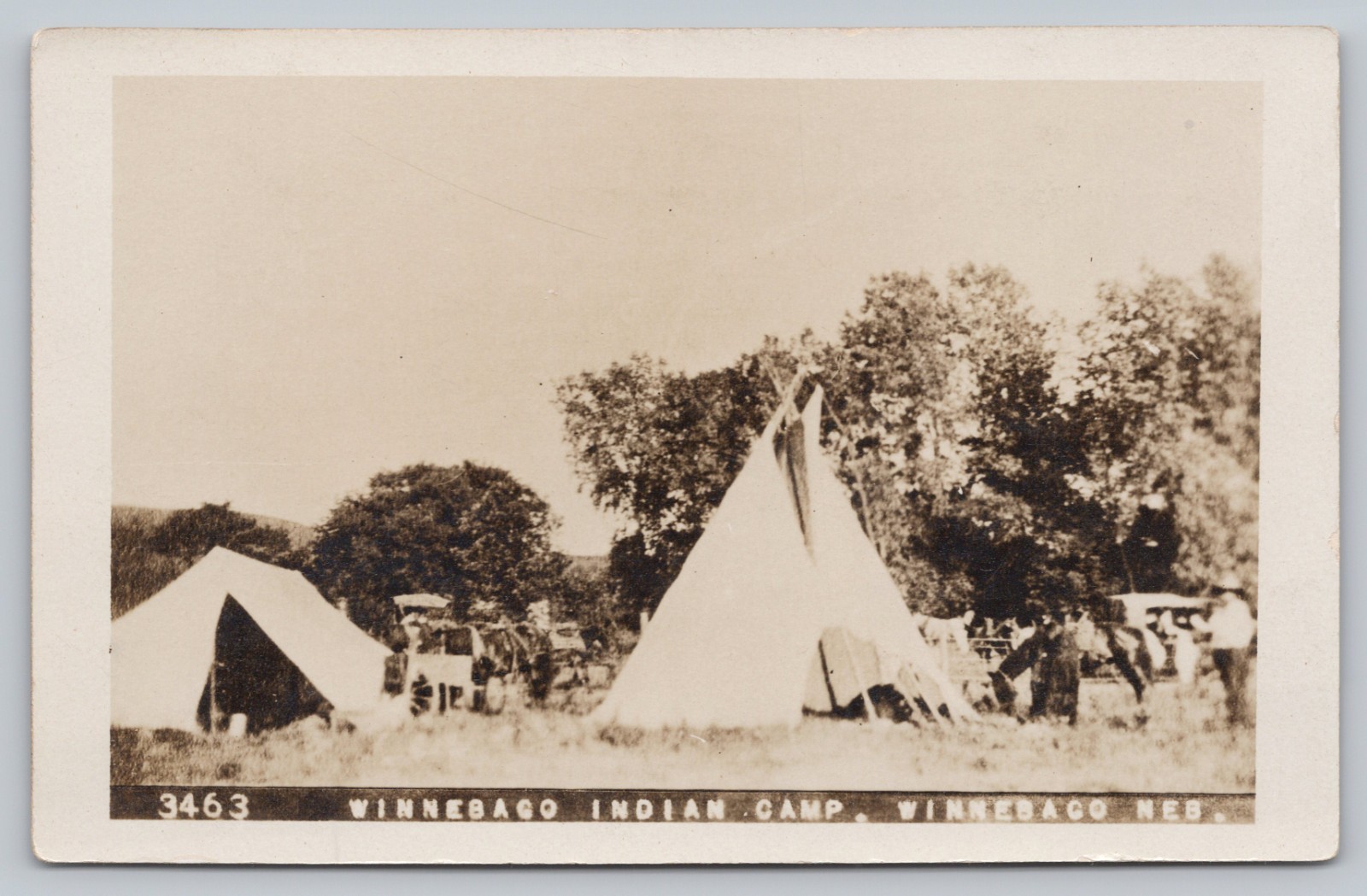
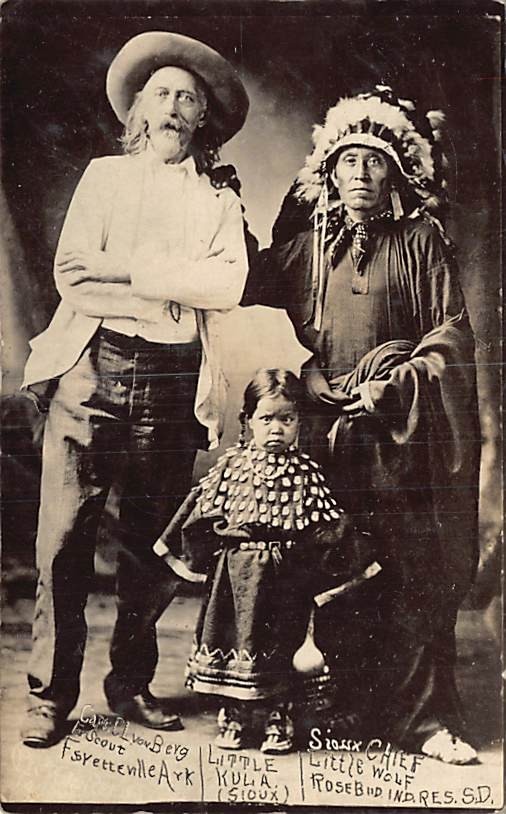
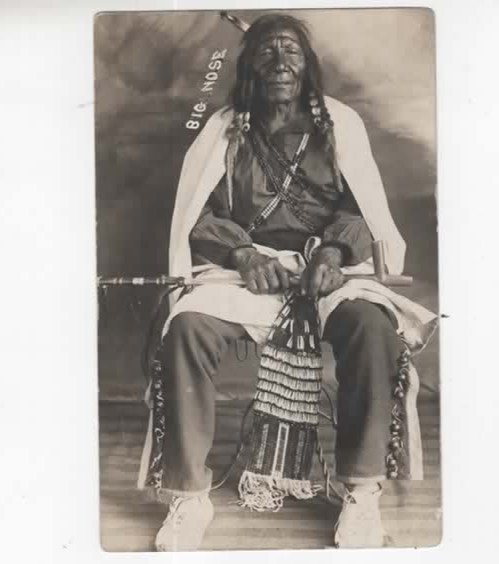
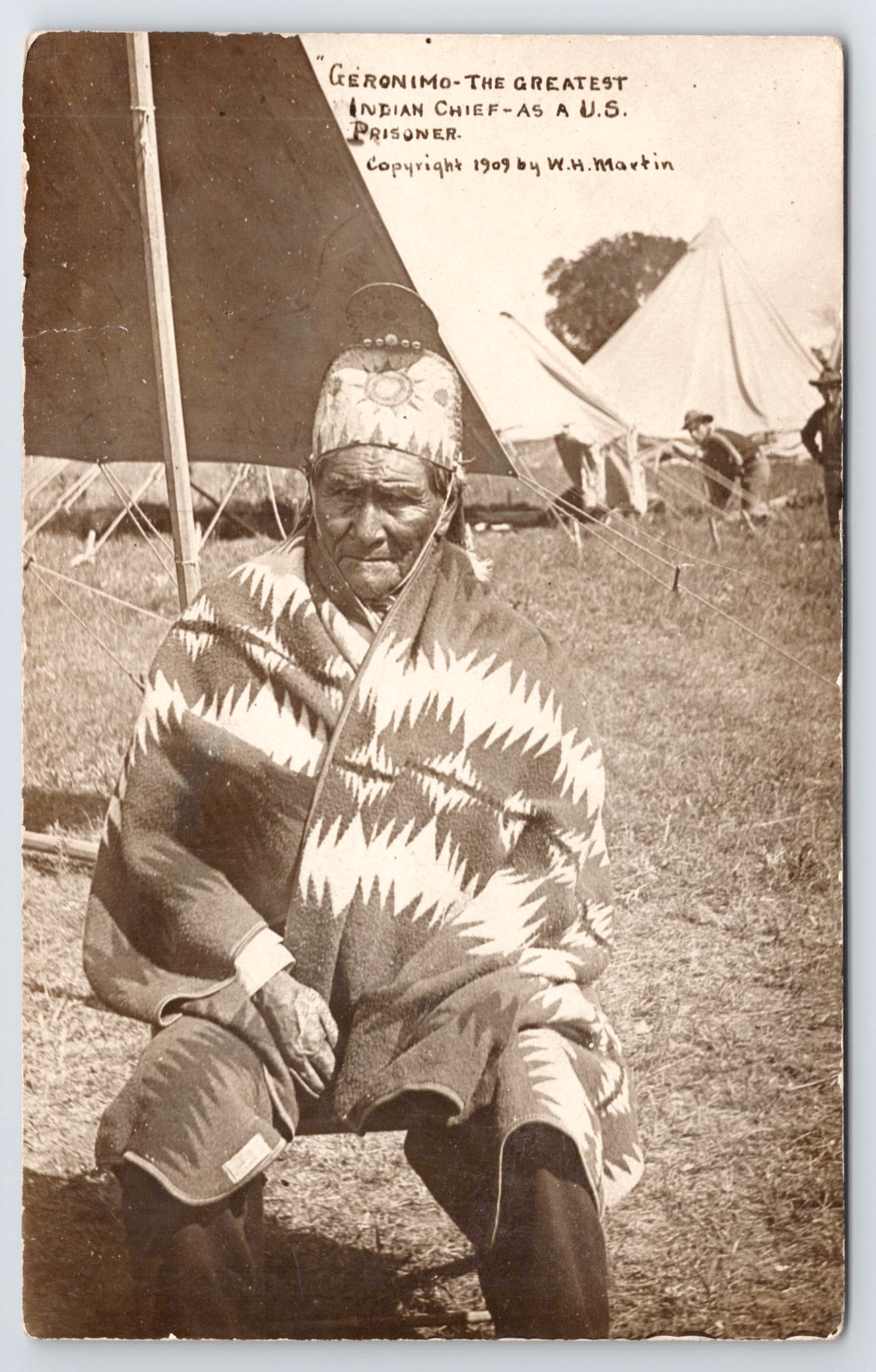
The Winnebago Indian Camp in Winnebago, Nebraska, likely depicts a scene from the Winnebago Tribe of Nebraska (Ho-Chunk Nation) reservation during the early 20th century. The tribe was forcibly relocated to this area in 1865, establishing a permanent presence in what became Thurston County. This encampment, featuring both traditional tipi structures and canvas tents, illustrates aspects of daily life, cultural practices, or possibly a communal gathering during a period when Indigenous communities adapted to reservation realities while maintaining cultural continuity.
Such images from the early 1900s offer a glimpse into the diverse living arrangements and communal gatherings prevalent among Native American tribes post-allotment and prior to widespread assimilation pressures fully altering traditional housing. The coexistence of tipis and canvas tents reflects a blend of traditional architectural forms with more readily available materials, characteristic of many Indigenous camps during this era of significant social and economic transition on reservations across the Great Plains.
Such images from the early 1900s offer a glimpse into the diverse living arrangements and communal gatherings prevalent among Native American tribes post-allotment and prior to widespread assimilation pressures fully altering traditional housing. The coexistence of tipis and canvas tents reflects a blend of traditional architectural forms with more readily available materials, characteristic of many Indigenous camps during this era of significant social and economic transition on reservations across the Great Plains.