Halloween Postcard With Beware The Night

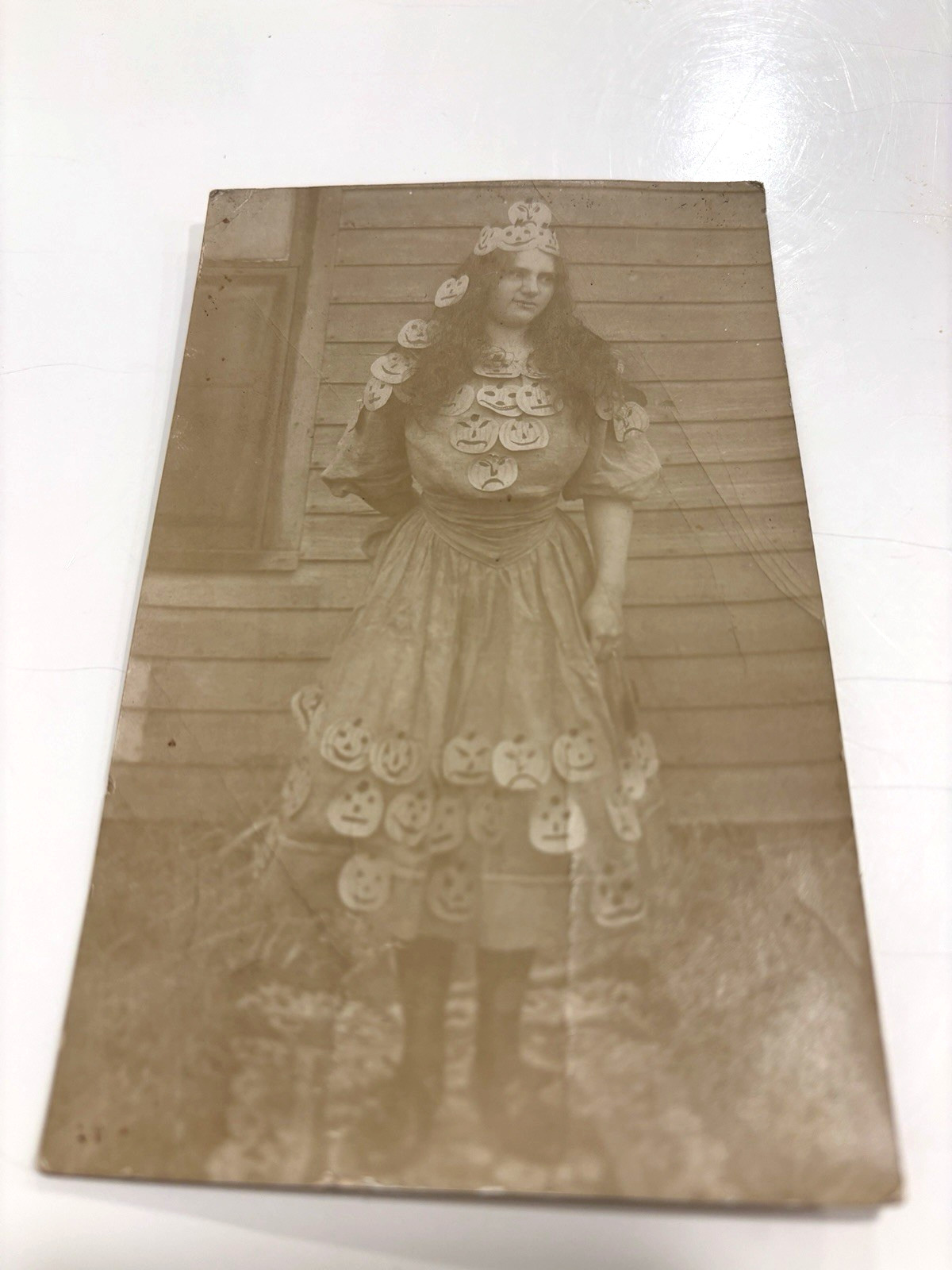
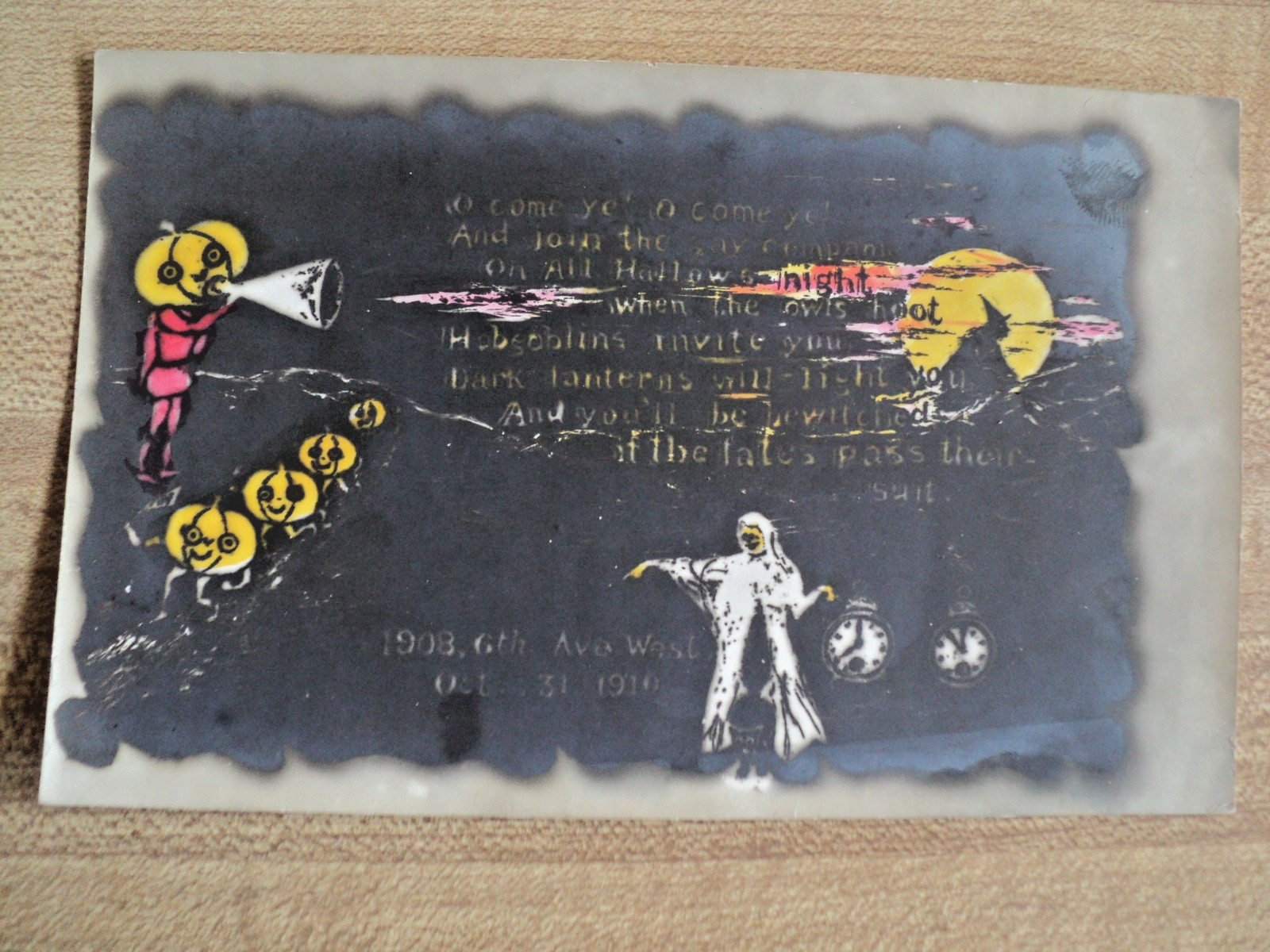
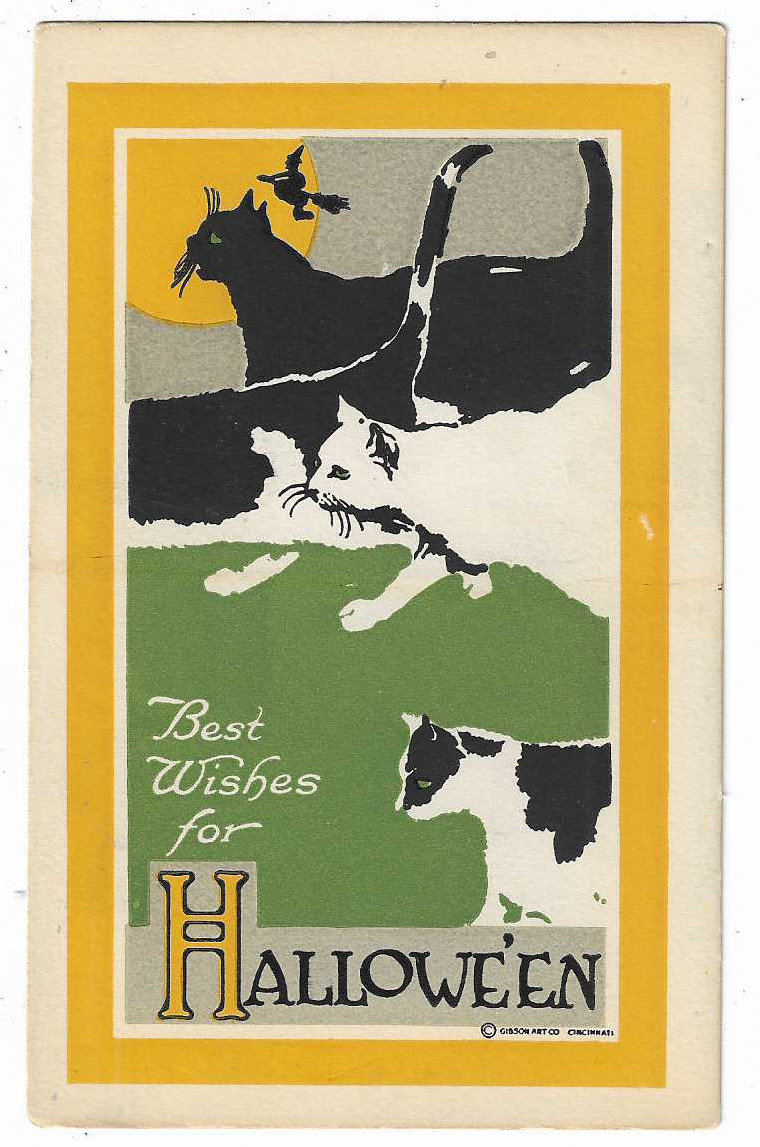
Halloween, stemming from the ancient Celtic festival of Samhain and later integrated with Christian observances as All Hallows' Eve, evolved into a popular secular holiday in North America during the late 19th and early 20th centuries. This era saw its transformation from more solemn, superstitious practices to a celebrated occasion marked by social gatherings, costumes, and the playful invocation of supernatural themes. The imagery of "spooks" and ghosts, central to traditional folklore surrounding the night when the veil between worlds thinned, became a defining characteristic of the holiday.
This type of vintage postcard, featuring apparitions and a spooky house under a night sky, played a significant role in popularizing and standardizing Halloween iconography during the early 1900s. Such cards often captured the era's blend of ancient supernatural beliefs and emerging festive traditions. The depiction of glowing-eyed ghosts, moonlit scenes, and illuminated houses reflects the period's visual lexicon for the mysterious and uncanny elements of Halloween, aligning with burgeoning customs like haunted house narratives and costumed pranks.
This type of vintage postcard, featuring apparitions and a spooky house under a night sky, played a significant role in popularizing and standardizing Halloween iconography during the early 1900s. Such cards often captured the era's blend of ancient supernatural beliefs and emerging festive traditions. The depiction of glowing-eyed ghosts, moonlit scenes, and illuminated houses reflects the period's visual lexicon for the mysterious and uncanny elements of Halloween, aligning with burgeoning customs like haunted house narratives and costumed pranks.